

4.2.2 MCDA Method
In order to tackle the problem in exam, we applied an interactive Dominance-based
Rough Set Approach (DRSA, Greco et al. 2001, 2008a). This method is based on the
use of a preference model expressed in terms of easily understandable “if . . . then”
decision rules. The rules are induced from a preference information given by the DM
in terms of indication of relatively good actions from a given sample called exemplary decision. The method consists of organizing the search of the most preferred
action by alternating stages of calculation and dialogue. The calculation stages aim at
inducing decision rules and applying them to new actions. During the dialogue
stages, the DMs are called to react to the proposal revealing their preferences sorting
the alternative as good or bad, which are in turn considered in the next stages of
calculation. The procedure stops when the DMs find a satisfactory action (Fig. 6.3).
The case study in exam required four interactions with the DM. Apart from the
first interaction, where only a subset of candidate sites has been considered, the
number of good sites decreased from 39 to 23 (second interaction), to 6 (third
interaction), to 2 (fourth interaction).
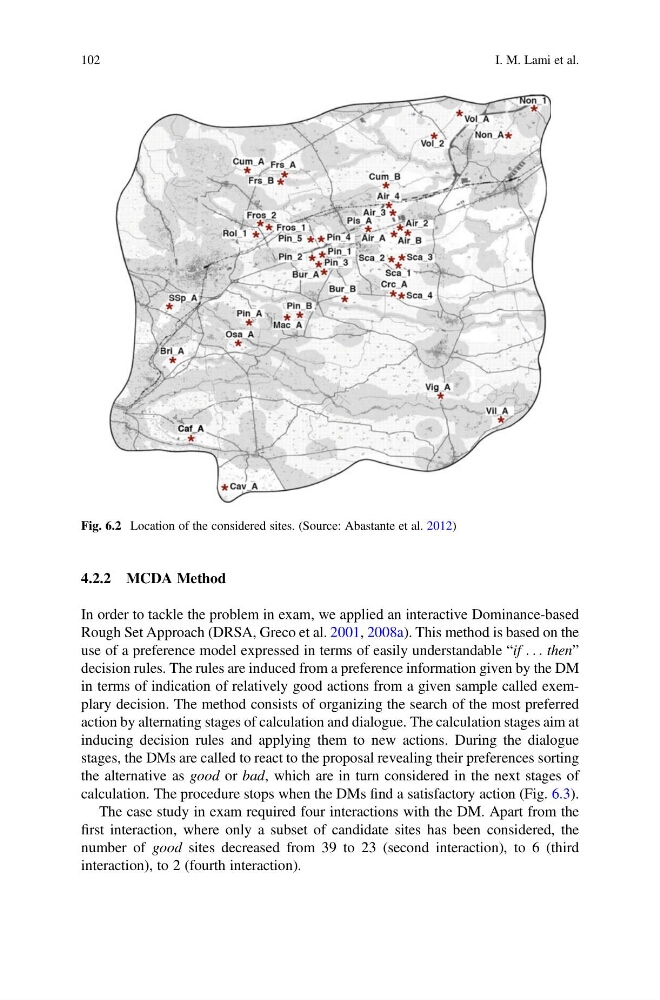
Fig. 6.2 Location of the considered sites. (Source: Abastante et al. 2012)
102
I. M. Lami et al.
In order to tackle the problem in exam, we applied an interactive Dominance-based
Rough Set Approach (DRSA, Greco et al. 2001, 2008a). This method is based on the
use of a preference model expressed in terms of easily understandable “if . . . then”
decision rules. The rules are induced from a preference information given by the DM
in terms of indication of relatively good actions from a given sample called exemplary decision. The method consists of organizing the search of the most preferred
action by alternating stages of calculation and dialogue. The calculation stages aim at
inducing decision rules and applying them to new actions. During the dialogue
stages, the DMs are called to react to the proposal revealing their preferences sorting
the alternative as good or bad, which are in turn considered in the next stages of
calculation. The procedure stops when the DMs find a satisfactory action (Fig. 6.3).
The case study in exam required four interactions with the DM. Apart from the
first interaction, where only a subset of candidate sites has been considered, the
number of good sites decreased from 39 to 23 (second interaction), to 6 (third
interaction), to 2 (fourth interaction).
Fig. 6.2 Location of the considered sites. (Source: Abastante et al. 2012)
102
I. M. Lami et al.