

12 Inter-spin Interactions of Organic Radical Chains in Organic 1D. . .
427
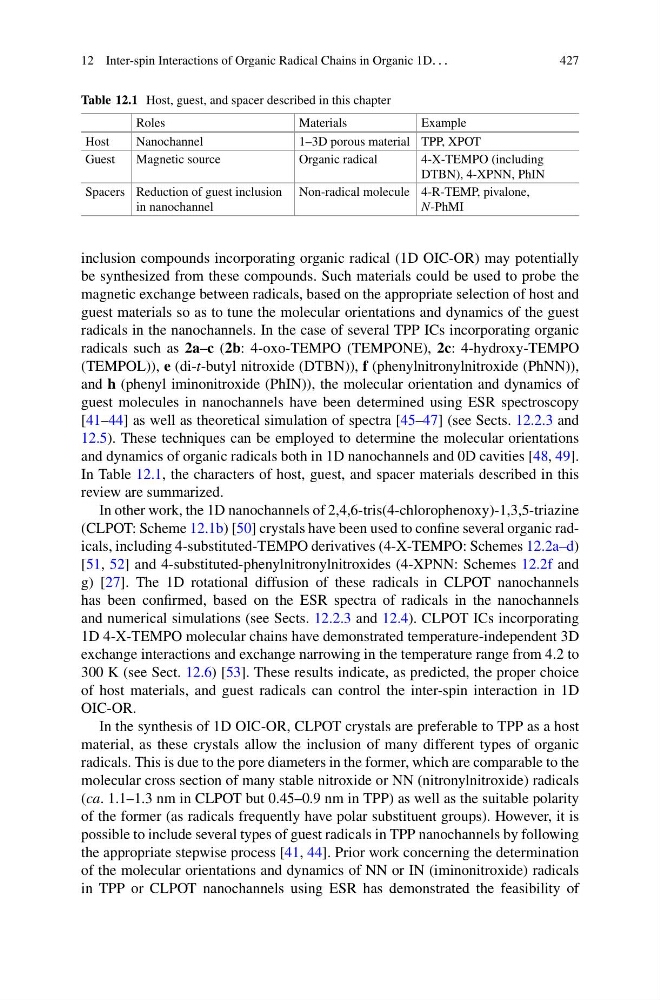
Table 12.1 Host, guest, and spacer described in this chapter
Roles
Materials
Example
Host
Nanochannel
1–3D porous material TPP, XPOT
Guest
Magnetic source
Organic radical
4-X-TEMPO (including
DTBN), 4-XPNN, PhIN
Spacers Reduction of guest inclusion
in nanochannel
Non-radical molecule 4-R-TEMP, pivalone,
N-PhMI
inclusion compounds incorporating organic radical (1D OIC-OR) may potentially
be synthesized from these compounds. Such materials could be used to probe the
magnetic exchange between radicals, based on the appropriate selection of host and
guest materials so as to tune the molecular orientations and dynamics of the guest
radicals in the nanochannels. In the case of several TPP ICs incorporating organic
radicals such as 2a–c (2b: 4-oxo-TEMPO (TEMPONE), 2c: 4-hydroxy-TEMPO
(TEMPOL)), e (di-t-butyl nitroxide (DTBN)), f (phenylnitronylnitroxide (PhNN)),
and h (phenyl iminonitroxide (PhIN)), the molecular orientation and dynamics of
guest molecules in nanochannels have been determined using ESR spectroscopy
[41–44] as well as theoretical simulation of spectra [45–47] (see Sects. 12.2.3 and
12.5). These techniques can be employed to determine the molecular orientations
and dynamics of organic radicals both in 1D nanochannels and 0D cavities [48, 49].
In Table 12.1, the characters of host, guest, and spacer materials described in this
review are summarized.
In other work, the 1D nanochannels of 2,4,6-tris(4-chlorophenoxy)-1,3,5-triazine
(CLPOT: Scheme 12.1b) [50] crystals have been used to confine several organic radicals, including 4-substituted-TEMPO derivatives (4-X-TEMPO: Schemes 12.2a–d)
[51, 52] and 4-substituted-phenylnitronylnitroxides (4-XPNN: Schemes 12.2f and
g) [27]. The 1D rotational diffusion of these radicals in CLPOT nanochannels
has been confirmed, based on the ESR spectra of radicals in the nanochannels
and numerical simulations (see Sects. 12.2.3 and 12.4). CLPOT ICs incorporating
1D 4-X-TEMPO molecular chains have demonstrated temperature-independent 3D
exchange interactions and exchange narrowing in the temperature range from 4.2 to
300 K (see Sect. 12.6) [53]. These results indicate, as predicted, the proper choice
of host materials, and guest radicals can control the inter-spin interaction in 1D
OIC-OR.
In the synthesis of 1D OIC-OR, CLPOT crystals are preferable to TPP as a host
material, as these crystals allow the inclusion of many different types of organic
radicals. This is due to the pore diameters in the former, which are comparable to the
molecular cross section of many stable nitroxide or NN (nitronylnitroxide) radicals
(ca. 1.1–1.3 nm in CLPOT but 0.45–0.9 nm in TPP) as well as the suitable polarity
of the former (as radicals frequently have polar substituent groups). However, it is
possible to include several types of guest radicals in TPP nanochannels by following
the appropriate stepwise process [41, 44]. Prior work concerning the determination
of the molecular orientations and dynamics of NN or IN (iminonitroxide) radicals
in TPP or CLPOT nanochannels using ESR has demonstrated the feasibility of
427
Table 12.1 Host, guest, and spacer described in this chapter
Roles
Materials
Example
Host
Nanochannel
1–3D porous material TPP, XPOT
Guest
Magnetic source
Organic radical
4-X-TEMPO (including
DTBN), 4-XPNN, PhIN
Spacers Reduction of guest inclusion
in nanochannel
Non-radical molecule 4-R-TEMP, pivalone,
N-PhMI
inclusion compounds incorporating organic radical (1D OIC-OR) may potentially
be synthesized from these compounds. Such materials could be used to probe the
magnetic exchange between radicals, based on the appropriate selection of host and
guest materials so as to tune the molecular orientations and dynamics of the guest
radicals in the nanochannels. In the case of several TPP ICs incorporating organic
radicals such as 2a–c (2b: 4-oxo-TEMPO (TEMPONE), 2c: 4-hydroxy-TEMPO
(TEMPOL)), e (di-t-butyl nitroxide (DTBN)), f (phenylnitronylnitroxide (PhNN)),
and h (phenyl iminonitroxide (PhIN)), the molecular orientation and dynamics of
guest molecules in nanochannels have been determined using ESR spectroscopy
[41–44] as well as theoretical simulation of spectra [45–47] (see Sects. 12.2.3 and
12.5). These techniques can be employed to determine the molecular orientations
and dynamics of organic radicals both in 1D nanochannels and 0D cavities [48, 49].
In Table 12.1, the characters of host, guest, and spacer materials described in this
review are summarized.
In other work, the 1D nanochannels of 2,4,6-tris(4-chlorophenoxy)-1,3,5-triazine
(CLPOT: Scheme 12.1b) [50] crystals have been used to confine several organic radicals, including 4-substituted-TEMPO derivatives (4-X-TEMPO: Schemes 12.2a–d)
[51, 52] and 4-substituted-phenylnitronylnitroxides (4-XPNN: Schemes 12.2f and
g) [27]. The 1D rotational diffusion of these radicals in CLPOT nanochannels
has been confirmed, based on the ESR spectra of radicals in the nanochannels
and numerical simulations (see Sects. 12.2.3 and 12.4). CLPOT ICs incorporating
1D 4-X-TEMPO molecular chains have demonstrated temperature-independent 3D
exchange interactions and exchange narrowing in the temperature range from 4.2 to
300 K (see Sect. 12.6) [53]. These results indicate, as predicted, the proper choice
of host materials, and guest radicals can control the inter-spin interaction in 1D
OIC-OR.
In the synthesis of 1D OIC-OR, CLPOT crystals are preferable to TPP as a host
material, as these crystals allow the inclusion of many different types of organic
radicals. This is due to the pore diameters in the former, which are comparable to the
molecular cross section of many stable nitroxide or NN (nitronylnitroxide) radicals
(ca. 1.1–1.3 nm in CLPOT but 0.45–0.9 nm in TPP) as well as the suitable polarity
of the former (as radicals frequently have polar substituent groups). However, it is
possible to include several types of guest radicals in TPP nanochannels by following
the appropriate stepwise process [41, 44]. Prior work concerning the determination
of the molecular orientations and dynamics of NN or IN (iminonitroxide) radicals
in TPP or CLPOT nanochannels using ESR has demonstrated the feasibility of