

6 Group 13–15 Needle-Shaped Oligomers and Nanorods: Structures. . .
217
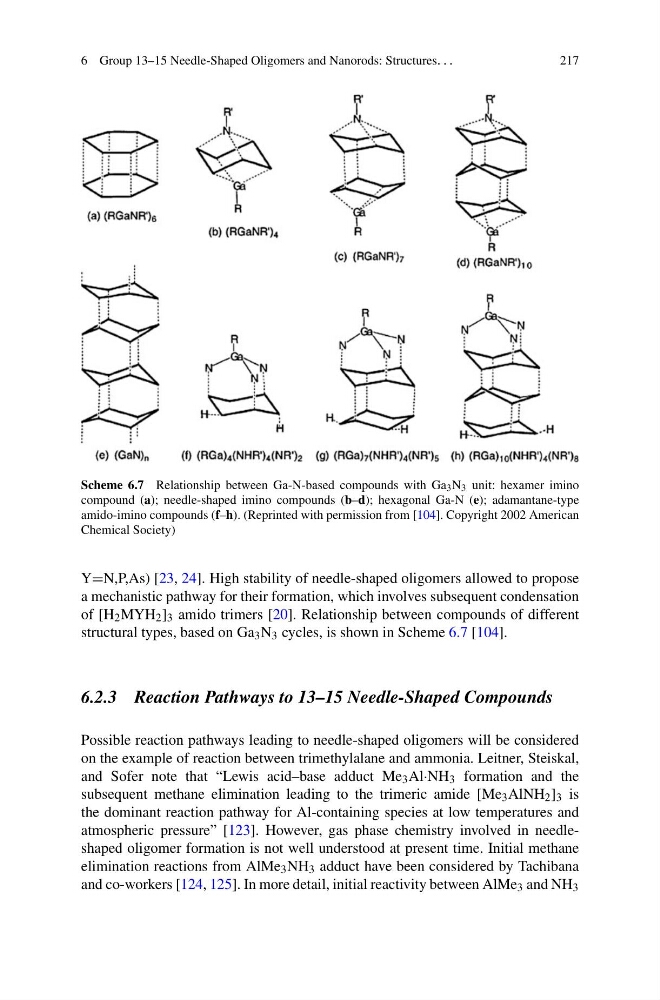
Scheme 6.7 Relationship between Ga-N-based compounds with Ga 3 N 3 unit: hexamer imino
compound (a); needle-shaped imino compounds (b–d); hexagonal Ga-N (e); adamantane-type
amido-imino compounds (f–h). (Reprinted with permission from [104]. Copyright 2002 American
Chemical Society)
Y=N,P,As) [23, 24]. High stability of needle-shaped oligomers allowed to propose
a mechanistic pathway for their formation, which involves subsequent condensation
of [H 2 MYH 2 ] 3 amido trimers [20]. Relationship between compounds of different
structural types, based on Ga 3 N 3 cycles, is shown in Scheme 6.7 [104].
6.2.3 Reaction Pathways to 13–15 Needle-Shaped Compounds
Possible reaction pathways leading to needle-shaped oligomers will be considered
on the example of reaction between trimethylalane and ammonia. Leitner, Steiskal,
and Sofer note that “Lewis acid–base adduct Me 3 Al·NH 3 formation and the
subsequent methane elimination leading to the trimeric amide [Me 3 AlNH 2 ] 3 is
the dominant reaction pathway for Al-containing species at low temperatures and
atmospheric pressure” [123]. However, gas phase chemistry involved in needleshaped oligomer formation is not well understood at present time. Initial methane
elimination reactions from AlMe 3 NH 3 adduct have been considered by Tachibana
and co-workers [124, 125]. In more detail, initial reactivity between AlMe 3 and NH 3
217
Scheme 6.7 Relationship between Ga-N-based compounds with Ga 3 N 3 unit: hexamer imino
compound (a); needle-shaped imino compounds (b–d); hexagonal Ga-N (e); adamantane-type
amido-imino compounds (f–h). (Reprinted with permission from [104]. Copyright 2002 American
Chemical Society)
Y=N,P,As) [23, 24]. High stability of needle-shaped oligomers allowed to propose
a mechanistic pathway for their formation, which involves subsequent condensation
of [H 2 MYH 2 ] 3 amido trimers [20]. Relationship between compounds of different
structural types, based on Ga 3 N 3 cycles, is shown in Scheme 6.7 [104].
6.2.3 Reaction Pathways to 13–15 Needle-Shaped Compounds
Possible reaction pathways leading to needle-shaped oligomers will be considered
on the example of reaction between trimethylalane and ammonia. Leitner, Steiskal,
and Sofer note that “Lewis acid–base adduct Me 3 Al·NH 3 formation and the
subsequent methane elimination leading to the trimeric amide [Me 3 AlNH 2 ] 3 is
the dominant reaction pathway for Al-containing species at low temperatures and
atmospheric pressure” [123]. However, gas phase chemistry involved in needleshaped oligomer formation is not well understood at present time. Initial methane
elimination reactions from AlMe 3 NH 3 adduct have been considered by Tachibana
and co-workers [124, 125]. In more detail, initial reactivity between AlMe 3 and NH 3