

2.2.3 Prostate-Specific Membrane Antigen (PSMA)-Targeted
Fluorescence Probes
Prostate cancer is the most commonly diagnosed malignancy in men, and the
integral membrane protein PSMA is becoming increasingly recognized as a viable
target for prostate cancer diagnosis and treatment. Therefore, PSMA-specific antibodies, peptides, peptide derivatives, or other small molecules have been developed
as targeting ligands for the development of imaging probes for prostate cancer
detection (compounds 6–9, Fig. 9) [38–41].
2.2.4 Folate Receptor-Targeted Fluorescent Probes
Folates are essential for the maintenance of all cells and tissue regeneration. Folates
have a high affinity for their cell surface folate receptor (FR), which is primarily
expressed on healthy cells where it does not readily encounter folate from the
bloodstream. When the malignant transformation occurs, high levels of FR are
expressed in a number of malignancies, including ovarian and endometrial cancers
and myeloid leukemias. Thus, the high affinity of FR offers a potential means for
tumor targeting, which has already become the main design strategy for the
FR-targeted tumor imaging probes (compounds 10–11, Fig. 10) [42, 43].
2.2.5 Cyclooxygenase-2 (COX-2)-Targeted Fluorescent Probes
COX-2 is a crucial biological mediator in the etiology of cancer. This enzyme is
absent or present at low levels in normal cells but shows high expression levels in
inflamed tissues as well as many premalignant and malignant tumors such as
colorectal adenomas and adenocarcinomas. COX-2 has been used as an ideal
imaging biomarker for cancer cells. Currently, many fluorescent probes have been
engineered to target COX-2 for tumor detection (compounds 12–15, Fig. 11)
[44, 45].
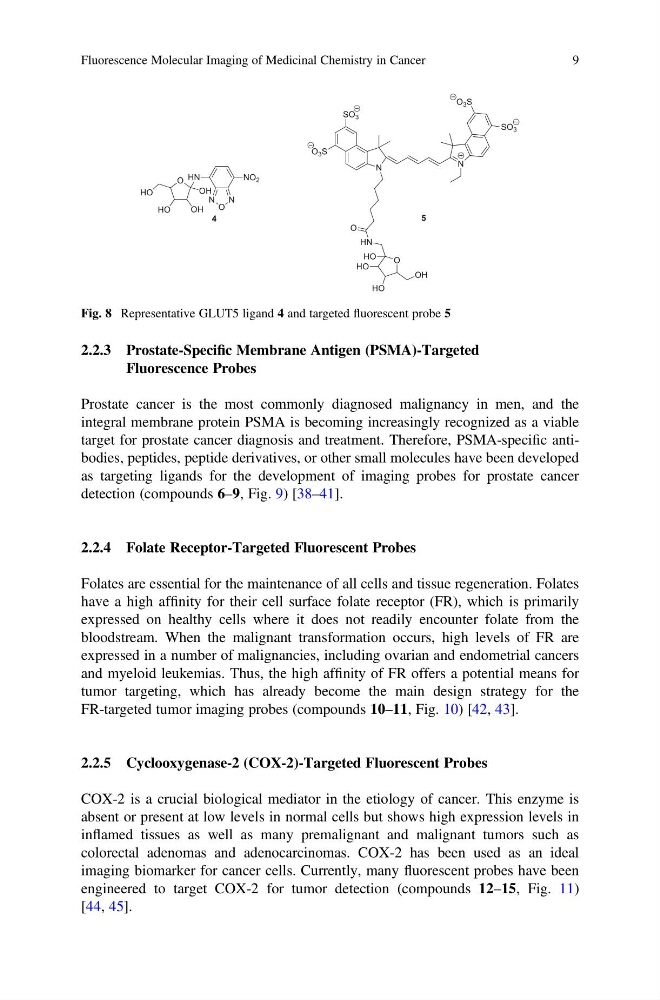
Fig. 8 Representative GLUT5 ligand 4 and targeted fluorescent probe 5
Fluorescence Molecular Imaging of Medicinal Chemistry in Cancer
9
Fluorescence Probes
Prostate cancer is the most commonly diagnosed malignancy in men, and the
integral membrane protein PSMA is becoming increasingly recognized as a viable
target for prostate cancer diagnosis and treatment. Therefore, PSMA-specific antibodies, peptides, peptide derivatives, or other small molecules have been developed
as targeting ligands for the development of imaging probes for prostate cancer
detection (compounds 6–9, Fig. 9) [38–41].
2.2.4 Folate Receptor-Targeted Fluorescent Probes
Folates are essential for the maintenance of all cells and tissue regeneration. Folates
have a high affinity for their cell surface folate receptor (FR), which is primarily
expressed on healthy cells where it does not readily encounter folate from the
bloodstream. When the malignant transformation occurs, high levels of FR are
expressed in a number of malignancies, including ovarian and endometrial cancers
and myeloid leukemias. Thus, the high affinity of FR offers a potential means for
tumor targeting, which has already become the main design strategy for the
FR-targeted tumor imaging probes (compounds 10–11, Fig. 10) [42, 43].
2.2.5 Cyclooxygenase-2 (COX-2)-Targeted Fluorescent Probes
COX-2 is a crucial biological mediator in the etiology of cancer. This enzyme is
absent or present at low levels in normal cells but shows high expression levels in
inflamed tissues as well as many premalignant and malignant tumors such as
colorectal adenomas and adenocarcinomas. COX-2 has been used as an ideal
imaging biomarker for cancer cells. Currently, many fluorescent probes have been
engineered to target COX-2 for tumor detection (compounds 12–15, Fig. 11)
[44, 45].
Fig. 8 Representative GLUT5 ligand 4 and targeted fluorescent probe 5
Fluorescence Molecular Imaging of Medicinal Chemistry in Cancer
9