

still encouraging enormous attention to discover further extraordinary potential with
high efficiency for the removal of dyes.
Summary In this book chapter we explored the synthesis of carbon dots by utilizing green
biomass sources such as fruits, vegetables and kitchen waste. As green approach for the synthesis
of C-dots has received greater attention because it reduces both costs, time and results in high yield
formation of environment-friendly material. The biomass derived C-dots were found to be highly
biocompatible and non-toxic in nature. The adsorption properties of developed C-dots further
investigated out in dye removal. The large surface area, high chemical stability and superior
catalytic activities made the nanomaterials as potential candidate for the removal of dyes. The
correlation between the morphology and size of nanomaterials has also been discussed with
reference to their dye removal efficiency.
References
Abouzeid RE, Khiari R, El-Wakil N, Dufresne A (2019) Current state and new trends in the use of
cellulose nanomaterials for wastewater treatment. Biomacromolecules 20:573–597
Akbari A, Sabouri Z, Hosseini HA, Hashemzadeh A, Khatami M, Darroudi M (2020) Effect of
nickel oxide nanoparticles as a photocatalyst in dyes degradation and evaluation of effective
parameters in their removal from aqueous environments. Inorg Chem Comm 115:107867
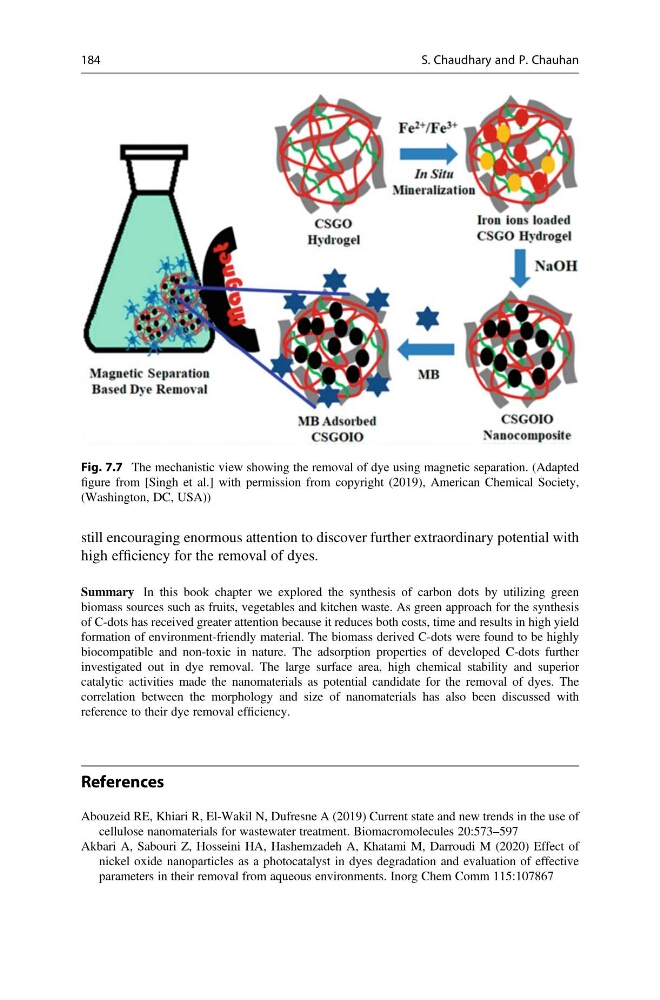
Fig. 7.7 The mechanistic view showing the removal of dye using magnetic separation. (Adapted
figure from [Singh et al.] with permission from copyright (2019), American Chemical Society,
(Washington, DC, USA))
184
S. Chaudhary and P. Chauhan
high efficiency for the removal of dyes.
Summary In this book chapter we explored the synthesis of carbon dots by utilizing green
biomass sources such as fruits, vegetables and kitchen waste. As green approach for the synthesis
of C-dots has received greater attention because it reduces both costs, time and results in high yield
formation of environment-friendly material. The biomass derived C-dots were found to be highly
biocompatible and non-toxic in nature. The adsorption properties of developed C-dots further
investigated out in dye removal. The large surface area, high chemical stability and superior
catalytic activities made the nanomaterials as potential candidate for the removal of dyes. The
correlation between the morphology and size of nanomaterials has also been discussed with
reference to their dye removal efficiency.
References
Abouzeid RE, Khiari R, El-Wakil N, Dufresne A (2019) Current state and new trends in the use of
cellulose nanomaterials for wastewater treatment. Biomacromolecules 20:573–597
Akbari A, Sabouri Z, Hosseini HA, Hashemzadeh A, Khatami M, Darroudi M (2020) Effect of
nickel oxide nanoparticles as a photocatalyst in dyes degradation and evaluation of effective
parameters in their removal from aqueous environments. Inorg Chem Comm 115:107867
Fig. 7.7 The mechanistic view showing the removal of dye using magnetic separation. (Adapted
figure from [Singh et al.] with permission from copyright (2019), American Chemical Society,
(Washington, DC, USA))
184
S. Chaudhary and P. Chauhan