

processing of waste water. Sometimes it becomes highly difficult to select the
suitable approach for the treatment of dyes. It has also been observed that degradation of dyes has produced toxic side products which are highly lethal towards the
living beings (Zhou et al. 2019; Islam et al. 2019). The carcinogenic nature of
intermediate products has caused the additional burden over the processing of dye
waste. In addition, separate analytical methods have been employed for the testing of
intermediate side products for their proper disposal. As a result, the over cost of
the methods has tremendously shoot up and put extra burden on the treatment. The
available methods for dye decolouration have possessed several loopholes. The
methods are not consistent and economically not friendly on large scale treatment
of dye effluents. Therefore, there is an urgent requirement for the methodologies
which are economically viable without producing any kind of additional toxins.
7.5
Emerging Potential of Nano-Based Techniques for Dye
Removal
Out of different types of available methods, the application of nano-based materials
has attained significant position in waste water treatment. Till date, the environmental role of nanomaterials is categorized into three main streams:
• Fabrication of sustainable materials via economically viable methods.
• Treatment of waste resources polluted with lethal toxins.
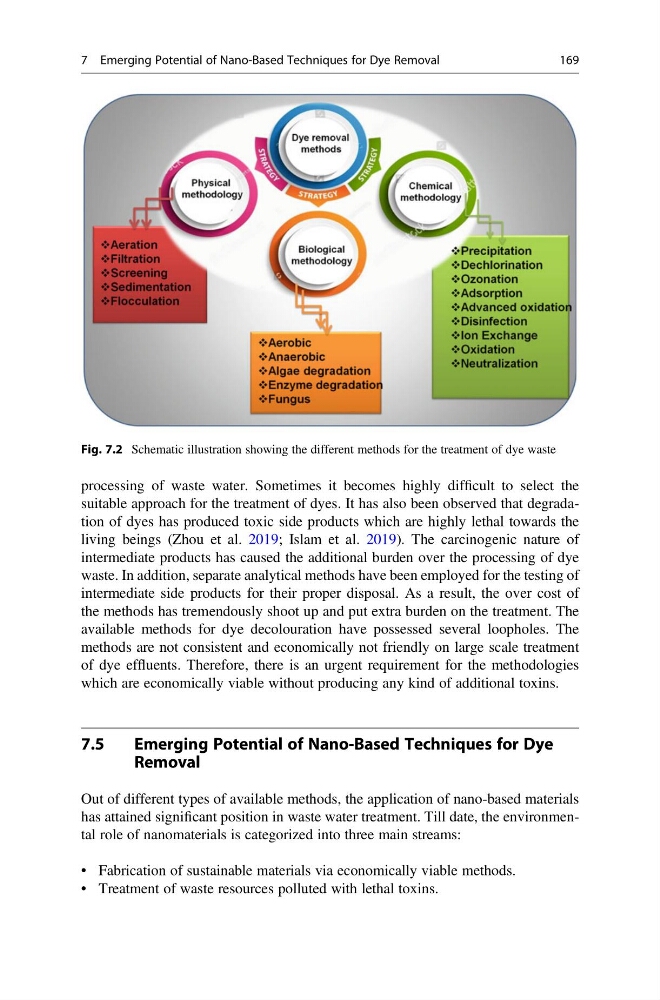
Fig. 7.2 Schematic illustration showing the different methods for the treatment of dye waste
7 Emerging Potential of Nano-Based Techniques for Dye Removal
169
suitable approach for the treatment of dyes. It has also been observed that degradation of dyes has produced toxic side products which are highly lethal towards the
living beings (Zhou et al. 2019; Islam et al. 2019). The carcinogenic nature of
intermediate products has caused the additional burden over the processing of dye
waste. In addition, separate analytical methods have been employed for the testing of
intermediate side products for their proper disposal. As a result, the over cost of
the methods has tremendously shoot up and put extra burden on the treatment. The
available methods for dye decolouration have possessed several loopholes. The
methods are not consistent and economically not friendly on large scale treatment
of dye effluents. Therefore, there is an urgent requirement for the methodologies
which are economically viable without producing any kind of additional toxins.
7.5
Emerging Potential of Nano-Based Techniques for Dye
Removal
Out of different types of available methods, the application of nano-based materials
has attained significant position in waste water treatment. Till date, the environmental role of nanomaterials is categorized into three main streams:
• Fabrication of sustainable materials via economically viable methods.
• Treatment of waste resources polluted with lethal toxins.
Fig. 7.2 Schematic illustration showing the different methods for the treatment of dye waste
7 Emerging Potential of Nano-Based Techniques for Dye Removal
169