

chromophoric azo groups present in dye molecules have further produced the lethal
aromatic amines in water resources and possessed harmful impact on the aquatic
species (Vikrant et al. 2018; Natrajan et al. 2018; Sharma et al. 2019a). The
indefensible misuse and unmanageable contamination of water resources via dyes
have brought high consideration among the scientist to bring out economically
viable solution for the treatment of waste water resources.
7.2
Lethal Impact of Commercially Employed Dyes
Various types of problems are being faced due to the unmanageable discharge of
dyes in water resources. The waste water generated from the textile industries is one
of the major contributors for the water pollution. The non-biodegradable by-products
of commercially used dyes are highly noxious to the aquatic beings (Aoudj et al.
2010). Dyes are producing carcinogenic reductive cleavage by-products such as
benzidines or amines which are highly toxic towards living beings. These effluents
discharge in water resources are considered as one of the major contributors of skin
problem in human beings (Fig. 7.1). The uncontrolled release of these harmful dyes
in water bodies has possessed serious threat to the BOD and COD levels. The
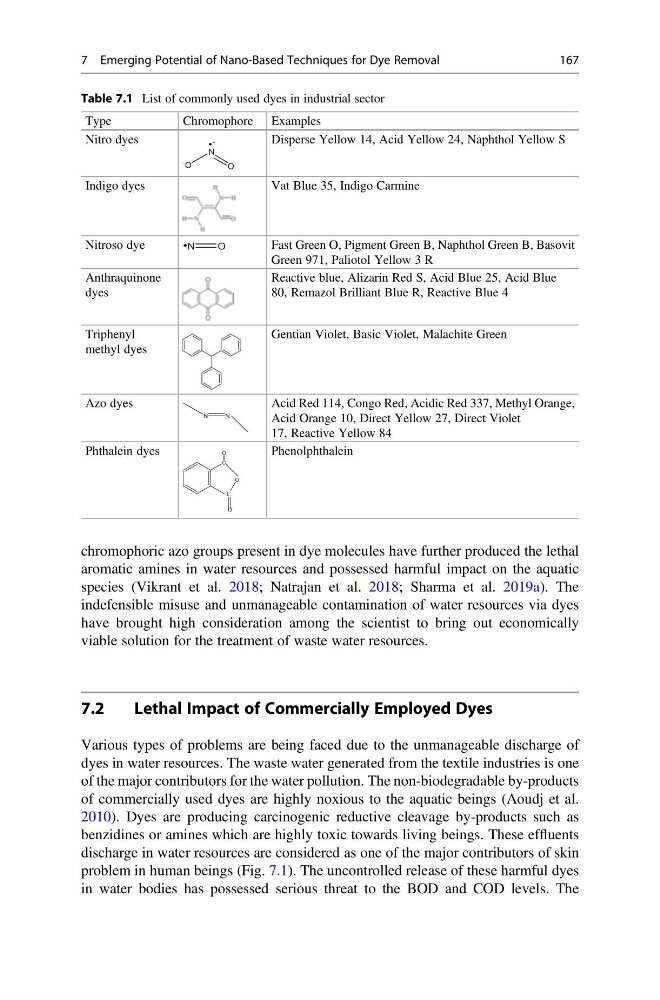
Table 7.1 List of commonly used dyes in industrial sector
Type
Chromophore Examples
Nitro dyes
•
+
N
O
- O
Disperse Yellow 14, Acid Yellow 24, Naphthol Yellow S
Indigo dyes
Vat Blue 35, Indigo Carmine
Nitroso dye
•N
O
Fast Green O, Pigment Green B, Naphthol Green B, Basovit
Green 971, Paliotol Yellow 3 R
Anthraquinone
dyes
Reactive blue, Alizarin Red S, Acid Blue 25, Acid Blue
80, Remazol Brilliant Blue R, Reactive Blue 4
Triphenyl
methyl dyes
Gentian Violet, Basic Violet, Malachite Green
Azo dyes
N
N
Acid Red 114, Congo Red, Acidic Red 337, Methyl Orange,
Acid Orange 10, Direct Yellow 27, Direct Violet
17, Reactive Yellow 84
Phthalein dyes
C
C
O
O
O
Phenolphthalein
7 Emerging Potential of Nano-Based Techniques for Dye Removal
167
aromatic amines in water resources and possessed harmful impact on the aquatic
species (Vikrant et al. 2018; Natrajan et al. 2018; Sharma et al. 2019a). The
indefensible misuse and unmanageable contamination of water resources via dyes
have brought high consideration among the scientist to bring out economically
viable solution for the treatment of waste water resources.
7.2
Lethal Impact of Commercially Employed Dyes
Various types of problems are being faced due to the unmanageable discharge of
dyes in water resources. The waste water generated from the textile industries is one
of the major contributors for the water pollution. The non-biodegradable by-products
of commercially used dyes are highly noxious to the aquatic beings (Aoudj et al.
2010). Dyes are producing carcinogenic reductive cleavage by-products such as
benzidines or amines which are highly toxic towards living beings. These effluents
discharge in water resources are considered as one of the major contributors of skin
problem in human beings (Fig. 7.1). The uncontrolled release of these harmful dyes
in water bodies has possessed serious threat to the BOD and COD levels. The
Table 7.1 List of commonly used dyes in industrial sector
Type
Chromophore Examples
Nitro dyes
•
+
N
O
- O
Disperse Yellow 14, Acid Yellow 24, Naphthol Yellow S
Indigo dyes
Vat Blue 35, Indigo Carmine
Nitroso dye
•N
O
Fast Green O, Pigment Green B, Naphthol Green B, Basovit
Green 971, Paliotol Yellow 3 R
Anthraquinone
dyes
Reactive blue, Alizarin Red S, Acid Blue 25, Acid Blue
80, Remazol Brilliant Blue R, Reactive Blue 4
Triphenyl
methyl dyes
Gentian Violet, Basic Violet, Malachite Green
Azo dyes
N
N
Acid Red 114, Congo Red, Acidic Red 337, Methyl Orange,
Acid Orange 10, Direct Yellow 27, Direct Violet
17, Reactive Yellow 84
Phthalein dyes
C
C
O
O
O
Phenolphthalein
7 Emerging Potential of Nano-Based Techniques for Dye Removal
167