

6.3.2 Carbon Nanotubes
Carbon nanotubes have been considered as remarkable innovative discovery in the
field of science. They are less than 100 nm in diameter, carbon bonded, cylindrical in
shape and can be as thin as 1 or 2 nm. They can be physically and chemically
manipulated. It has been reported that carbon nanotubes exhibit unique morphological structure and physical properties such as thermal, electrical, and mechanical.
Because of such exceptional properties, they served as a useful tool in remediation of
metal pollution (Attar and Ranveer 2015). There are two types of nanotubes:
(1) single walled carbon nanotubes (SWCNTs) and (2) multiple walled carbon
nanotubes (MWCNTs). SWCNTs have three different designs: zigzag, armchair,
and chiral, these structural formations depend upon how graphene has been wrapped
to the cylinder. In case of MWCNTs outer nanotube has greater diameter than the
inner nanotube. They have high tensile strength than single walled carbon nanotube
(Sheng et al. 2010). Carbon nanotubes have exceptional adsorptive properties
towards heavy metal removal (lead, chromium, and manganese heptoxide shown
in Table 6.2) as they have large specific surface area, high adsorption capacity, and
fast adsorption kinetics (Ali et al. 2019). The adsorption takes place over the
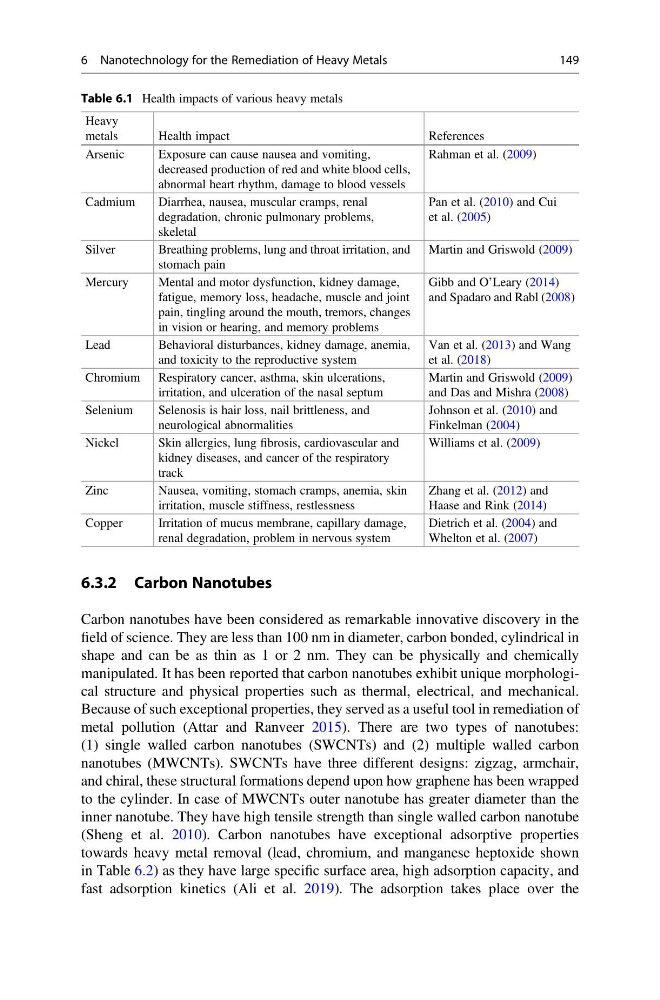
Table 6.1 Health impacts of various heavy metals
Heavy
metals
Health impact
References
Arsenic
Exposure can cause nausea and vomiting,
decreased production of red and white blood cells,
abnormal heart rhythm, damage to blood vessels
Rahman et al. (2009)
Cadmium
Diarrhea, nausea, muscular cramps, renal
degradation, chronic pulmonary problems,
skeletal
Pan et al. (2010) and Cui
et al. (2005)
Silver
Breathing problems, lung and throat irritation, and
stomach pain
Martin and Griswold (2009)
Mercury
Mental and motor dysfunction, kidney damage,
fatigue, memory loss, headache, muscle and joint
pain, tingling around the mouth, tremors, changes
in vision or hearing, and memory problems
Gibb and O’Leary (2014)
and Spadaro and Rabl (2008)
Lead
Behavioral disturbances, kidney damage, anemia,
and toxicity to the reproductive system
Van et al. (2013) and Wang
et al. (2018)
Chromium Respiratory cancer, asthma, skin ulcerations,
irritation, and ulceration of the nasal septum
Martin and Griswold (2009)
and Das and Mishra (2008)
Selenium
Selenosis is hair loss, nail brittleness, and
neurological abnormalities
Johnson et al. (2010) and
Finkelman (2004)
Nickel
Skin allergies, lung fibrosis, cardiovascular and
kidney diseases, and cancer of the respiratory
track
Williams et al. (2009)
Zinc
Nausea, vomiting, stomach cramps, anemia, skin
irritation, muscle stiffness, restlessness
Zhang et al. (2012) and
Haase and Rink (2014)
Copper
Irritation of mucus membrane, capillary damage,
renal degradation, problem in nervous system
Dietrich et al. (2004) and
Whelton et al. (2007)
6 Nanotechnology for the Remediation of Heavy Metals
149
Carbon nanotubes have been considered as remarkable innovative discovery in the
field of science. They are less than 100 nm in diameter, carbon bonded, cylindrical in
shape and can be as thin as 1 or 2 nm. They can be physically and chemically
manipulated. It has been reported that carbon nanotubes exhibit unique morphological structure and physical properties such as thermal, electrical, and mechanical.
Because of such exceptional properties, they served as a useful tool in remediation of
metal pollution (Attar and Ranveer 2015). There are two types of nanotubes:
(1) single walled carbon nanotubes (SWCNTs) and (2) multiple walled carbon
nanotubes (MWCNTs). SWCNTs have three different designs: zigzag, armchair,
and chiral, these structural formations depend upon how graphene has been wrapped
to the cylinder. In case of MWCNTs outer nanotube has greater diameter than the
inner nanotube. They have high tensile strength than single walled carbon nanotube
(Sheng et al. 2010). Carbon nanotubes have exceptional adsorptive properties
towards heavy metal removal (lead, chromium, and manganese heptoxide shown
in Table 6.2) as they have large specific surface area, high adsorption capacity, and
fast adsorption kinetics (Ali et al. 2019). The adsorption takes place over the
Table 6.1 Health impacts of various heavy metals
Heavy
metals
Health impact
References
Arsenic
Exposure can cause nausea and vomiting,
decreased production of red and white blood cells,
abnormal heart rhythm, damage to blood vessels
Rahman et al. (2009)
Cadmium
Diarrhea, nausea, muscular cramps, renal
degradation, chronic pulmonary problems,
skeletal
Pan et al. (2010) and Cui
et al. (2005)
Silver
Breathing problems, lung and throat irritation, and
stomach pain
Martin and Griswold (2009)
Mercury
Mental and motor dysfunction, kidney damage,
fatigue, memory loss, headache, muscle and joint
pain, tingling around the mouth, tremors, changes
in vision or hearing, and memory problems
Gibb and O’Leary (2014)
and Spadaro and Rabl (2008)
Lead
Behavioral disturbances, kidney damage, anemia,
and toxicity to the reproductive system
Van et al. (2013) and Wang
et al. (2018)
Chromium Respiratory cancer, asthma, skin ulcerations,
irritation, and ulceration of the nasal septum
Martin and Griswold (2009)
and Das and Mishra (2008)
Selenium
Selenosis is hair loss, nail brittleness, and
neurological abnormalities
Johnson et al. (2010) and
Finkelman (2004)
Nickel
Skin allergies, lung fibrosis, cardiovascular and
kidney diseases, and cancer of the respiratory
track
Williams et al. (2009)
Zinc
Nausea, vomiting, stomach cramps, anemia, skin
irritation, muscle stiffness, restlessness
Zhang et al. (2012) and
Haase and Rink (2014)
Copper
Irritation of mucus membrane, capillary damage,
renal degradation, problem in nervous system
Dietrich et al. (2004) and
Whelton et al. (2007)
6 Nanotechnology for the Remediation of Heavy Metals
149