

6.3.1 Nano Particles Employed for the Remediation of Heavy
Metals
Carbon-based nanomaterials are known for their physical and chemical properties
like high tensile strength, exceptional resistance to corrosion, remarkable thermal,
electrical conductivity, stability, and versatility in removing organic and inorganic
pollutants have made carbon-based nanomaterial an important alternative technology for the treatment of heavy metal from the wastewater (Astefanei et al. 2015). The
two major classes for carbon-based nanomaterials are carbon nanotubes and
graphene-based nanomaterials:
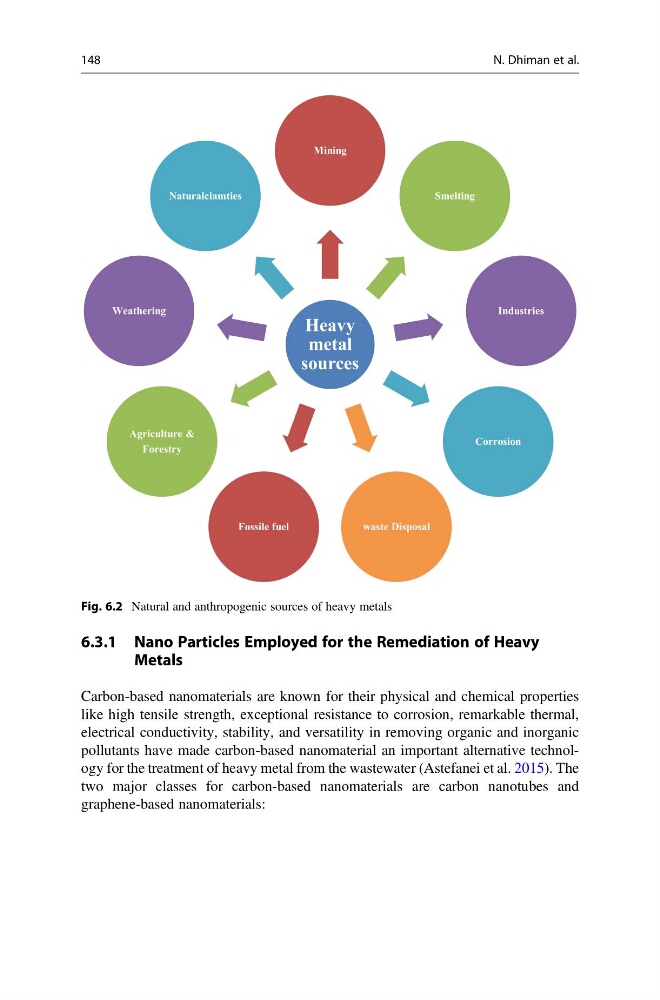
Heavy
metal
sources
Mining
Smelting
Industries
Corrosion
waste Disposal
Fossile fuel
Agriculture &
Forestry
Weathering
Naturalclamties
Fig. 6.2 Natural and anthropogenic sources of heavy metals
148
N. Dhiman et al.
Metals
Carbon-based nanomaterials are known for their physical and chemical properties
like high tensile strength, exceptional resistance to corrosion, remarkable thermal,
electrical conductivity, stability, and versatility in removing organic and inorganic
pollutants have made carbon-based nanomaterial an important alternative technology for the treatment of heavy metal from the wastewater (Astefanei et al. 2015). The
two major classes for carbon-based nanomaterials are carbon nanotubes and
graphene-based nanomaterials:
Heavy
metal
sources
Mining
Smelting
Industries
Corrosion
waste Disposal
Fossile fuel
Agriculture &
Forestry
Weathering
Naturalclamties
Fig. 6.2 Natural and anthropogenic sources of heavy metals
148
N. Dhiman et al.