

which can be controlled by surface engineering (Li et al. 2013; Stopel et al. 2013).
QD-FRET sensors have been used for detection of various analytes like nucleic
acids, and enzymatic activities. QD-FRET-based immunoassays have been used for
sensing organic compounds including some organic pollutants. For instance, Zhang
et al. reported the FRET-induced fluorescence quenching of CdTe QDs by
dithiazone (DZ), which is a bidentate ligand. This sensor was used for detection of
organophosphorothionate pesticides with chlorpyrifos as model pesticide. The
detection was based on the recovery of luminescence of CdTe upon the replacement
of DZ in the presence of the pesticide. Successful detection of
organophosphorothionates was done in apple samples (Zhang et al. 2010). Guo
et al. showed the QD-FRET-based sensing of broad-spectrum herbicide, glyphosate
using cysteamine-stabilized gold nanoparticles (CS-AuNPs) with positive charge as
acceptor, and negatively charged CdTe QDs capped with TGA as energy donor (Guo
et al. 2014). QD-FRET-based nanosensors have also been used for prominent
detection of heavy metal ions. For instance, Li et al. designed nanosensors for
detection of mercury Hg(II). They used butyl rhodamine B dye and electronegative
TGA-capped CDTe (cadmium telluride) QDs. For better FRET efficiency, the two
fluorophores were brought closer by cetyltrimethylammoniumbromide addition in
Tris-HCl buffer. The presence of Hg(II) quenched the photoluminescence of QDs by
displacement of Cd(II) ions from the surface of TGA-CdTe QDs due to higher
affinity of Hg(II) towards Te. With the decrease in fluorescence of TGA-CdTe QDs,
there was a corresponding increase in the rhodamine B dye’s fluorescence (Li et al.
2008). Many harmful microorganisms and their toxins have also been detected by
QDs-FRET-based nanosensors. Kattke et al. reported the detection of Aspergillus
amstelodami using QDs-FRET-based immunoassay. They designed the nanosensor
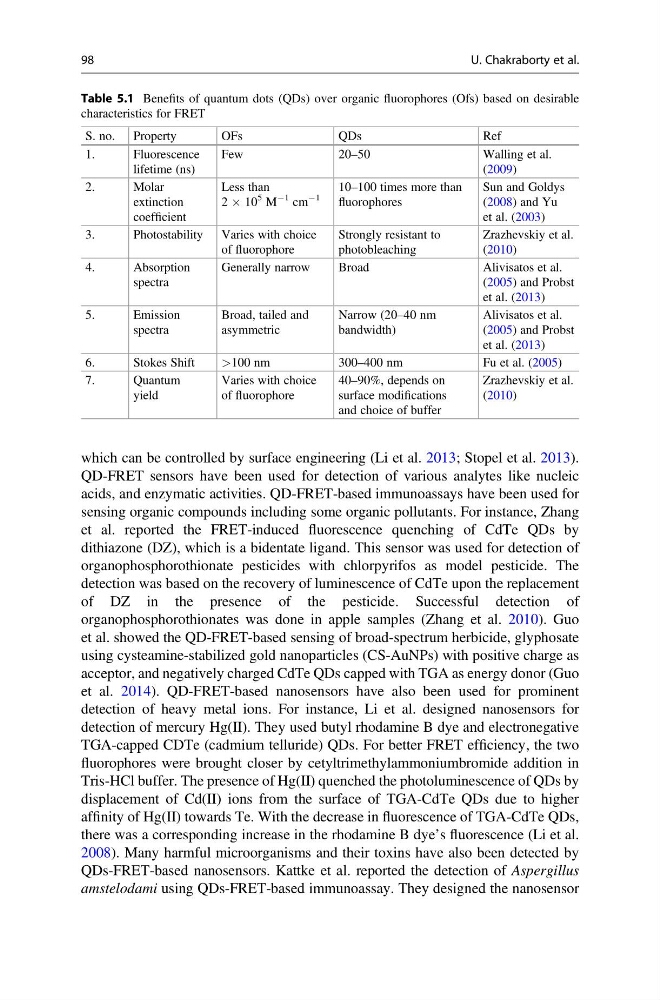
Table 5.1 Benefits of quantum dots (QDs) over organic fluorophores (Ofs) based on desirable
characteristics for FRET
S. no. Property
OFs
QDs
Ref
1.
Fluorescence
lifetime (ns)
Few
20–50
Walling et al.
(2009)
2.
Molar
extinction
coefficient
Less than
2 Â 10
5 M
À1 cm
À1
10–100 times more than
fluorophores
Sun and Goldys
(2008) and Yu
et al. (2003)
3.
Photostability Varies with choice
of fluorophore
Strongly resistant to
photobleaching
Zrazhevskiy et al.
(2010)
4.
Absorption
spectra
Generally narrow
Broad
Alivisatos et al.
(2005) and Probst
et al. (2013)
5.
Emission
spectra
Broad, tailed and
asymmetric
Narrow (20–40 nm
bandwidth)
Alivisatos et al.
(2005) and Probst
et al. (2013)
6.
Stokes Shift
>100 nm
300–400 nm
Fu et al. (2005)
7.
Quantum
yield
Varies with choice
of fluorophore
40–90%, depends on
surface modifications
and choice of buffer
Zrazhevskiy et al.
(2010)
98
U. Chakraborty et al.
QD-FRET sensors have been used for detection of various analytes like nucleic
acids, and enzymatic activities. QD-FRET-based immunoassays have been used for
sensing organic compounds including some organic pollutants. For instance, Zhang
et al. reported the FRET-induced fluorescence quenching of CdTe QDs by
dithiazone (DZ), which is a bidentate ligand. This sensor was used for detection of
organophosphorothionate pesticides with chlorpyrifos as model pesticide. The
detection was based on the recovery of luminescence of CdTe upon the replacement
of DZ in the presence of the pesticide. Successful detection of
organophosphorothionates was done in apple samples (Zhang et al. 2010). Guo
et al. showed the QD-FRET-based sensing of broad-spectrum herbicide, glyphosate
using cysteamine-stabilized gold nanoparticles (CS-AuNPs) with positive charge as
acceptor, and negatively charged CdTe QDs capped with TGA as energy donor (Guo
et al. 2014). QD-FRET-based nanosensors have also been used for prominent
detection of heavy metal ions. For instance, Li et al. designed nanosensors for
detection of mercury Hg(II). They used butyl rhodamine B dye and electronegative
TGA-capped CDTe (cadmium telluride) QDs. For better FRET efficiency, the two
fluorophores were brought closer by cetyltrimethylammoniumbromide addition in
Tris-HCl buffer. The presence of Hg(II) quenched the photoluminescence of QDs by
displacement of Cd(II) ions from the surface of TGA-CdTe QDs due to higher
affinity of Hg(II) towards Te. With the decrease in fluorescence of TGA-CdTe QDs,
there was a corresponding increase in the rhodamine B dye’s fluorescence (Li et al.
2008). Many harmful microorganisms and their toxins have also been detected by
QDs-FRET-based nanosensors. Kattke et al. reported the detection of Aspergillus
amstelodami using QDs-FRET-based immunoassay. They designed the nanosensor
Table 5.1 Benefits of quantum dots (QDs) over organic fluorophores (Ofs) based on desirable
characteristics for FRET
S. no. Property
OFs
QDs
Ref
1.
Fluorescence
lifetime (ns)
Few
20–50
Walling et al.
(2009)
2.
Molar
extinction
coefficient
Less than
2 Â 10
5 M
À1 cm
À1
10–100 times more than
fluorophores
Sun and Goldys
(2008) and Yu
et al. (2003)
3.
Photostability Varies with choice
of fluorophore
Strongly resistant to
photobleaching
Zrazhevskiy et al.
(2010)
4.
Absorption
spectra
Generally narrow
Broad
Alivisatos et al.
(2005) and Probst
et al. (2013)
5.
Emission
spectra
Broad, tailed and
asymmetric
Narrow (20–40 nm
bandwidth)
Alivisatos et al.
(2005) and Probst
et al. (2013)
6.
Stokes Shift
>100 nm
300–400 nm
Fu et al. (2005)
7.
Quantum
yield
Varies with choice
of fluorophore
40–90%, depends on
surface modifications
and choice of buffer
Zrazhevskiy et al.
(2010)
98
U. Chakraborty et al.