

3 Continuous Catalytic Processes with Supported Ionic Liquid …
59
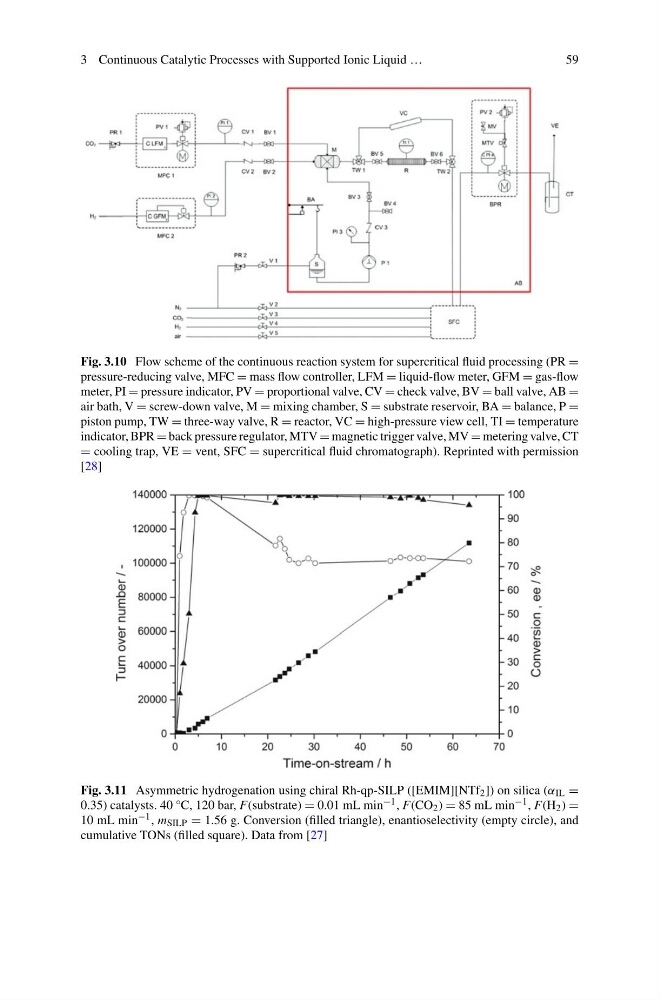
Fig. 3.10 Flow scheme of the continuous reaction system for supercritical fluid processing (PR =
pressure-reducing valve, MFC = mass flow controller, LFM = liquid-flow meter, GFM = gas-flow
meter, PI = pressure indicator, PV = proportional valve, CV = check valve, BV = ball valve, AB =
air bath, V = screw-down valve, M = mixing chamber, S = substrate reservoir, BA = balance, P =
piston pump, TW = three-way valve, R = reactor, VC = high-pressure view cell, TI = temperature
indicator, BPR = back pressure regulator, MTV = magnetic trigger valve, MV = metering valve, CT
= cooling trap, VE = vent, SFC = supercritical fluid chromatograph). Reprinted with permission
[28]
Fig. 3.11 Asymmetric hydrogenation using chiral Rh-qp-SILP ([EMIM][NTf 2 ]) on silica (α IL =
0.35) catalysts. 40 °C, 120 bar, F(substrate) = 0.01 mL min −1 , F(CO 2 ) = 85 mL min −1 , F(H 2 ) =
10 mL min −1 , m SILP = 1.56 g. Conversion (filled triangle), enantioselectivity (empty circle), and
cumulative TONs (filled square). Data from [27]
59
Fig. 3.10 Flow scheme of the continuous reaction system for supercritical fluid processing (PR =
pressure-reducing valve, MFC = mass flow controller, LFM = liquid-flow meter, GFM = gas-flow
meter, PI = pressure indicator, PV = proportional valve, CV = check valve, BV = ball valve, AB =
air bath, V = screw-down valve, M = mixing chamber, S = substrate reservoir, BA = balance, P =
piston pump, TW = three-way valve, R = reactor, VC = high-pressure view cell, TI = temperature
indicator, BPR = back pressure regulator, MTV = magnetic trigger valve, MV = metering valve, CT
= cooling trap, VE = vent, SFC = supercritical fluid chromatograph). Reprinted with permission
[28]
Fig. 3.11 Asymmetric hydrogenation using chiral Rh-qp-SILP ([EMIM][NTf 2 ]) on silica (α IL =
0.35) catalysts. 40 °C, 120 bar, F(substrate) = 0.01 mL min −1 , F(CO 2 ) = 85 mL min −1 , F(H 2 ) =
10 mL min −1 , m SILP = 1.56 g. Conversion (filled triangle), enantioselectivity (empty circle), and
cumulative TONs (filled square). Data from [27]