

2 ISOALKY ™ Technology: Next-Generation Alkylate Gasoline …
37
The overall ISOALKY Technology can be roughly divided into five sections:
• Feed treating—conventional technology
• Alkylation reactor and effluent separation—unique
• Ionic liquid catalyst regeneration—unique
• Product distillation and recycling—conventional technology
• Product finishing—unique.
For the front feed-treating section and the back-end of product distillation section,
the ISOALKY Technology uses conventional technologies that are commonly used
in current refineries. Alkylation reactor, reactor effluent product separation, ionic
liquid catalyst regeneration, and alkylate product treating are unique innovations
specific for the ISOALKY Technology. Performance of these new components were
extensively developed and tested into optimized sub-processes in order to minimize
the scale-up technical risks.
2.4 ISOALKY Ionic Liquid Catalyst
The ISOALKY Technology uses a state-of-the-art chloroaluminate-based ionic liquid
catalyst that is more environmentally sustainable than conventional mineral acid
catalysts. A trace amount of anhydrous HCl co-catalyst is added in situ by addition of
an organic chloride. The combined ISOALKY Catalyst system can be described as an
anhydrous AlCl 3 -based Lewis acid catalyst promoted with anhydrous HCl Brønsted
acid. Together, the catalyst system exhibits the characteristics of a superacid (see
Sect. 2.6).
The ionic liquid alkylation catalyst can be characterized by the general formula
Q
+ A
− , wherein Q
+ is an ammonium or phosphonium cation and A
− is a negatively
charged ion, such as AlCl 4
− , Al 2 Cl 7
− , GaCl 4
− , Ga 2 Cl 7
− , or Ga 3 Cl 10
− . Various ionic
liquids, selected from the group consisting of hydrocarbyl-substituted pyridinium
chloroaluminate, hydrocarbyl-substituted imidazolium chloroaluminate, quaternary
amine chloroaluminate, trialkyl amine hydrogen chloride chloroaluminate, and alkyl
pyridine hydrochloride chloroaluminate, were evaluated [4]. Our study found that
phosphonium-containing ionic liquid catalysts [5] and gallium chloride-based ionic
liquids are also effective for the paraffin alkylation process.
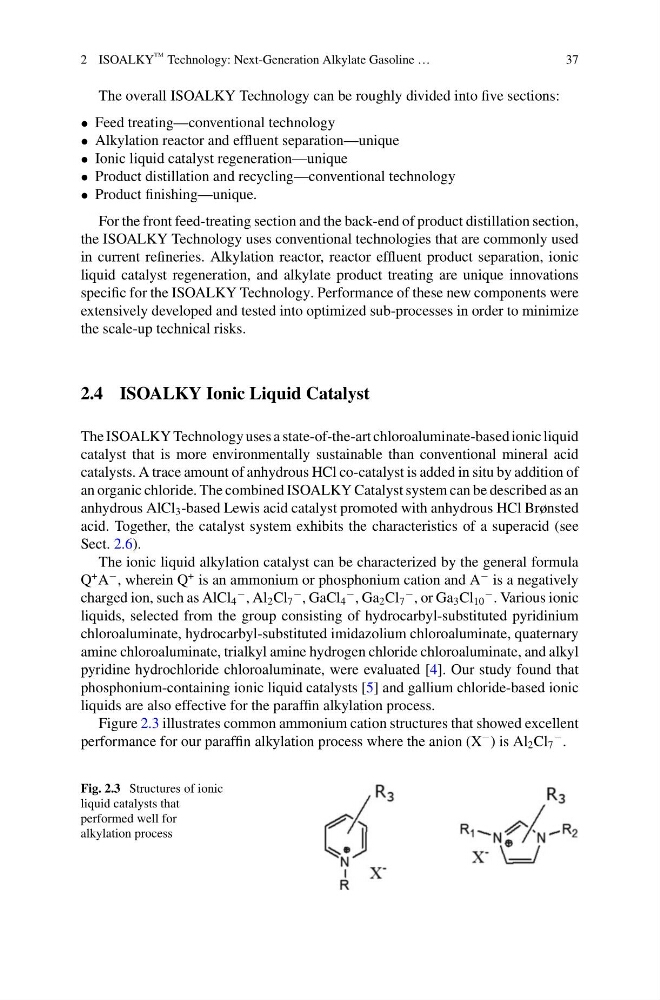
Figure 2.3 illustrates common ammonium cation structures that showed excellent
performance for our paraffin alkylation process where the anion (X
− ) is Al 2 Cl 7
− .
Fig. 2.3 Structures of ionic
liquid catalysts that
performed well for
alkylation process
37
The overall ISOALKY Technology can be roughly divided into five sections:
• Feed treating—conventional technology
• Alkylation reactor and effluent separation—unique
• Ionic liquid catalyst regeneration—unique
• Product distillation and recycling—conventional technology
• Product finishing—unique.
For the front feed-treating section and the back-end of product distillation section,
the ISOALKY Technology uses conventional technologies that are commonly used
in current refineries. Alkylation reactor, reactor effluent product separation, ionic
liquid catalyst regeneration, and alkylate product treating are unique innovations
specific for the ISOALKY Technology. Performance of these new components were
extensively developed and tested into optimized sub-processes in order to minimize
the scale-up technical risks.
2.4 ISOALKY Ionic Liquid Catalyst
The ISOALKY Technology uses a state-of-the-art chloroaluminate-based ionic liquid
catalyst that is more environmentally sustainable than conventional mineral acid
catalysts. A trace amount of anhydrous HCl co-catalyst is added in situ by addition of
an organic chloride. The combined ISOALKY Catalyst system can be described as an
anhydrous AlCl 3 -based Lewis acid catalyst promoted with anhydrous HCl Brønsted
acid. Together, the catalyst system exhibits the characteristics of a superacid (see
Sect. 2.6).
The ionic liquid alkylation catalyst can be characterized by the general formula
Q
+ A
− , wherein Q
+ is an ammonium or phosphonium cation and A
− is a negatively
charged ion, such as AlCl 4
− , Al 2 Cl 7
− , GaCl 4
− , Ga 2 Cl 7
− , or Ga 3 Cl 10
− . Various ionic
liquids, selected from the group consisting of hydrocarbyl-substituted pyridinium
chloroaluminate, hydrocarbyl-substituted imidazolium chloroaluminate, quaternary
amine chloroaluminate, trialkyl amine hydrogen chloride chloroaluminate, and alkyl
pyridine hydrochloride chloroaluminate, were evaluated [4]. Our study found that
phosphonium-containing ionic liquid catalysts [5] and gallium chloride-based ionic
liquids are also effective for the paraffin alkylation process.
Figure 2.3 illustrates common ammonium cation structures that showed excellent
performance for our paraffin alkylation process where the anion (X
− ) is Al 2 Cl 7
− .
Fig. 2.3 Structures of ionic
liquid catalysts that
performed well for
alkylation process