

102
A. R. Abouelela et al.
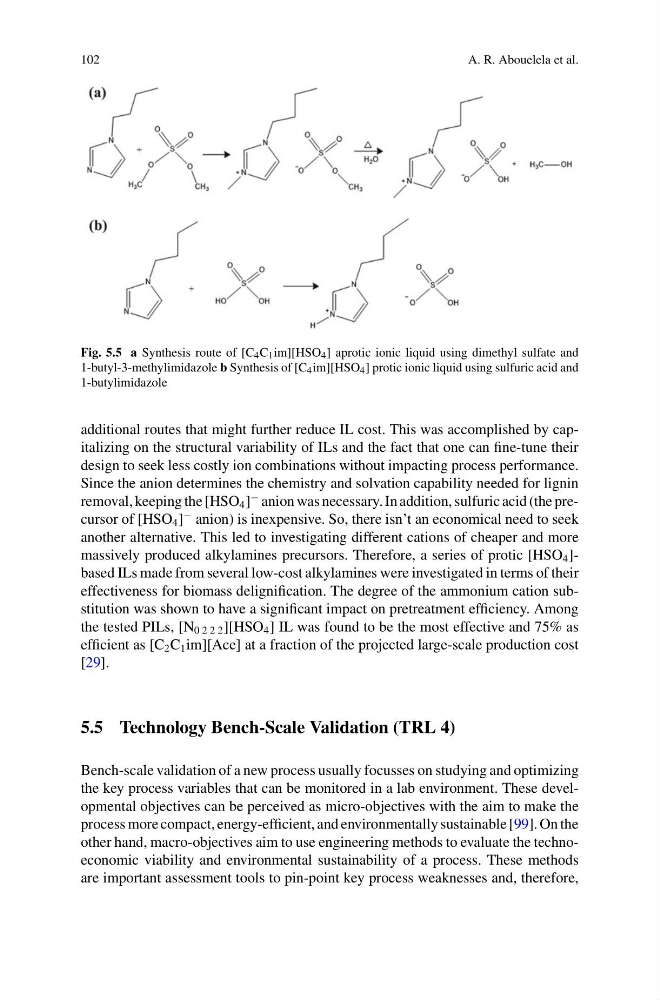
Fig. 5.5 a Synthesis route of [C 4 C 1 im][HSO 4 ] aprotic ionic liquid using dimethyl sulfate and
1-butyl-3-methylimidazole b Synthesis of [C 4 im][HSO 4 ] protic ionic liquid using sulfuric acid and
1-butylimidazole
additional routes that might further reduce IL cost. This was accomplished by capitalizing on the structural variability of ILs and the fact that one can fine-tune their
design to seek less costly ion combinations without impacting process performance.
Since the anion determines the chemistry and solvation capability needed for lignin
removal, keeping the [HSO 4 ]
− anion was necessary. In addition, sulfuric acid (the precursor of [HSO 4 ]
− anion) is inexpensive. So, there isn’t an economical need to seek
another alternative. This led to investigating different cations of cheaper and more
massively produced alkylamines precursors. Therefore, a series of protic [HSO 4 ]based ILs made from several low-cost alkylamines were investigated in terms of their
effectiveness for biomass delignification. The degree of the ammonium cation substitution was shown to have a significant impact on pretreatment efficiency. Among
the tested PILs, [N 0 2 2 2 ][HSO 4 ] IL was found to be the most effective and 75% as
efficient as [C 2 C 1 im][Ace] at a fraction of the projected large-scale production cost
[29].
5.5 Technology Bench-Scale Validation (TRL 4)
Bench-scale validation of a new process usually focusses on studying and optimizing
the key process variables that can be monitored in a lab environment. These developmental objectives can be perceived as micro-objectives with the aim to make the
process more compact, energy-efficient, and environmentally sustainable [99]. On the
other hand, macro-objectives aim to use engineering methods to evaluate the technoeconomic viability and environmental sustainability of a process. These methods
are important assessment tools to pin-point key process weaknesses and, therefore,
A. R. Abouelela et al.
Fig. 5.5 a Synthesis route of [C 4 C 1 im][HSO 4 ] aprotic ionic liquid using dimethyl sulfate and
1-butyl-3-methylimidazole b Synthesis of [C 4 im][HSO 4 ] protic ionic liquid using sulfuric acid and
1-butylimidazole
additional routes that might further reduce IL cost. This was accomplished by capitalizing on the structural variability of ILs and the fact that one can fine-tune their
design to seek less costly ion combinations without impacting process performance.
Since the anion determines the chemistry and solvation capability needed for lignin
removal, keeping the [HSO 4 ]
− anion was necessary. In addition, sulfuric acid (the precursor of [HSO 4 ]
− anion) is inexpensive. So, there isn’t an economical need to seek
another alternative. This led to investigating different cations of cheaper and more
massively produced alkylamines precursors. Therefore, a series of protic [HSO 4 ]based ILs made from several low-cost alkylamines were investigated in terms of their
effectiveness for biomass delignification. The degree of the ammonium cation substitution was shown to have a significant impact on pretreatment efficiency. Among
the tested PILs, [N 0 2 2 2 ][HSO 4 ] IL was found to be the most effective and 75% as
efficient as [C 2 C 1 im][Ace] at a fraction of the projected large-scale production cost
[29].
5.5 Technology Bench-Scale Validation (TRL 4)
Bench-scale validation of a new process usually focusses on studying and optimizing
the key process variables that can be monitored in a lab environment. These developmental objectives can be perceived as micro-objectives with the aim to make the
process more compact, energy-efficient, and environmentally sustainable [99]. On the
other hand, macro-objectives aim to use engineering methods to evaluate the technoeconomic viability and environmental sustainability of a process. These methods
are important assessment tools to pin-point key process weaknesses and, therefore,