

5 Commercial Aspects of Biomass Deconstruction with Ionic Liquids
101
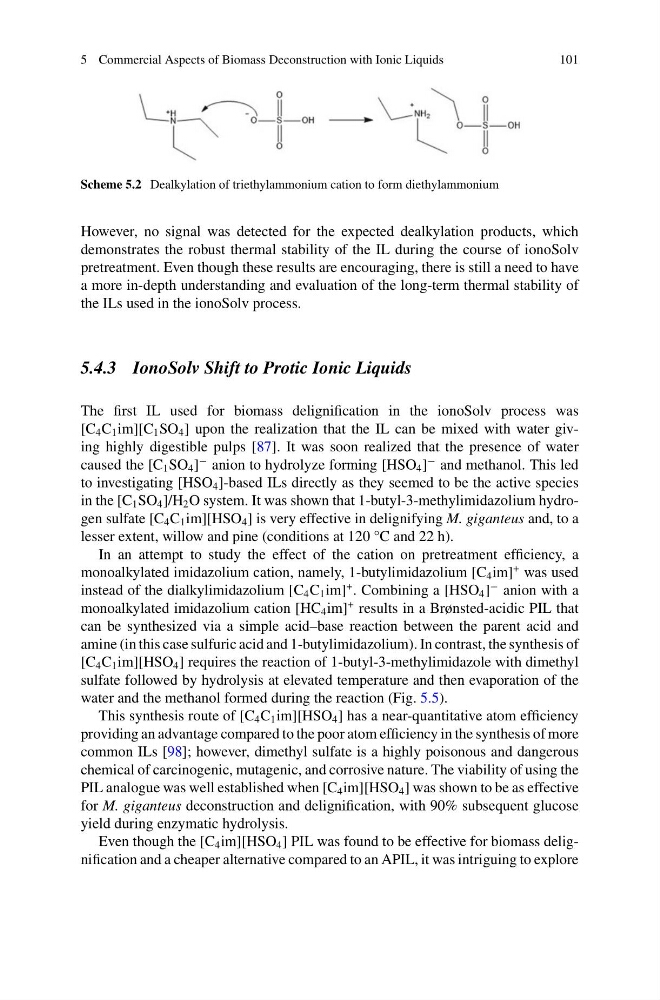
Scheme 5.2 Dealkylation of triethylammonium cation to form diethylammonium
However, no signal was detected for the expected dealkylation products, which
demonstrates the robust thermal stability of the IL during the course of ionoSolv
pretreatment. Even though these results are encouraging, there is still a need to have
a more in-depth understanding and evaluation of the long-term thermal stability of
the ILs used in the ionoSolv process.
5.4.3 IonoSolv Shift to Protic Ionic Liquids
The first IL used for biomass delignification in the ionoSolv process was
[C 4 C 1 im][C 1 SO 4 ] upon the realization that the IL can be mixed with water giving highly digestible pulps [87]. It was soon realized that the presence of water
caused the [C 1 SO 4 ]
− anion to hydrolyze forming [HSO 4 ]
− and methanol. This led
to investigating [HSO 4 ]-based ILs directly as they seemed to be the active species
in the [C 1 SO 4 ]/H 2 O system. It was shown that 1-butyl-3-methylimidazolium hydrogen sulfate [C 4 C 1 im][HSO 4 ] is very effective in delignifying M. giganteus and, to a
lesser extent, willow and pine (conditions at 120 °C and 22 h).
In an attempt to study the effect of the cation on pretreatment efficiency, a
monoalkylated imidazolium cation, namely, 1-butylimidazolium [C 4 im]
+ was used
instead of the dialkylimidazolium [C 4 C 1 im]
+ . Combining a [HSO 4 ]
− anion with a
monoalkylated imidazolium cation [HC 4 im]
+ results in a Brønsted-acidic PIL that
can be synthesized via a simple acid–base reaction between the parent acid and
amine (in this case sulfuric acid and 1-butylimidazolium). In contrast, the synthesis of
[C 4 C 1 im][HSO 4 ] requires the reaction of 1-butyl-3-methylimidazole with dimethyl
sulfate followed by hydrolysis at elevated temperature and then evaporation of the
water and the methanol formed during the reaction (Fig. 5.5).
This synthesis route of [C 4 C 1 im][HSO 4 ] has a near-quantitative atom efficiency
providing an advantage compared to the poor atom efficiency in the synthesis of more
common ILs [98]; however, dimethyl sulfate is a highly poisonous and dangerous
chemical of carcinogenic, mutagenic, and corrosive nature. The viability of using the
PIL analogue was well established when [C 4 im][HSO 4 ] was shown to be as effective
for M. giganteus deconstruction and delignification, with 90% subsequent glucose
yield during enzymatic hydrolysis.
Even though the [C 4 im][HSO 4 ] PIL was found to be effective for biomass delignification and a cheaper alternative compared to an APIL, it was intriguing to explore
101
Scheme 5.2 Dealkylation of triethylammonium cation to form diethylammonium
However, no signal was detected for the expected dealkylation products, which
demonstrates the robust thermal stability of the IL during the course of ionoSolv
pretreatment. Even though these results are encouraging, there is still a need to have
a more in-depth understanding and evaluation of the long-term thermal stability of
the ILs used in the ionoSolv process.
5.4.3 IonoSolv Shift to Protic Ionic Liquids
The first IL used for biomass delignification in the ionoSolv process was
[C 4 C 1 im][C 1 SO 4 ] upon the realization that the IL can be mixed with water giving highly digestible pulps [87]. It was soon realized that the presence of water
caused the [C 1 SO 4 ]
− anion to hydrolyze forming [HSO 4 ]
− and methanol. This led
to investigating [HSO 4 ]-based ILs directly as they seemed to be the active species
in the [C 1 SO 4 ]/H 2 O system. It was shown that 1-butyl-3-methylimidazolium hydrogen sulfate [C 4 C 1 im][HSO 4 ] is very effective in delignifying M. giganteus and, to a
lesser extent, willow and pine (conditions at 120 °C and 22 h).
In an attempt to study the effect of the cation on pretreatment efficiency, a
monoalkylated imidazolium cation, namely, 1-butylimidazolium [C 4 im]
+ was used
instead of the dialkylimidazolium [C 4 C 1 im]
+ . Combining a [HSO 4 ]
− anion with a
monoalkylated imidazolium cation [HC 4 im]
+ results in a Brønsted-acidic PIL that
can be synthesized via a simple acid–base reaction between the parent acid and
amine (in this case sulfuric acid and 1-butylimidazolium). In contrast, the synthesis of
[C 4 C 1 im][HSO 4 ] requires the reaction of 1-butyl-3-methylimidazole with dimethyl
sulfate followed by hydrolysis at elevated temperature and then evaporation of the
water and the methanol formed during the reaction (Fig. 5.5).
This synthesis route of [C 4 C 1 im][HSO 4 ] has a near-quantitative atom efficiency
providing an advantage compared to the poor atom efficiency in the synthesis of more
common ILs [98]; however, dimethyl sulfate is a highly poisonous and dangerous
chemical of carcinogenic, mutagenic, and corrosive nature. The viability of using the
PIL analogue was well established when [C 4 im][HSO 4 ] was shown to be as effective
for M. giganteus deconstruction and delignification, with 90% subsequent glucose
yield during enzymatic hydrolysis.
Even though the [C 4 im][HSO 4 ] PIL was found to be effective for biomass delignification and a cheaper alternative compared to an APIL, it was intriguing to explore