

Damodar taking off below Selimabad and meeting the River Hugli at Uluberia (Bhattacharyya
1998). At present the River Mundeswari migrated easterly and south-easterly in Khanakul-II
Block due to back pressure of tidal flood. It also
shifted westerly in Khanakul-I Block. Darakeswar River has changed its course towards
east in Khanakul-I and Khanakul-II.
The migrating river course, mainly occurred
during flood, can change the block or district’s
administrative boundary and making a big barrage useless because of its destructive nature.
Such shifting nature is found in almost all the
rivers of the study area but among them Mundeswari River is dominating.
6.4 Impact of Flood
on Embankment Breaching
Embankment is built with earth or rock to contain floodwater or to construct a road, railway,
canal, etc. It is an important structural measure of
flood control. The performance of embankment
varies from case to case. It is quite effective for
short-term flood elevation, but it puts a question
regarding the long-term viability of embankment
and become harmful to the adjacent floodplain. It
creates drainage congestion in the protected
areas. In the post- construction period, the
floodplains get deprived of silt deposition and
thereby, choking the natural process of floodplain
development. Due to confinement of river flow
within embankments, rapid siltation takes place
on the river bed. It reduces the depth of the river
flow within embankment (Molla 2010).
Mundeswari and Darakeswar are two important rivers in west Bengal. Embankment constructed along Mundeswari and Darakeswar is
subject to frequent breach. Breaching of
embankment causes devastating flood and results
in huge sand deposition on the floodplain. The
length of Embankment varies from year to year
and block to block (Table 6.4 and Fig. 6.7).
6.5 Structural Measures
Actually, flood cannot be stopped or controlled
as it is a natural phenomenon but it can be mitigated as much as possible. Over centuries, a
variety of structures have been evolved to
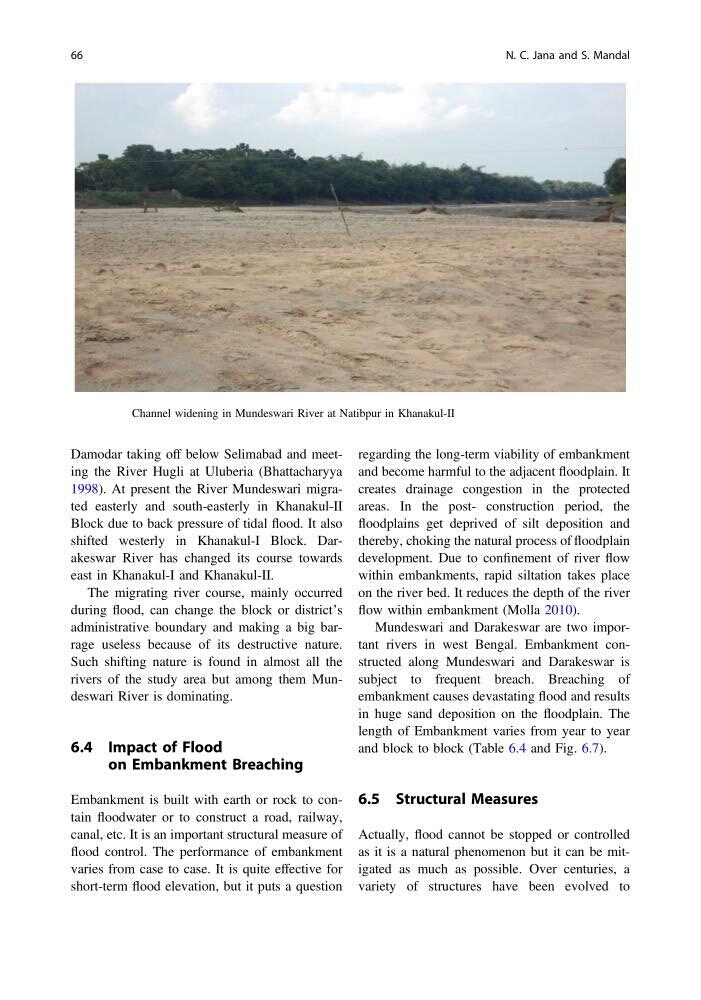
Plate 6.10 Channel widening in Mundeswari River at Natibpur in Khanakul-II
66
N. C. Jana and S. Mandal
1998). At present the River Mundeswari migrated easterly and south-easterly in Khanakul-II
Block due to back pressure of tidal flood. It also
shifted westerly in Khanakul-I Block. Darakeswar River has changed its course towards
east in Khanakul-I and Khanakul-II.
The migrating river course, mainly occurred
during flood, can change the block or district’s
administrative boundary and making a big barrage useless because of its destructive nature.
Such shifting nature is found in almost all the
rivers of the study area but among them Mundeswari River is dominating.
6.4 Impact of Flood
on Embankment Breaching
Embankment is built with earth or rock to contain floodwater or to construct a road, railway,
canal, etc. It is an important structural measure of
flood control. The performance of embankment
varies from case to case. It is quite effective for
short-term flood elevation, but it puts a question
regarding the long-term viability of embankment
and become harmful to the adjacent floodplain. It
creates drainage congestion in the protected
areas. In the post- construction period, the
floodplains get deprived of silt deposition and
thereby, choking the natural process of floodplain
development. Due to confinement of river flow
within embankments, rapid siltation takes place
on the river bed. It reduces the depth of the river
flow within embankment (Molla 2010).
Mundeswari and Darakeswar are two important rivers in west Bengal. Embankment constructed along Mundeswari and Darakeswar is
subject to frequent breach. Breaching of
embankment causes devastating flood and results
in huge sand deposition on the floodplain. The
length of Embankment varies from year to year
and block to block (Table 6.4 and Fig. 6.7).
6.5 Structural Measures
Actually, flood cannot be stopped or controlled
as it is a natural phenomenon but it can be mitigated as much as possible. Over centuries, a
variety of structures have been evolved to
Plate 6.10 Channel widening in Mundeswari River at Natibpur in Khanakul-II
66
N. C. Jana and S. Mandal