

1991. The average population density was
moderately low with 5,978 persons per sq.km. In
2001, Hyderabad recorded a geographical extent
of 778.1 sq.km. The total population of Hyderabad was 5.75 million persons. The average
population density was a moderate 7,391 persons
per sq.km.
In 2011, Hyderabad registered a geographical
area of 851 sq.km. The total population of
Hyderabad also increased to 7.74 million persons. The average population density grew to
9,106 persons per sq.km. The persistently moderate population density depicts a sprawling
urban expansion of Hyderabad. This may have a
distinct effect on the urban heat island growth.
The built-up density is very high in the inner
nuclei of the city. The built-up density tends to
decrease towards the city periphery. There is a
visible core-periphery differential in the built-up
density of the city.
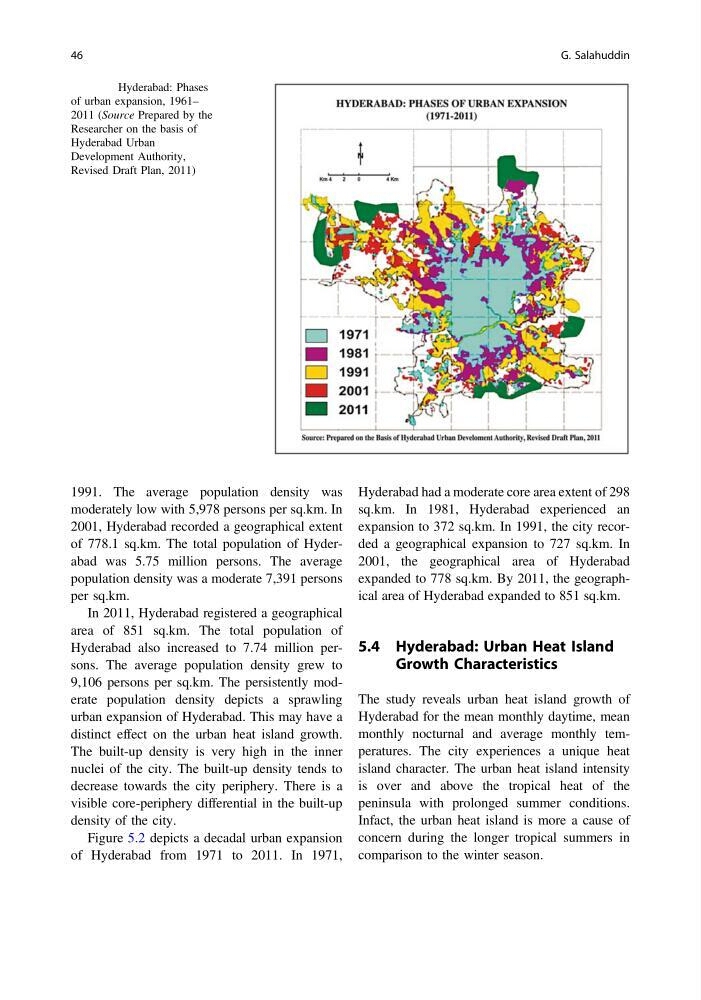
Figure 5.2 depicts a decadal urban expansion
of Hyderabad from 1971 to 2011. In 1971,
Hyderabad had a moderate core area extent of 298
sq.km. In 1981, Hyderabad experienced an
expansion to 372 sq.km. In 1991, the city recorded a geographical expansion to 727 sq.km. In
2001, the geographical area of Hyderabad
expanded to 778 sq.km. By 2011, the geographical area of Hyderabad expanded to 851 sq.km.
5.4 Hyderabad: Urban Heat Island
Growth Characteristics
The study reveals urban heat island growth of
Hyderabad for the mean monthly daytime, mean
monthly nocturnal and average monthly temperatures. The city experiences a unique heat
island character. The urban heat island intensity
is over and above the tropical heat of the
peninsula with prolonged summer conditions.
Infact, the urban heat island is more a cause of
concern during the longer tropical summers in
comparison to the winter season.
Fig. 5.2 Hyderabad: Phases
of urban expansion, 1961–
2011 (Source Prepared by the
Researcher on the basis of
Hyderabad Urban
Development Authority,
Revised Draft Plan, 2011)
46
G. Salahuddin
moderately low with 5,978 persons per sq.km. In
2001, Hyderabad recorded a geographical extent
of 778.1 sq.km. The total population of Hyderabad was 5.75 million persons. The average
population density was a moderate 7,391 persons
per sq.km.
In 2011, Hyderabad registered a geographical
area of 851 sq.km. The total population of
Hyderabad also increased to 7.74 million persons. The average population density grew to
9,106 persons per sq.km. The persistently moderate population density depicts a sprawling
urban expansion of Hyderabad. This may have a
distinct effect on the urban heat island growth.
The built-up density is very high in the inner
nuclei of the city. The built-up density tends to
decrease towards the city periphery. There is a
visible core-periphery differential in the built-up
density of the city.
Figure 5.2 depicts a decadal urban expansion
of Hyderabad from 1971 to 2011. In 1971,
Hyderabad had a moderate core area extent of 298
sq.km. In 1981, Hyderabad experienced an
expansion to 372 sq.km. In 1991, the city recorded a geographical expansion to 727 sq.km. In
2001, the geographical area of Hyderabad
expanded to 778 sq.km. By 2011, the geographical area of Hyderabad expanded to 851 sq.km.
5.4 Hyderabad: Urban Heat Island
Growth Characteristics
The study reveals urban heat island growth of
Hyderabad for the mean monthly daytime, mean
monthly nocturnal and average monthly temperatures. The city experiences a unique heat
island character. The urban heat island intensity
is over and above the tropical heat of the
peninsula with prolonged summer conditions.
Infact, the urban heat island is more a cause of
concern during the longer tropical summers in
comparison to the winter season.
Fig. 5.2 Hyderabad: Phases
of urban expansion, 1961–
2011 (Source Prepared by the
Researcher on the basis of
Hyderabad Urban
Development Authority,
Revised Draft Plan, 2011)
46
G. Salahuddin