

the formation of char also decreased. This clearly indicates that crosslinking density
affects the FR activity. Mariappan et al. [89] synthesized PUs and epoxy resins
containing phosphorus oxides and phosphorus oxide derivatives of different oxidation states (Scheme 4.8). Their thermal properties and FR activity mechanisms
were studied by TGA and cone colorimetry, respectively. They found out that
phosphate-containing PUs show better FR activity, while phosphite oxide compounds are more suitable for epoxy resins. This is because phosphites react with
epoxy resins during combustion via transesterification and form ester products;
however, in the case of polyurea, such kinetic reactions are not possible. Therefore,
in the case of polyurea, phosphorus oxides of high oxidation states show good
FR activity. Unsaturated polystyrene (PS) resins were modified with different a
phosphorus-containing monomer (PDPA); when the PDPA content in the resin
increased, the char yield and LOI values increased with a decrease in the HRR
and THR.
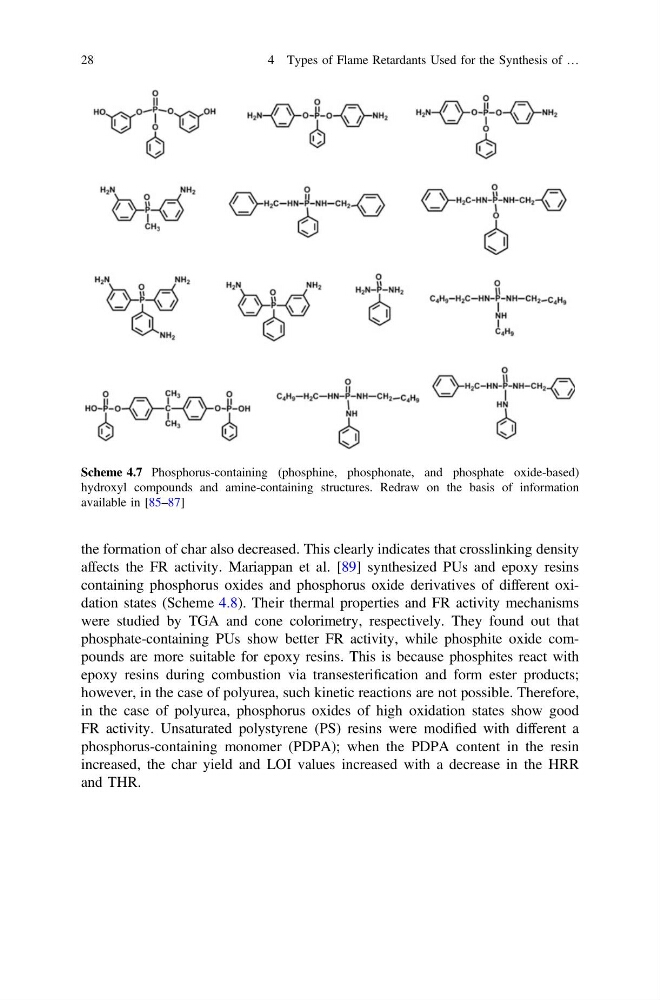
Scheme 4.7 Phosphorus-containing (phosphine, phosphonate, and phosphate oxide-based)
hydroxyl compounds and amine-containing structures. Redraw on the basis of information
available in [85–87]
28
4 Types of Flame Retardants Used for the Synthesis of …
affects the FR activity. Mariappan et al. [89] synthesized PUs and epoxy resins
containing phosphorus oxides and phosphorus oxide derivatives of different oxidation states (Scheme 4.8). Their thermal properties and FR activity mechanisms
were studied by TGA and cone colorimetry, respectively. They found out that
phosphate-containing PUs show better FR activity, while phosphite oxide compounds are more suitable for epoxy resins. This is because phosphites react with
epoxy resins during combustion via transesterification and form ester products;
however, in the case of polyurea, such kinetic reactions are not possible. Therefore,
in the case of polyurea, phosphorus oxides of high oxidation states show good
FR activity. Unsaturated polystyrene (PS) resins were modified with different a
phosphorus-containing monomer (PDPA); when the PDPA content in the resin
increased, the char yield and LOI values increased with a decrease in the HRR
and THR.
Scheme 4.7 Phosphorus-containing (phosphine, phosphonate, and phosphate oxide-based)
hydroxyl compounds and amine-containing structures. Redraw on the basis of information
available in [85–87]
28
4 Types of Flame Retardants Used for the Synthesis of …