

451
The calculations produce an estimate that a gallon of water can produce
0.42 kg of hydrogen. With the PEM electrolyzers suggested, the significant figure is 44.5 kWh/kg H 2 , producing a total yield of 16.7 kWh. Significantly, a
kilowatt hour comprises 3600 kJ with the enthalpy for production of hydrogen
energy deriving from liquid water at 25 °C amounting to −296 kg/mol, with a
gallon of water constituting 3785 mL. Accepting that water should be 18 mL/
mol, representing around 210 mol of water, the calculation of 286 × 210.3/3600
would produce an energy of 116.7 kWh. An average four-person family needs
30 kWh of energy per diem, and so 2 gallons of water would suffice to fulfill their
daily energy requirements if undertaken every day, and so the quantity of water
vapor produced by a small oak tree would suffice for these purposes when using
electrolysis.
Conclusion
Energy, water, and environmental vulnerability are the top three problems for global
environmental equilibrium where trees play a significant role in creating these problems by the process of transpiration. The hydraulic conductivity of the soil and the
magnitude of the pressure gradient through the soil force the excessive flow of water
moving into the plant from the roots to the leaves. Interestingly only 0.5% of this
water is used for the plants’ metabolism and thus the remaining water is evaporated
by transpiration. As H2O molecule transpires from the surface of the plant’s leaf, it
pulls on the adjacent water molecule, confirming a continuous excessive flow of
water through the roots. Ultimately this process causes the loss of tremendous
amount of groundwater since it has been finally released as water vapor into the air
which causes global warming. To mitigate these problems, transpiration mechanism
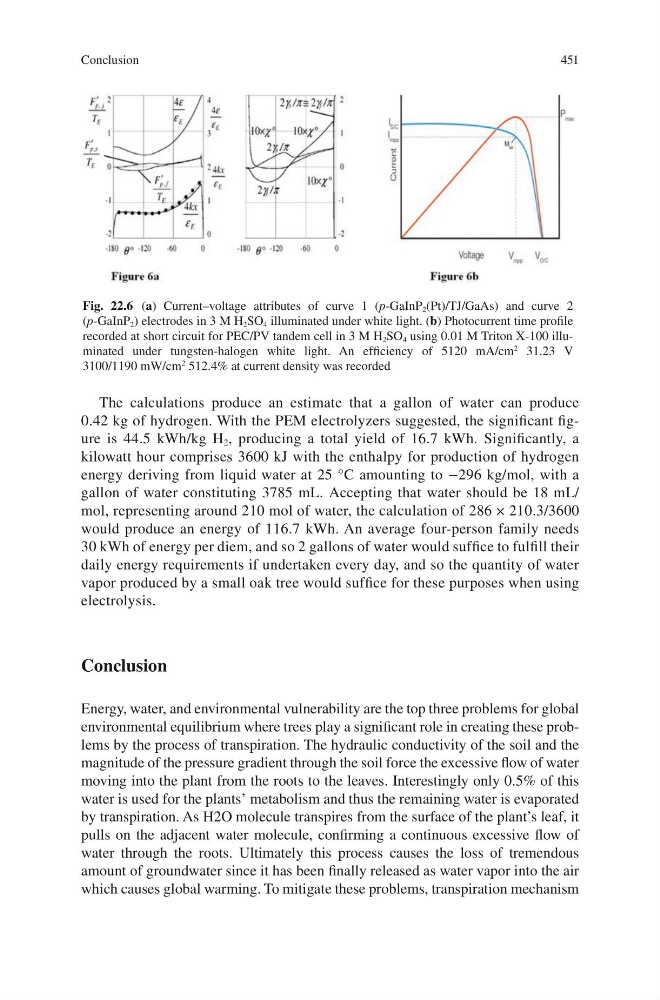
Fig. 22.6 (a) Current–voltage attributes of curve 1 (p-GaInP 2 (Pt)/TJ/GaAs) and curve 2
(p-GaInP 2 ) electrodes in 3 M H 2 SO 4 illuminated under white light. (b) Photocurrent time profile
recorded at short circuit for PEC/PV tandem cell in 3 M H 2 SO 4 using 0.01 M Triton X-100 illuminated under tungsten-halogen white light. An efficiency of 5120 mA/cm
2 31.23 V
3100/1190 mW/cm
2 512.4% at current density was recorded
Conclusion
The calculations produce an estimate that a gallon of water can produce
0.42 kg of hydrogen. With the PEM electrolyzers suggested, the significant figure is 44.5 kWh/kg H 2 , producing a total yield of 16.7 kWh. Significantly, a
kilowatt hour comprises 3600 kJ with the enthalpy for production of hydrogen
energy deriving from liquid water at 25 °C amounting to −296 kg/mol, with a
gallon of water constituting 3785 mL. Accepting that water should be 18 mL/
mol, representing around 210 mol of water, the calculation of 286 × 210.3/3600
would produce an energy of 116.7 kWh. An average four-person family needs
30 kWh of energy per diem, and so 2 gallons of water would suffice to fulfill their
daily energy requirements if undertaken every day, and so the quantity of water
vapor produced by a small oak tree would suffice for these purposes when using
electrolysis.
Conclusion
Energy, water, and environmental vulnerability are the top three problems for global
environmental equilibrium where trees play a significant role in creating these problems by the process of transpiration. The hydraulic conductivity of the soil and the
magnitude of the pressure gradient through the soil force the excessive flow of water
moving into the plant from the roots to the leaves. Interestingly only 0.5% of this
water is used for the plants’ metabolism and thus the remaining water is evaporated
by transpiration. As H2O molecule transpires from the surface of the plant’s leaf, it
pulls on the adjacent water molecule, confirming a continuous excessive flow of
water through the roots. Ultimately this process causes the loss of tremendous
amount of groundwater since it has been finally released as water vapor into the air
which causes global warming. To mitigate these problems, transpiration mechanism
Fig. 22.6 (a) Current–voltage attributes of curve 1 (p-GaInP 2 (Pt)/TJ/GaAs) and curve 2
(p-GaInP 2 ) electrodes in 3 M H 2 SO 4 illuminated under white light. (b) Photocurrent time profile
recorded at short circuit for PEC/PV tandem cell in 3 M H 2 SO 4 using 0.01 M Triton X-100 illuminated under tungsten-halogen white light. An efficiency of 5120 mA/cm
2 31.23 V
3100/1190 mW/cm
2 512.4% at current density was recorded
Conclusion