

214
p represents the number of pairs of poles
The equation below can be applicable in case of dynamic modeling and is also
pertinent in the instance of squirrel-confined initiation generator (SCIG):
From the stator side, the equivalence is
From the rotor side, the equivalence is
For the inflight gap flux connection, the equivalences are
In the equation
R s = stator curving resistance
R r = motor sneaking resistance
L m = magnetizing inductance
L ls = stator seepage inductance
L lr = dynamic rotor angular velocity
ω r = current, energy
λ q = fluidities
A substitution for the above equations can be expressed as
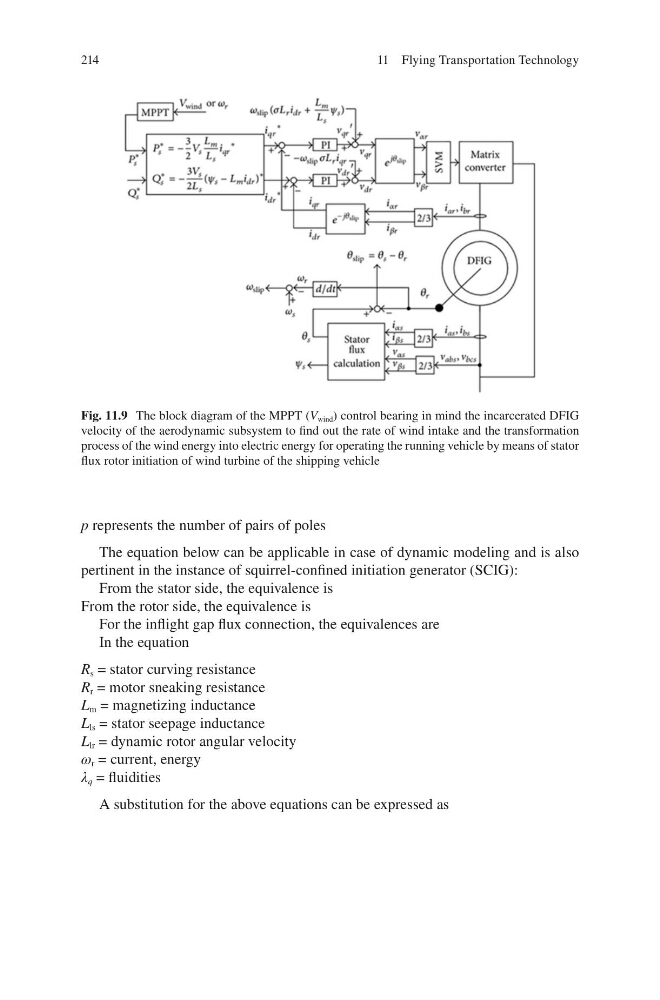
Fig. 11.9 The block diagram of the MPPT (V wind ) control bearing in mind the incarcerated DFIG
velocity of the aerodynamic subsystem to find out the rate of wind intake and the transformation
process of the wind energy into electric energy for operating the running vehicle by means of stator
flux rotor initiation of wind turbine of the shipping vehicle
11 Flying Transportation Technology
p represents the number of pairs of poles
The equation below can be applicable in case of dynamic modeling and is also
pertinent in the instance of squirrel-confined initiation generator (SCIG):
From the stator side, the equivalence is
From the rotor side, the equivalence is
For the inflight gap flux connection, the equivalences are
In the equation
R s = stator curving resistance
R r = motor sneaking resistance
L m = magnetizing inductance
L ls = stator seepage inductance
L lr = dynamic rotor angular velocity
ω r = current, energy
λ q = fluidities
A substitution for the above equations can be expressed as
Fig. 11.9 The block diagram of the MPPT (V wind ) control bearing in mind the incarcerated DFIG
velocity of the aerodynamic subsystem to find out the rate of wind intake and the transformation
process of the wind energy into electric energy for operating the running vehicle by means of stator
flux rotor initiation of wind turbine of the shipping vehicle
11 Flying Transportation Technology