

169
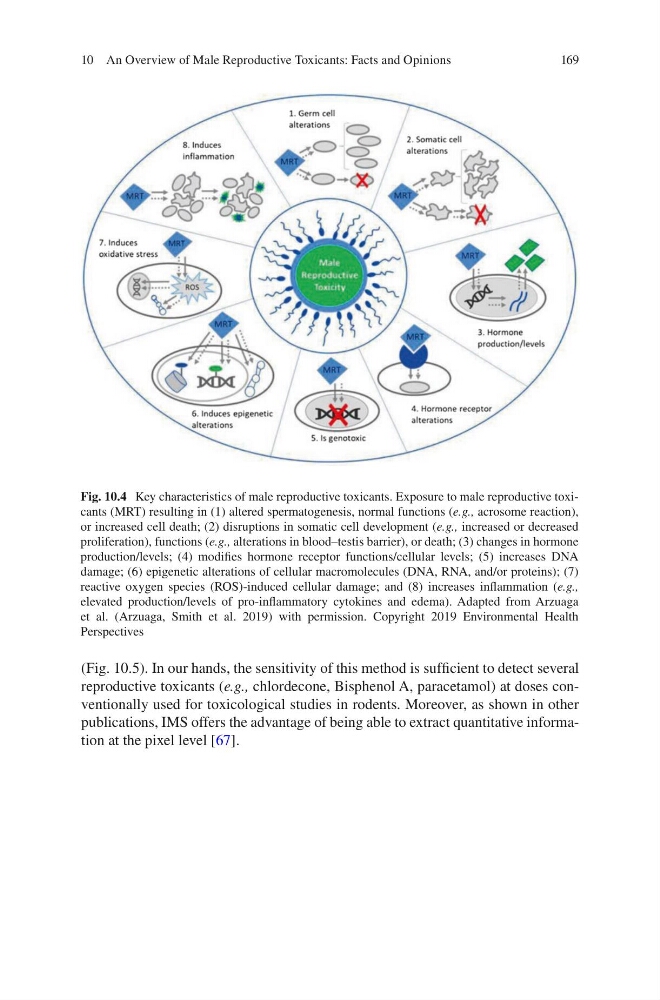
Fig. 10.4 Key characteristics of male reproductive toxicants. Exposure to male reproductive toxicants (MRT) resulting in (1) altered spermatogenesis, normal functions (e.g., acrosome reaction),
or increased cell death; (2) disruptions in somatic cell development (e.g., increased or decreased
proliferation), functions (e.g., alterations in blood–testis barrier), or death; (3) changes in hormone
production/levels; (4) modifies hormone receptor functions/cellular levels; (5) increases DNA
damage; (6) epigenetic alterations of cellular macromolecules (DNA, RNA, and/or proteins); (7)
reactive oxygen species (ROS)-induced cellular damage; and (8) increases inflammation (e.g.,
elevated production/levels of pro-inflammatory cytokines and edema). Adapted from Arzuaga
et al. (Arzuaga, Smith et al. 2019) with permission. Copyright 2019 Environmental Health
Perspectives
(Fig. 10.5). In our hands, the sensitivity of this method is sufficient to detect several
reproductive toxicants (e.g., chlordecone, Bisphenol A, paracetamol) at doses conventionally used for toxicological studies in rodents. Moreover, as shown in other
publications, IMS offers the advantage of being able to extract quantitative information at the pixel level [67].
10 An Overview of Male Reproductive Toxicants: Facts and Opinions
Fig. 10.4 Key characteristics of male reproductive toxicants. Exposure to male reproductive toxicants (MRT) resulting in (1) altered spermatogenesis, normal functions (e.g., acrosome reaction),
or increased cell death; (2) disruptions in somatic cell development (e.g., increased or decreased
proliferation), functions (e.g., alterations in blood–testis barrier), or death; (3) changes in hormone
production/levels; (4) modifies hormone receptor functions/cellular levels; (5) increases DNA
damage; (6) epigenetic alterations of cellular macromolecules (DNA, RNA, and/or proteins); (7)
reactive oxygen species (ROS)-induced cellular damage; and (8) increases inflammation (e.g.,
elevated production/levels of pro-inflammatory cytokines and edema). Adapted from Arzuaga
et al. (Arzuaga, Smith et al. 2019) with permission. Copyright 2019 Environmental Health
Perspectives
(Fig. 10.5). In our hands, the sensitivity of this method is sufficient to detect several
reproductive toxicants (e.g., chlordecone, Bisphenol A, paracetamol) at doses conventionally used for toxicological studies in rodents. Moreover, as shown in other
publications, IMS offers the advantage of being able to extract quantitative information at the pixel level [67].
10 An Overview of Male Reproductive Toxicants: Facts and Opinions