

105
The accumulation and translocation of titanium dioxide nanoparticles across placental barrier was studied in an in vitro model of placental transfer. Although translocation was negligible, a significant placental accumulation was observed,
suggesting the need for further research to understand the nanoparticles’ effects on
the functionality and signaling in the placenta [62]. An important phenomenon governing the effects of nanoparticles in the cells entails the formation of nanoparticleprotein corona, which occurs when nanoparticles come in contact with biota. For
example, silver nanoparticles were shown to bind to and inhibit the activity of a
bacterial enzyme tryptophanase [63].
An MS-based study of corona proteins recovered from a rainbow trout gill cell
line exposed to silver nanoparticles revealed several types of proteins that could be
affected by nanoparticles through corona formation mechanisms, including proteins
involved in endocytosis, transport, and storage, general stress response proteins, and
proteins involved in ionic regulation [64].
6.3 Conclusions
In conclusion, MS plays an important role in both environmental chemistry and
toxicology. MS-based techniques are used to (i) measure chemicals in environmental compartments and biota, (ii) identify unknown chemicals potentially causing
adverse effects in the environment, which can be done using EDA and (iii) provide
insights into the internal toxicokinetic processes and molecular mechanisms of toxicity, thus helping to elucidate AOPs leading to apical effects of interest. Thus, MS
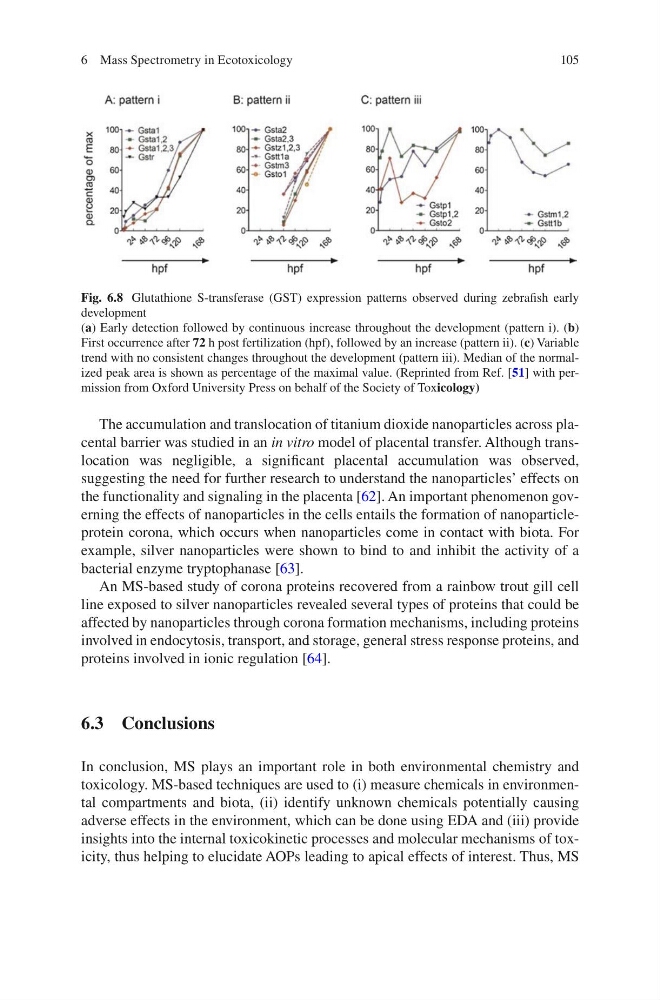
Fig. 6.8 Glutathione S-transferase (GST) expression patterns observed during zebrafish early
development
(a) Early detection followed by continuous increase throughout the development (pattern i). (b)
First occurrence after 72 h post fertilization (hpf), followed by an increase (pattern ii). (c) Variable
trend with no consistent changes throughout the development (pattern iii). Median of the normalized peak area is shown as percentage of the maximal value. (Reprinted from Ref. [51] with permission from Oxford University Press on behalf of the Society of Toxicology)
6 Mass Spectrometry in Ecotoxicology
The accumulation and translocation of titanium dioxide nanoparticles across placental barrier was studied in an in vitro model of placental transfer. Although translocation was negligible, a significant placental accumulation was observed,
suggesting the need for further research to understand the nanoparticles’ effects on
the functionality and signaling in the placenta [62]. An important phenomenon governing the effects of nanoparticles in the cells entails the formation of nanoparticleprotein corona, which occurs when nanoparticles come in contact with biota. For
example, silver nanoparticles were shown to bind to and inhibit the activity of a
bacterial enzyme tryptophanase [63].
An MS-based study of corona proteins recovered from a rainbow trout gill cell
line exposed to silver nanoparticles revealed several types of proteins that could be
affected by nanoparticles through corona formation mechanisms, including proteins
involved in endocytosis, transport, and storage, general stress response proteins, and
proteins involved in ionic regulation [64].
6.3 Conclusions
In conclusion, MS plays an important role in both environmental chemistry and
toxicology. MS-based techniques are used to (i) measure chemicals in environmental compartments and biota, (ii) identify unknown chemicals potentially causing
adverse effects in the environment, which can be done using EDA and (iii) provide
insights into the internal toxicokinetic processes and molecular mechanisms of toxicity, thus helping to elucidate AOPs leading to apical effects of interest. Thus, MS
Fig. 6.8 Glutathione S-transferase (GST) expression patterns observed during zebrafish early
development
(a) Early detection followed by continuous increase throughout the development (pattern i). (b)
First occurrence after 72 h post fertilization (hpf), followed by an increase (pattern ii). (c) Variable
trend with no consistent changes throughout the development (pattern iii). Median of the normalized peak area is shown as percentage of the maximal value. (Reprinted from Ref. [51] with permission from Oxford University Press on behalf of the Society of Toxicology)
6 Mass Spectrometry in Ecotoxicology