

104
organisms such as zebrafish (Danio rerio) or green alga (Chlamydomonas reinhardtii) [9, 29, 43, 50], but also in field-relevant species such as mussels (Mytilus
galloprovincialis) [8] or frogs (Rana sp.) [58]. Low sensitivity constitutes an important limitation of global proteomics, because this can hinder detection of crucial
regulatory proteins, such as receptors or transcription factors, which are often present at low copy numbers. To maximize sensitivity, targeted proteomics should be
used; this technique is also applied for hypothesis-driven analysis, when proteins to
be studied are selected in advance [49, 51]. For instance, investigation of the ontogeny of the phase II metabolizing glutathione S-transferase (GST) enzyme family in
developing zebrafish embryos demonstrated that some enzymes are maternallytransferred, some are synthesized right from the beginning of development and
some appear only later, when the liver becomes functional (see Fig. 6.8) [51].
One subfield of toxicology which has received a lot of attention in recent years is
nanotoxicology. Research focused on elucidation of fate and effects of nanoparticles in humans and the environment would not have been possible without the MS
advances in place [59]. Inductively coupled plasma MS (ICP-MS) has been routinely applied to study metal-based nanoparticles, with dedicated separation methods such as ultrafiltration used to distinguish between ionic and nanoparticulate
forms [60, 61].
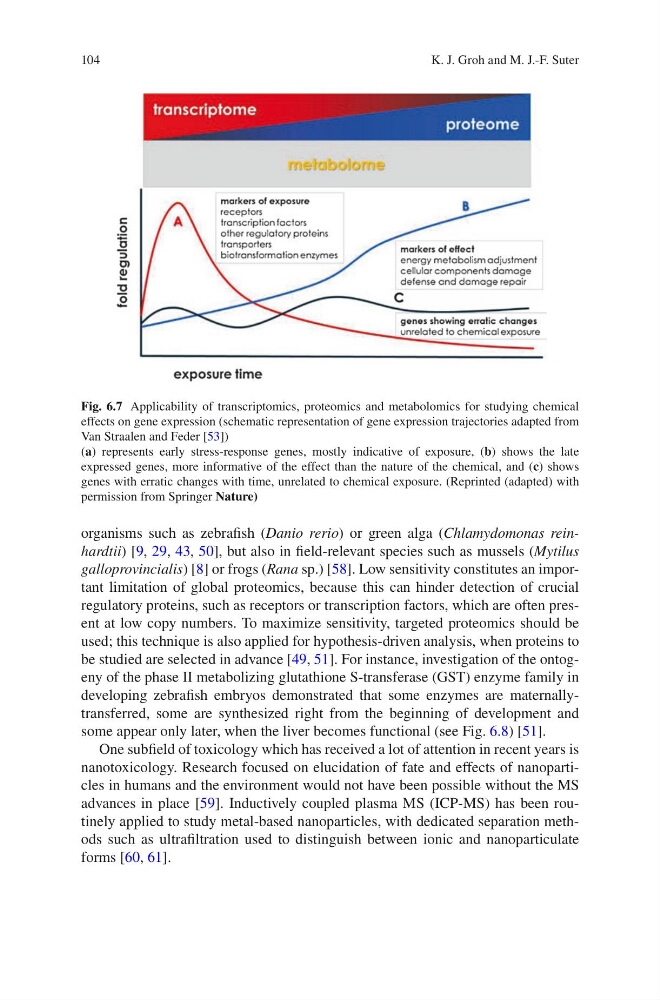
Fig. 6.7 Applicability of transcriptomics, proteomics and metabolomics for studying chemical
effects on gene expression (schematic representation of gene expression trajectories adapted from
Van Straalen and Feder [53])
(a) represents early stress-response genes, mostly indicative of exposure, (b) shows the late
expressed genes, more informative of the effect than the nature of the chemical, and (c) shows
genes with erratic changes with time, unrelated to chemical exposure. (Reprinted (adapted) with
permission from Springer Nature)
K. J. Groh and M. J.-F. Suter
organisms such as zebrafish (Danio rerio) or green alga (Chlamydomonas reinhardtii) [9, 29, 43, 50], but also in field-relevant species such as mussels (Mytilus
galloprovincialis) [8] or frogs (Rana sp.) [58]. Low sensitivity constitutes an important limitation of global proteomics, because this can hinder detection of crucial
regulatory proteins, such as receptors or transcription factors, which are often present at low copy numbers. To maximize sensitivity, targeted proteomics should be
used; this technique is also applied for hypothesis-driven analysis, when proteins to
be studied are selected in advance [49, 51]. For instance, investigation of the ontogeny of the phase II metabolizing glutathione S-transferase (GST) enzyme family in
developing zebrafish embryos demonstrated that some enzymes are maternallytransferred, some are synthesized right from the beginning of development and
some appear only later, when the liver becomes functional (see Fig. 6.8) [51].
One subfield of toxicology which has received a lot of attention in recent years is
nanotoxicology. Research focused on elucidation of fate and effects of nanoparticles in humans and the environment would not have been possible without the MS
advances in place [59]. Inductively coupled plasma MS (ICP-MS) has been routinely applied to study metal-based nanoparticles, with dedicated separation methods such as ultrafiltration used to distinguish between ionic and nanoparticulate
forms [60, 61].
Fig. 6.7 Applicability of transcriptomics, proteomics and metabolomics for studying chemical
effects on gene expression (schematic representation of gene expression trajectories adapted from
Van Straalen and Feder [53])
(a) represents early stress-response genes, mostly indicative of exposure, (b) shows the late
expressed genes, more informative of the effect than the nature of the chemical, and (c) shows
genes with erratic changes with time, unrelated to chemical exposure. (Reprinted (adapted) with
permission from Springer Nature)
K. J. Groh and M. J.-F. Suter