

95
However, the “Universe of Chemicals” as of July 2019 comprises over 155 million unique organic and inorganic substances as listed in the Chemical Abstracts
Service (CAS – an operating division of the American Chemical Society), of which
only roughly 350,000 are inventoried/regulated (see http://www.cas.org). Of course
not all of these will be reaching the environment and cause adverse effects. But even
so, if only a small fraction of the 350,000 inventoried substances pose a threat,
monitoring them all is very likely beyond what is routinely feasible for regulatory
agencies or enforcement bodies.
To further complicate the matters, these chemicals cover a wide range of physicochemical properties, from volatile to non-volatile, from apolar with log Kow > 5, to
polar and ionic. The latter group, when targeted for LC-MS analysis, comprises the
so-called gap chemicals that are positively or negatively charged under natural conditions (pH 7.4). Their interaction with other charged chemicals present in the
matrix will influence their speciation, and with that sorption to particles and sediments, and uptake into organisms [12, 13]. The reason why they are called gap
chemicals is that classical analytical pipelines, designed with non-polar compounds
in mind, will typically lose most of the polar substances in the enrichment step,
particularly if reversed-phase C18 material is used. Therefore, to simultaneously
capture the multitude of the “chemical universe” or “close the gap”, mixed-mode
enrichment [14, 15] and separation [16] methods, combining ion exchange and
reversed phase, are required (Fig. 6.2).
The chemicals listed with log D ow < 1 would not be captured using a C18 solid
phase. However, many of these chemicals are of high environmental concern and
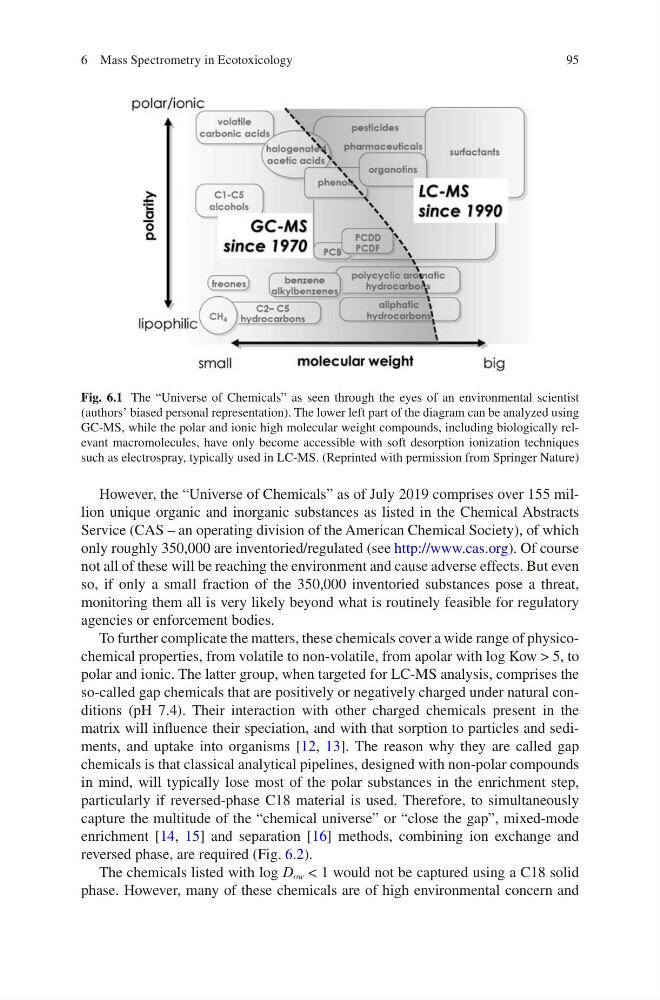
Fig. 6.1 The “Universe of Chemicals” as seen through the eyes of an environmental scientist
(authors’ biased personal representation). The lower left part of the diagram can be analyzed using
GC-MS, while the polar and ionic high molecular weight compounds, including biologically relevant macromolecules, have only become accessible with soft desorption ionization techniques
such as electrospray, typically used in LC-MS. (Reprinted with permission from Springer Nature)
6 Mass Spectrometry in Ecotoxicology
However, the “Universe of Chemicals” as of July 2019 comprises over 155 million unique organic and inorganic substances as listed in the Chemical Abstracts
Service (CAS – an operating division of the American Chemical Society), of which
only roughly 350,000 are inventoried/regulated (see http://www.cas.org). Of course
not all of these will be reaching the environment and cause adverse effects. But even
so, if only a small fraction of the 350,000 inventoried substances pose a threat,
monitoring them all is very likely beyond what is routinely feasible for regulatory
agencies or enforcement bodies.
To further complicate the matters, these chemicals cover a wide range of physicochemical properties, from volatile to non-volatile, from apolar with log Kow > 5, to
polar and ionic. The latter group, when targeted for LC-MS analysis, comprises the
so-called gap chemicals that are positively or negatively charged under natural conditions (pH 7.4). Their interaction with other charged chemicals present in the
matrix will influence their speciation, and with that sorption to particles and sediments, and uptake into organisms [12, 13]. The reason why they are called gap
chemicals is that classical analytical pipelines, designed with non-polar compounds
in mind, will typically lose most of the polar substances in the enrichment step,
particularly if reversed-phase C18 material is used. Therefore, to simultaneously
capture the multitude of the “chemical universe” or “close the gap”, mixed-mode
enrichment [14, 15] and separation [16] methods, combining ion exchange and
reversed phase, are required (Fig. 6.2).
The chemicals listed with log D ow < 1 would not be captured using a C18 solid
phase. However, many of these chemicals are of high environmental concern and
Fig. 6.1 The “Universe of Chemicals” as seen through the eyes of an environmental scientist
(authors’ biased personal representation). The lower left part of the diagram can be analyzed using
GC-MS, while the polar and ionic high molecular weight compounds, including biologically relevant macromolecules, have only become accessible with soft desorption ionization techniques
such as electrospray, typically used in LC-MS. (Reprinted with permission from Springer Nature)
6 Mass Spectrometry in Ecotoxicology