

errors and what PETH’s new understanding will be in each case, it is useful to go
over the general statements, which appeared in Sect. 8.1, one by one.
On Heat’s ontology. Unlike others who have written on refutation of interconvertibility principle, PETH, by no means, entertains a return to the caloric
framework in returning to Carnot's thinking. Carnot’s theory is not a caloric theory
of heat. The paramount difference between the caloric theory of heat and Carnot’s
theory is that Carnot’s theory is not an ontological theory of heat. It is a relational or
predicative theory of heat and, as a predicative theory, it can incorporate either the
ontology of the caloric theory of heat or the ontology of the mechanical theory of
heat. Carnot embraced the caloric theory in his 1824 publication, but in his private
writing [4] indicated predisposition in accepting the ontology of the mechanical
theory. As the update of Carnot’s theory, PETH accepts GS-1
GS-1. Heat’s ontology. Heat is a high-entropy form of energy.
On equivalence principle. The PETH also accepts GS-2. Everyone does. The
only clarification is that GS-2 should be revised by replacing “consumption” of heat
with “extraction” of heat
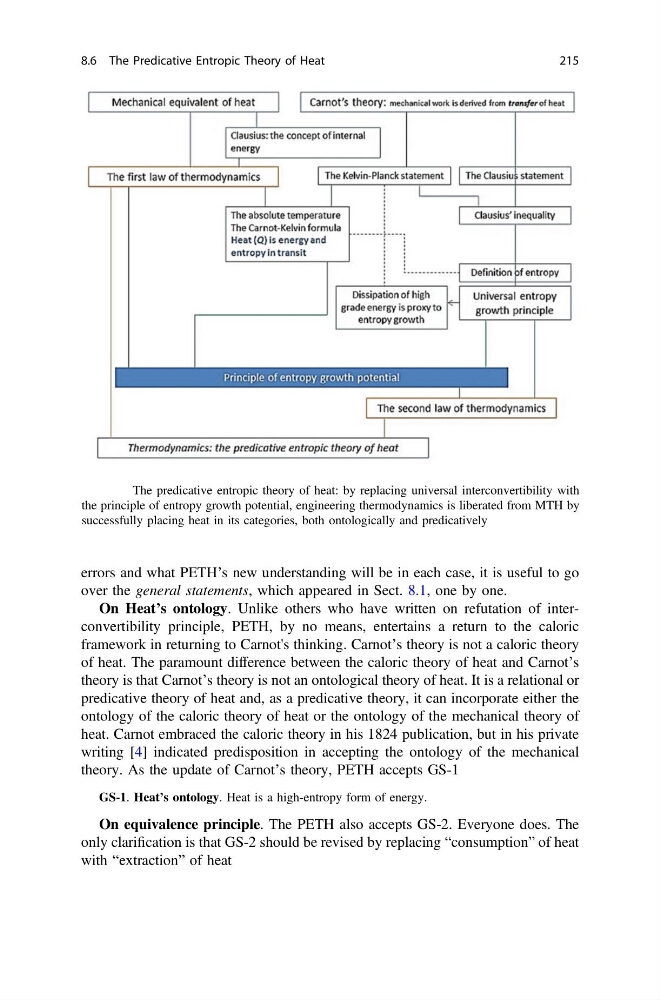
Fig. 8.7 The predicative entropic theory of heat: by replacing universal interconvertibility with
the principle of entropy growth potential, engineering thermodynamics is liberated from MTH by
successfully placing heat in its categories, both ontologically and predicatively
8.6 The Predicative Entropic Theory of Heat
215
over the general statements, which appeared in Sect. 8.1, one by one.
On Heat’s ontology. Unlike others who have written on refutation of interconvertibility principle, PETH, by no means, entertains a return to the caloric
framework in returning to Carnot's thinking. Carnot’s theory is not a caloric theory
of heat. The paramount difference between the caloric theory of heat and Carnot’s
theory is that Carnot’s theory is not an ontological theory of heat. It is a relational or
predicative theory of heat and, as a predicative theory, it can incorporate either the
ontology of the caloric theory of heat or the ontology of the mechanical theory of
heat. Carnot embraced the caloric theory in his 1824 publication, but in his private
writing [4] indicated predisposition in accepting the ontology of the mechanical
theory. As the update of Carnot’s theory, PETH accepts GS-1
GS-1. Heat’s ontology. Heat is a high-entropy form of energy.
On equivalence principle. The PETH also accepts GS-2. Everyone does. The
only clarification is that GS-2 should be revised by replacing “consumption” of heat
with “extraction” of heat
Fig. 8.7 The predicative entropic theory of heat: by replacing universal interconvertibility with
the principle of entropy growth potential, engineering thermodynamics is liberated from MTH by
successfully placing heat in its categories, both ontologically and predicatively
8.6 The Predicative Entropic Theory of Heat
215