

60
4 Mechanical characterization on constituent level
model definition, since these properties reflect a homogenized core. Therefore, the calibration process is considerably simplified. However, the orthotropic material model additionally requires the input of in-plane properties as well as Poisson’s ratios, which are
usually not covered by macroscopic tests. This is because the in-plane properties have
limited impact on the macroscopic sandwich behavior. It is therefore common practice
to make assumption regarding these properties. Bitzer [Bit97] suggests to use 1% of the
known out-of-plane properties for the respective in-plane properties, while he suggests
a Poisson’s ratio of 0.1. This approach is applied in the present work. Alternatively, analytical formulae can be applied to estimate these unknown properties. Such analytical
relationships have been published by various authors. Steenackers et al. [Ste16] and
Heimbs [Hei08] gave an overview on such formulae. The results of the implemented
model in terms of stress-strain relationship in comparison to the experimental results
are given in Figure 49. In these graphs two sets of simulation results are illustrated. One
reflects the results of a calibrated material model based on the obtained experimental
results. The second set represents a simulation which was based on material properties
given by manufacturers (Table 9, p. 44). Since manufacturers do not indicate the plateau
stress after initial core damage, the material was simplified using an elasto-perfectly
plastic material model. The two implemented simulation models generally lead to a good
match of the experimental results.
Compression
Tension
Shear LT
Shear WT
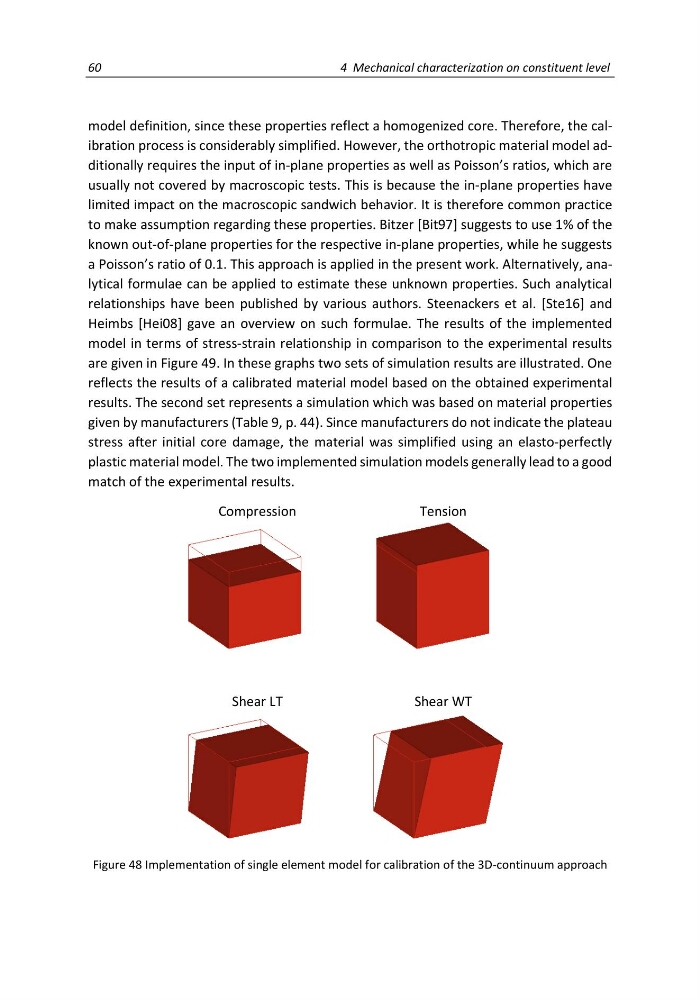
Figure 48 Implementation of single element model for calibration of the 3D-continuum approach
4 Mechanical characterization on constituent level
model definition, since these properties reflect a homogenized core. Therefore, the calibration process is considerably simplified. However, the orthotropic material model additionally requires the input of in-plane properties as well as Poisson’s ratios, which are
usually not covered by macroscopic tests. This is because the in-plane properties have
limited impact on the macroscopic sandwich behavior. It is therefore common practice
to make assumption regarding these properties. Bitzer [Bit97] suggests to use 1% of the
known out-of-plane properties for the respective in-plane properties, while he suggests
a Poisson’s ratio of 0.1. This approach is applied in the present work. Alternatively, analytical formulae can be applied to estimate these unknown properties. Such analytical
relationships have been published by various authors. Steenackers et al. [Ste16] and
Heimbs [Hei08] gave an overview on such formulae. The results of the implemented
model in terms of stress-strain relationship in comparison to the experimental results
are given in Figure 49. In these graphs two sets of simulation results are illustrated. One
reflects the results of a calibrated material model based on the obtained experimental
results. The second set represents a simulation which was based on material properties
given by manufacturers (Table 9, p. 44). Since manufacturers do not indicate the plateau
stress after initial core damage, the material was simplified using an elasto-perfectly
plastic material model. The two implemented simulation models generally lead to a good
match of the experimental results.
Compression
Tension
Shear LT
Shear WT
Figure 48 Implementation of single element model for calibration of the 3D-continuum approach