

140
7 Virtual testing approach for sandwich panel joints
Figure 108 Simulation results for core parameter study
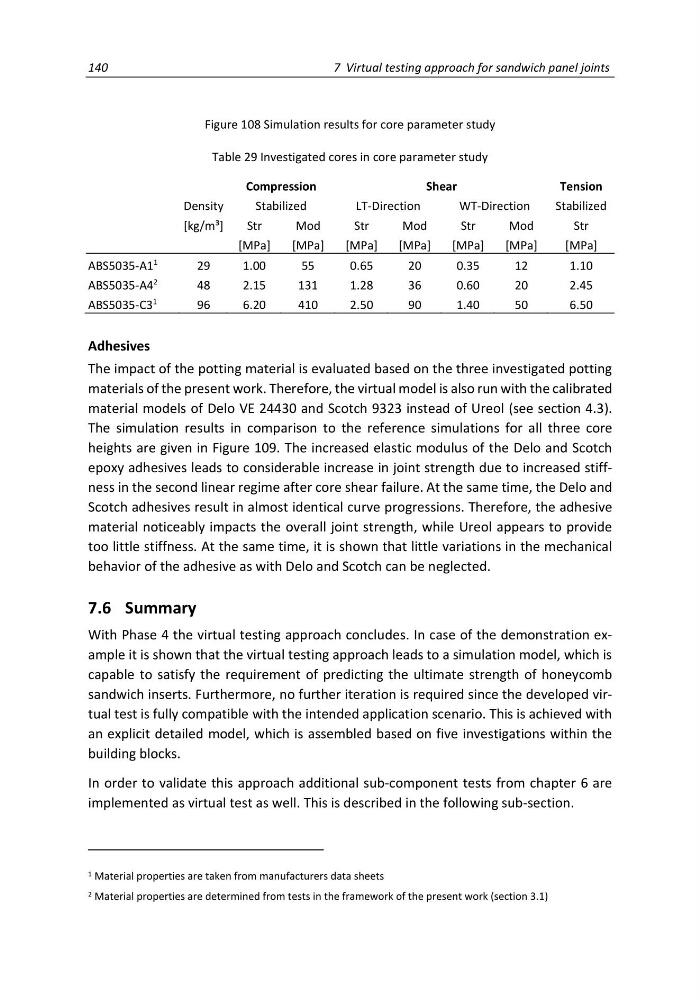
Table 29 Investigated cores in core parameter study
Density
[kg/m³]
Compression
Shear
Tension
Stabilized
LT-Direction
WT-Direction
Stabilized
Str
[MPa]
Mod
[MPa]
Str
[MPa]
Mod
[MPa]
Str
[MPa]
Mod
[MPa]
Str
[MPa]
ABS5035-A1
1
29
1.00
55
0.65
20
0.35
12
1.10
ABS5035-A4
2
48
2.15
131
1.28
36
0.60
20
2.45
ABS5035-C3
1
96
6.20
410
2.50
90
1.40
50
6.50
Adhesives
The impact of the potting material is evaluated based on the three investigated potting
materials of the present work. Therefore, the virtual model is also run with the calibrated
material models of Delo VE 24430 and Scotch 9323 instead of Ureol (see section 4.3).
The simulation results in comparison to the reference simulations for all three core
heights are given in Figure 109. The increased elastic modulus of the Delo and Scotch
epoxy adhesives leads to considerable increase in joint strength due to increased stiffness in the second linear regime after core shear failure. At the same time, the Delo and
Scotch adhesives result in almost identical curve progressions. Therefore, the adhesive
material noticeably impacts the overall joint strength, while Ureol appears to provide
too little stiffness. At the same time, it is shown that little variations in the mechanical
behavior of the adhesive as with Delo and Scotch can be neglected.
7.6 Summary
With Phase 4 the virtual testing approach concludes. In case of the demonstration example it is shown that the virtual testing approach leads to a simulation model, which is
capable to satisfy the requirement of predicting the ultimate strength of honeycomb
sandwich inserts. Furthermore, no further iteration is required since the developed virtual test is fully compatible with the intended application scenario. This is achieved with
an explicit detailed model, which is assembled based on five investigations within the
building blocks.
In order to validate this approach additional sub-component tests from chapter 6 are
implemented as virtual test as well. This is described in the following sub-section.
1 Material properties are taken from manufacturers data sheets
2 Material properties are determined from tests in the framework of the present work (section 3.1)
7 Virtual testing approach for sandwich panel joints
Figure 108 Simulation results for core parameter study
Table 29 Investigated cores in core parameter study
Density
[kg/m³]
Compression
Shear
Tension
Stabilized
LT-Direction
WT-Direction
Stabilized
Str
[MPa]
Mod
[MPa]
Str
[MPa]
Mod
[MPa]
Str
[MPa]
Mod
[MPa]
Str
[MPa]
ABS5035-A1
1
29
1.00
55
0.65
20
0.35
12
1.10
ABS5035-A4
2
48
2.15
131
1.28
36
0.60
20
2.45
ABS5035-C3
1
96
6.20
410
2.50
90
1.40
50
6.50
Adhesives
The impact of the potting material is evaluated based on the three investigated potting
materials of the present work. Therefore, the virtual model is also run with the calibrated
material models of Delo VE 24430 and Scotch 9323 instead of Ureol (see section 4.3).
The simulation results in comparison to the reference simulations for all three core
heights are given in Figure 109. The increased elastic modulus of the Delo and Scotch
epoxy adhesives leads to considerable increase in joint strength due to increased stiffness in the second linear regime after core shear failure. At the same time, the Delo and
Scotch adhesives result in almost identical curve progressions. Therefore, the adhesive
material noticeably impacts the overall joint strength, while Ureol appears to provide
too little stiffness. At the same time, it is shown that little variations in the mechanical
behavior of the adhesive as with Delo and Scotch can be neglected.
7.6 Summary
With Phase 4 the virtual testing approach concludes. In case of the demonstration example it is shown that the virtual testing approach leads to a simulation model, which is
capable to satisfy the requirement of predicting the ultimate strength of honeycomb
sandwich inserts. Furthermore, no further iteration is required since the developed virtual test is fully compatible with the intended application scenario. This is achieved with
an explicit detailed model, which is assembled based on five investigations within the
building blocks.
In order to validate this approach additional sub-component tests from chapter 6 are
implemented as virtual test as well. This is described in the following sub-section.
1 Material properties are taken from manufacturers data sheets
2 Material properties are determined from tests in the framework of the present work (section 3.1)