

4.3 Reactivity and Stability of Al n I x
− Clusters
63
4.3.3 Al n I x
− Reacting with Methanol
Further insights into the reactivity of Al n I x
− clusters have been performed by comprehensive theoretical and experimental investigations [3]. Two series of stable clusters Al 13 I n
− and Al 14 I m
− have been produced and allowed to react with methanol
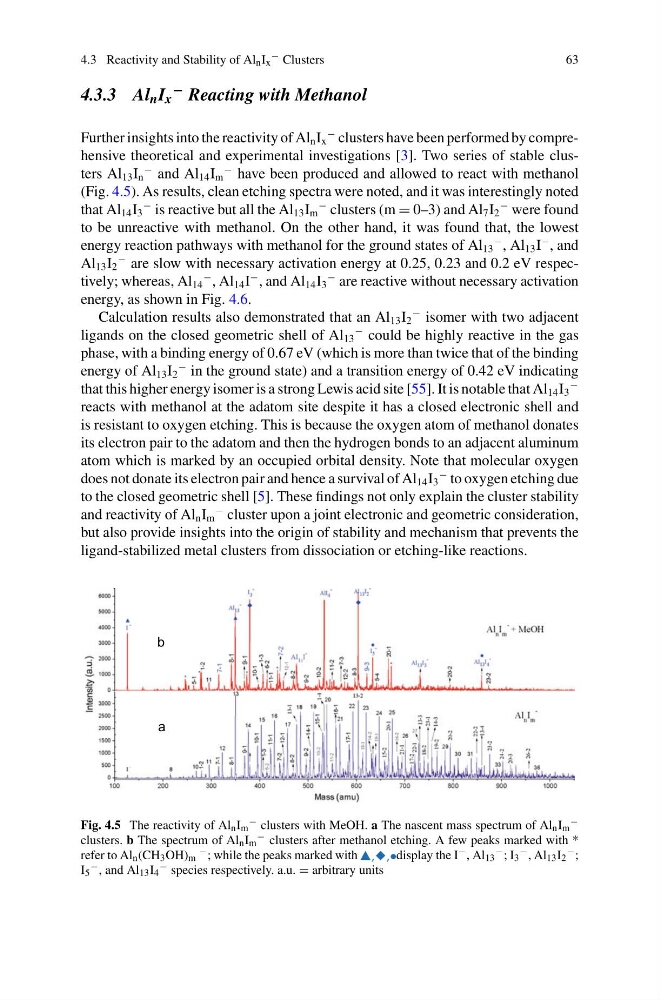
(Fig. 4.5). As results, clean etching spectra were noted, and it was interestingly noted
that Al 14 I 3
− is reactive but all the Al 13 I m
− clusters (m = 0–3) and Al 7 I 2
− were found
to be unreactive with methanol. On the other hand, it was found that, the lowest
energy reaction pathways with methanol for the ground states of Al 13
− , Al 13 I
− , and
Al 13 I 2
− are slow with necessary activation energy at 0.25, 0.23 and 0.2 eV respectively; whereas, Al 14
− , Al 14 I
− , and Al 14 I 3
− are reactive without necessary activation
energy, as shown in Fig. 4.6.
Calculation results also demonstrated that an Al 13 I 2
− isomer with two adjacent
ligands on the closed geometric shell of Al 13
− could be highly reactive in the gas
phase, with a binding energy of 0.67 eV (which is more than twice that of the binding
energy of Al 13 I 2
− in the ground state) and a transition energy of 0.42 eV indicating
that this higher energy isomer is a strong Lewis acid site [55]. It is notable that Al 14 I 3
−
reacts with methanol at the adatom site despite it has a closed electronic shell and
is resistant to oxygen etching. This is because the oxygen atom of methanol donates
its electron pair to the adatom and then the hydrogen bonds to an adjacent aluminum
atom which is marked by an occupied orbital density. Note that molecular oxygen
does not donate its electron pair and hence a survival of Al 14 I 3
− to oxygen etching due
to the closed geometric shell [5]. These findings not only explain the cluster stability
and reactivity of Al n I m
− cluster upon a joint electronic and geometric consideration,
but also provide insights into the origin of stability and mechanism that prevents the
ligand-stabilized metal clusters from dissociation or etching-like reactions.
a
b
Fig. 4.5 The reactivity of Al n I m
− clusters with MeOH. a The nascent mass spectrum of Al n I m
−
clusters. b The spectrum of Al n I m
− clusters after methanol etching. A few peaks marked with *
refer to Al n (CH 3 OH) m
− ; while the peaks marked with
display the I − , Al 13
− ; I 3
− , Al 13 I 2
− ;
I 5
− , and Al 13 I 4
− species respectively. a.u. = arbitrary units
− Clusters
63
4.3.3 Al n I x
− Reacting with Methanol
Further insights into the reactivity of Al n I x
− clusters have been performed by comprehensive theoretical and experimental investigations [3]. Two series of stable clusters Al 13 I n
− and Al 14 I m
− have been produced and allowed to react with methanol
(Fig. 4.5). As results, clean etching spectra were noted, and it was interestingly noted
that Al 14 I 3
− is reactive but all the Al 13 I m
− clusters (m = 0–3) and Al 7 I 2
− were found
to be unreactive with methanol. On the other hand, it was found that, the lowest
energy reaction pathways with methanol for the ground states of Al 13
− , Al 13 I
− , and
Al 13 I 2
− are slow with necessary activation energy at 0.25, 0.23 and 0.2 eV respectively; whereas, Al 14
− , Al 14 I
− , and Al 14 I 3
− are reactive without necessary activation
energy, as shown in Fig. 4.6.
Calculation results also demonstrated that an Al 13 I 2
− isomer with two adjacent
ligands on the closed geometric shell of Al 13
− could be highly reactive in the gas
phase, with a binding energy of 0.67 eV (which is more than twice that of the binding
energy of Al 13 I 2
− in the ground state) and a transition energy of 0.42 eV indicating
that this higher energy isomer is a strong Lewis acid site [55]. It is notable that Al 14 I 3
−
reacts with methanol at the adatom site despite it has a closed electronic shell and
is resistant to oxygen etching. This is because the oxygen atom of methanol donates
its electron pair to the adatom and then the hydrogen bonds to an adjacent aluminum
atom which is marked by an occupied orbital density. Note that molecular oxygen
does not donate its electron pair and hence a survival of Al 14 I 3
− to oxygen etching due
to the closed geometric shell [5]. These findings not only explain the cluster stability
and reactivity of Al n I m
− cluster upon a joint electronic and geometric consideration,
but also provide insights into the origin of stability and mechanism that prevents the
ligand-stabilized metal clusters from dissociation or etching-like reactions.
a
b
Fig. 4.5 The reactivity of Al n I m
− clusters with MeOH. a The nascent mass spectrum of Al n I m
−
clusters. b The spectrum of Al n I m
− clusters after methanol etching. A few peaks marked with *
refer to Al n (CH 3 OH) m
− ; while the peaks marked with
display the I − , Al 13
− ; I 3
− , Al 13 I 2
− ;
I 5
− , and Al 13 I 4
− species respectively. a.u. = arbitrary units