

40
3 Metal Cluster Reacting with Oxygen
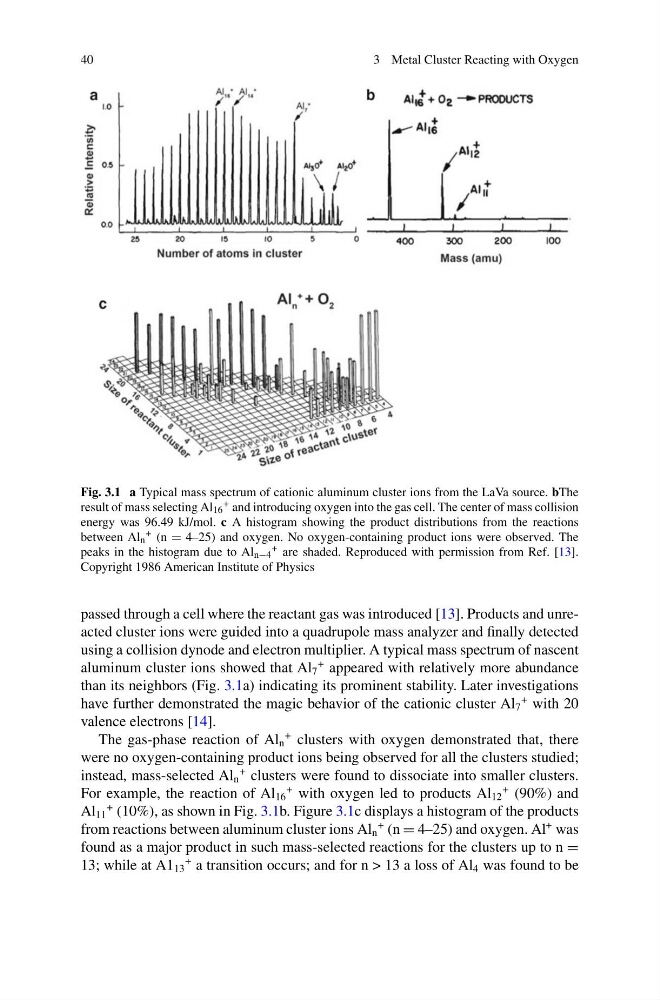
Fig. 3.1 a Typical mass spectrum of cationic aluminum cluster ions from the LaVa source. bThe
result of mass selecting Al 16
+ and introducing oxygen into the gas cell. The center of mass collision
energy was 96.49 kJ/mol. c A histogram showing the product distributions from the reactions
between Al n
+ (n = 4–25) and oxygen. No oxygen-containing product ions were observed. The
peaks in the histogram due to Al n−4
+ are shaded. Reproduced with permission from Ref. [13].
Copyright 1986 American Institute of Physics
passed through a cell where the reactant gas was introduced [13]. Products and unreacted cluster ions were guided into a quadrupole mass analyzer and finally detected
using a collision dynode and electron multiplier. A typical mass spectrum of nascent
aluminum cluster ions showed that Al 7
+ appeared with relatively more abundance
than its neighbors (Fig. 3.1a) indicating its prominent stability. Later investigations
have further demonstrated the magic behavior of the cationic cluster Al 7
+ with 20
valence electrons [14].
The gas-phase reaction of Al n
+ clusters with oxygen demonstrated that, there
were no oxygen-containing product ions being observed for all the clusters studied;
instead, mass-selected Al n
+ clusters were found to dissociate into smaller clusters.
For example, the reaction of Al 16
+ with oxygen led to products Al 12
+ (90%) and
Al 11
+ (10%), as shown in Fig. 3.1b. Figure 3.1c displays a histogram of the products
from reactions between aluminum cluster ions Al n
+ (n = 4–25) and oxygen. Al
+ was
found as a major product in such mass-selected reactions for the clusters up to n =
13; while at A1 13
+ a transition occurs; and for n > 13 a loss of Al 4 was found to be
3 Metal Cluster Reacting with Oxygen
Fig. 3.1 a Typical mass spectrum of cationic aluminum cluster ions from the LaVa source. bThe
result of mass selecting Al 16
+ and introducing oxygen into the gas cell. The center of mass collision
energy was 96.49 kJ/mol. c A histogram showing the product distributions from the reactions
between Al n
+ (n = 4–25) and oxygen. No oxygen-containing product ions were observed. The
peaks in the histogram due to Al n−4
+ are shaded. Reproduced with permission from Ref. [13].
Copyright 1986 American Institute of Physics
passed through a cell where the reactant gas was introduced [13]. Products and unreacted cluster ions were guided into a quadrupole mass analyzer and finally detected
using a collision dynode and electron multiplier. A typical mass spectrum of nascent
aluminum cluster ions showed that Al 7
+ appeared with relatively more abundance
than its neighbors (Fig. 3.1a) indicating its prominent stability. Later investigations
have further demonstrated the magic behavior of the cationic cluster Al 7
+ with 20
valence electrons [14].
The gas-phase reaction of Al n
+ clusters with oxygen demonstrated that, there
were no oxygen-containing product ions being observed for all the clusters studied;
instead, mass-selected Al n
+ clusters were found to dissociate into smaller clusters.
For example, the reaction of Al 16
+ with oxygen led to products Al 12
+ (90%) and
Al 11
+ (10%), as shown in Fig. 3.1b. Figure 3.1c displays a histogram of the products
from reactions between aluminum cluster ions Al n
+ (n = 4–25) and oxygen. Al
+ was
found as a major product in such mass-selected reactions for the clusters up to n =
13; while at A1 13
+ a transition occurs; and for n > 13 a loss of Al 4 was found to be