

244
14 Creating Genetic Materials of Metal Clusters
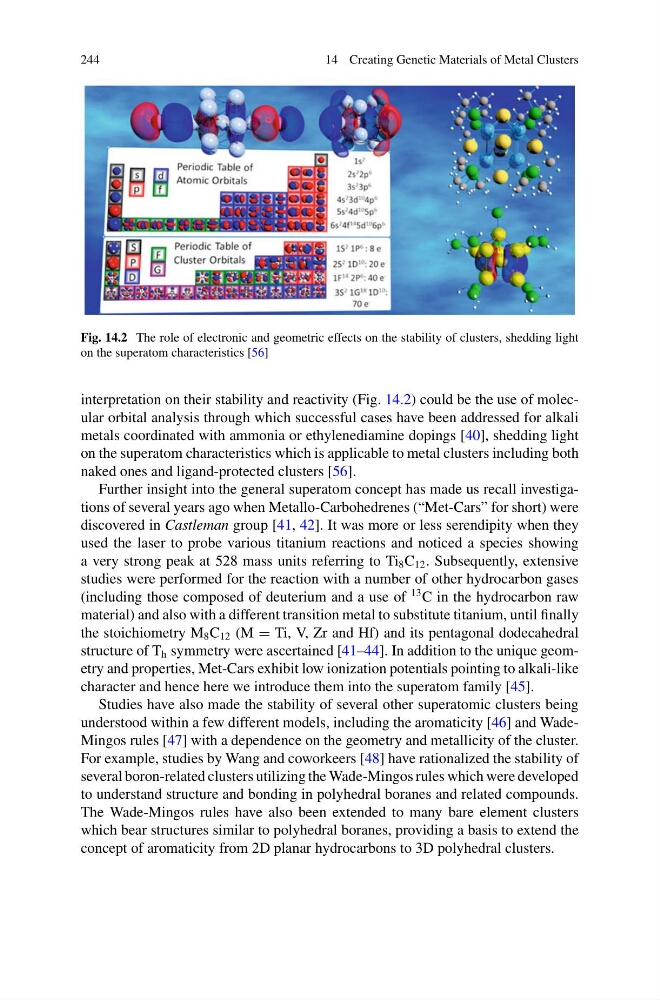
Fig. 14.2 The role of electronic and geometric effects on the stability of clusters, shedding light
on the superatom characteristics [56]
interpretation on their stability and reactivity (Fig. 14.2) could be the use of molecular orbital analysis through which successful cases have been addressed for alkali
metals coordinated with ammonia or ethylenediamine dopings [40], shedding light
on the superatom characteristics which is applicable to metal clusters including both
naked ones and ligand-protected clusters [56].
Further insight into the general superatom concept has made us recall investigations of several years ago when Metallo-Carbohedrenes (“Met-Cars” for short) were
discovered in Castleman group [41, 42]. It was more or less serendipity when they
used the laser to probe various titanium reactions and noticed a species showing
a very strong peak at 528 mass units referring to Ti 8 C 12 . Subsequently, extensive
studies were performed for the reaction with a number of other hydrocarbon gases
(including those composed of deuterium and a use of
13 C in the hydrocarbon raw
material) and also with a different transition metal to substitute titanium, until finally
the stoichiometry M 8 C 12 (M = Ti, V, Zr and Hf) and its pentagonal dodecahedral
structure of T h symmetry were ascertained [41–44]. In addition to the unique geometry and properties, Met-Cars exhibit low ionization potentials pointing to alkali-like
character and hence here we introduce them into the superatom family [45].
Studies have also made the stability of several other superatomic clusters being
understood within a few different models, including the aromaticity [46] and WadeMingos rules [47] with a dependence on the geometry and metallicity of the cluster.
For example, studies by Wang and coworkeers [48] have rationalized the stability of
several boron-related clusters utilizing the Wade-Mingos rules which were developed
to understand structure and bonding in polyhedral boranes and related compounds.
The Wade-Mingos rules have also been extended to many bare element clusters
which bear structures similar to polyhedral boranes, providing a basis to extend the
concept of aromaticity from 2D planar hydrocarbons to 3D polyhedral clusters.
14 Creating Genetic Materials of Metal Clusters
Fig. 14.2 The role of electronic and geometric effects on the stability of clusters, shedding light
on the superatom characteristics [56]
interpretation on their stability and reactivity (Fig. 14.2) could be the use of molecular orbital analysis through which successful cases have been addressed for alkali
metals coordinated with ammonia or ethylenediamine dopings [40], shedding light
on the superatom characteristics which is applicable to metal clusters including both
naked ones and ligand-protected clusters [56].
Further insight into the general superatom concept has made us recall investigations of several years ago when Metallo-Carbohedrenes (“Met-Cars” for short) were
discovered in Castleman group [41, 42]. It was more or less serendipity when they
used the laser to probe various titanium reactions and noticed a species showing
a very strong peak at 528 mass units referring to Ti 8 C 12 . Subsequently, extensive
studies were performed for the reaction with a number of other hydrocarbon gases
(including those composed of deuterium and a use of
13 C in the hydrocarbon raw
material) and also with a different transition metal to substitute titanium, until finally
the stoichiometry M 8 C 12 (M = Ti, V, Zr and Hf) and its pentagonal dodecahedral
structure of T h symmetry were ascertained [41–44]. In addition to the unique geometry and properties, Met-Cars exhibit low ionization potentials pointing to alkali-like
character and hence here we introduce them into the superatom family [45].
Studies have also made the stability of several other superatomic clusters being
understood within a few different models, including the aromaticity [46] and WadeMingos rules [47] with a dependence on the geometry and metallicity of the cluster.
For example, studies by Wang and coworkeers [48] have rationalized the stability of
several boron-related clusters utilizing the Wade-Mingos rules which were developed
to understand structure and bonding in polyhedral boranes and related compounds.
The Wade-Mingos rules have also been extended to many bare element clusters
which bear structures similar to polyhedral boranes, providing a basis to extend the
concept of aromaticity from 2D planar hydrocarbons to 3D polyhedral clusters.