

228
13 Metal Cluster Catalysis
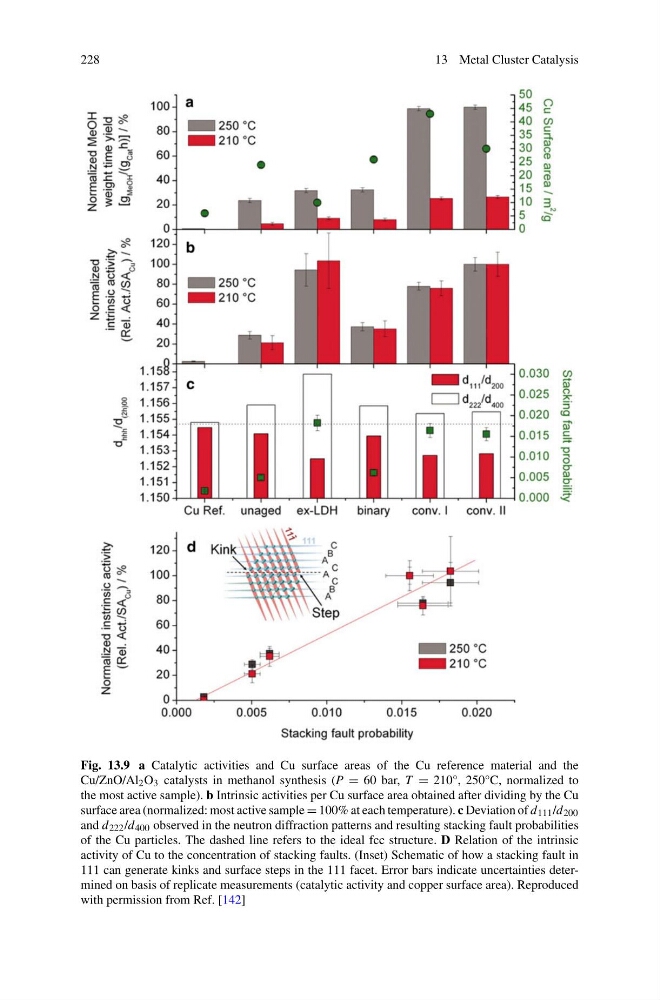
Fig. 13.9 a Catalytic activities and Cu surface areas of the Cu reference material and the
Cu/ZnO/Al 2 O 3 catalysts in methanol synthesis (P = 60 bar, T = 210°, 250°C, normalized to
the most active sample). b Intrinsic activities per Cu surface area obtained after dividing by the Cu
surface area (normalized: most active sample = 100% at each temperature). c Deviation of d 111 /d 200
and d 222 /d 400 observed in the neutron diffraction patterns and resulting stacking fault probabilities
of the Cu particles. The dashed line refers to the ideal fcc structure. D Relation of the intrinsic
activity of Cu to the concentration of stacking faults. (Inset) Schematic of how a stacking fault in
111 can generate kinks and surface steps in the 111 facet. Error bars indicate uncertainties determined on basis of replicate measurements (catalytic activity and copper surface area). Reproduced
with permission from Ref. [142]
13 Metal Cluster Catalysis
Fig. 13.9 a Catalytic activities and Cu surface areas of the Cu reference material and the
Cu/ZnO/Al 2 O 3 catalysts in methanol synthesis (P = 60 bar, T = 210°, 250°C, normalized to
the most active sample). b Intrinsic activities per Cu surface area obtained after dividing by the Cu
surface area (normalized: most active sample = 100% at each temperature). c Deviation of d 111 /d 200
and d 222 /d 400 observed in the neutron diffraction patterns and resulting stacking fault probabilities
of the Cu particles. The dashed line refers to the ideal fcc structure. D Relation of the intrinsic
activity of Cu to the concentration of stacking faults. (Inset) Schematic of how a stacking fault in
111 can generate kinks and surface steps in the 111 facet. Error bars indicate uncertainties determined on basis of replicate measurements (catalytic activity and copper surface area). Reproduced
with permission from Ref. [142]