

12.2 Charge-Transfer Reactions of Clusters
197
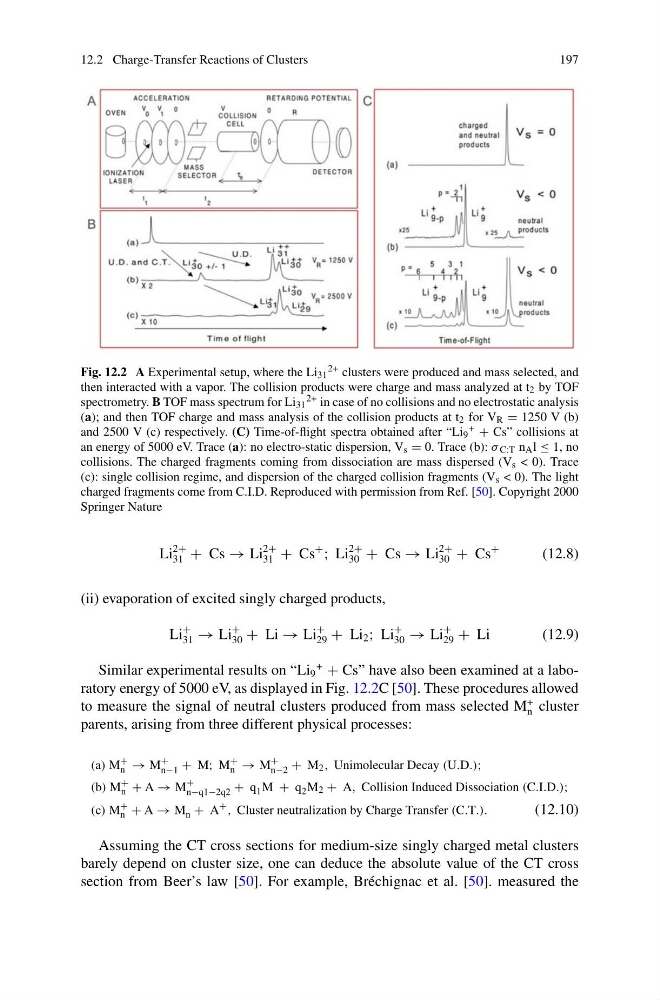
Fig. 12.2 A Experimental setup, where the Li 31
2+ clusters were produced and mass selected, and
then interacted with a vapor. The collision products were charge and mass analyzed at t 2 by TOF
spectrometry. B TOF mass spectrum for Li 31
2+ in case of no collisions and no electrostatic analysis
(a); and then TOF charge and mass analysis of the collision products at t 2 for V R = 1250 V (b)
and 2500 V (c) respectively. (C) Time-of-flight spectra obtained after “Li 9
+ + Cs” collisions at
an energy of 5000 eV. Trace (a): no electro-static dispersion, V s = 0. Trace (b): σ C:T n A l ≤ 1, no
collisions. The charged fragments coming from dissociation are mass dispersed (V s < 0). Trace
(c): single collision regime, and dispersion of the charged collision fragments (V s < 0). The light
charged fragments come from C.I.D. Reproduced with permission from Ref. [50]. Copyright 2000
Springer Nature
Li
2+
31 + Cs → Li
2+
31 + Cs
+
; Li
2+
30 + Cs → Li
2+
30 + Cs
+
(12.8)
(ii) evaporation of excited singly charged products,
Li
+
31 → Li
+
30 + Li → Li
+
29 + Li 2 ; Li
+
30 → Li
+
29 + Li
(12.9)
Similar experimental results on “Li 9
+
+ Cs” have also been examined at a laboratory energy of 5000 eV, as displayed in Fig. 12.2C [50]. These procedures allowed
to measure the signal of neutral clusters produced from mass selected M
+
n cluster
parents, arising from three different physical processes:
(a) M
+
n → M
+
n−1 + M; M
+
n → M
+
n−2 + M 2 , Unimolecular Decay (U.D.);
(b) M
+
n + A → M
+
n−q1−2q2 + q 1 M + q 2 M 2 + A, Collision Induced Dissociation (C.I.D.);
(c) M
+
n + A → M n + A
+ , Cluster neutralization by Charge Transfer (C.T.).
(12.10)
Assuming the CT cross sections for medium-size singly charged metal clusters
barely depend on cluster size, one can deduce the absolute value of the CT cross
section from Beer’s law [50]. For example, Bréchignac et al. [50]. measured the
197
Fig. 12.2 A Experimental setup, where the Li 31
2+ clusters were produced and mass selected, and
then interacted with a vapor. The collision products were charge and mass analyzed at t 2 by TOF
spectrometry. B TOF mass spectrum for Li 31
2+ in case of no collisions and no electrostatic analysis
(a); and then TOF charge and mass analysis of the collision products at t 2 for V R = 1250 V (b)
and 2500 V (c) respectively. (C) Time-of-flight spectra obtained after “Li 9
+ + Cs” collisions at
an energy of 5000 eV. Trace (a): no electro-static dispersion, V s = 0. Trace (b): σ C:T n A l ≤ 1, no
collisions. The charged fragments coming from dissociation are mass dispersed (V s < 0). Trace
(c): single collision regime, and dispersion of the charged collision fragments (V s < 0). The light
charged fragments come from C.I.D. Reproduced with permission from Ref. [50]. Copyright 2000
Springer Nature
Li
2+
31 + Cs → Li
2+
31 + Cs
+
; Li
2+
30 + Cs → Li
2+
30 + Cs
+
(12.8)
(ii) evaporation of excited singly charged products,
Li
+
31 → Li
+
30 + Li → Li
+
29 + Li 2 ; Li
+
30 → Li
+
29 + Li
(12.9)
Similar experimental results on “Li 9
+
+ Cs” have also been examined at a laboratory energy of 5000 eV, as displayed in Fig. 12.2C [50]. These procedures allowed
to measure the signal of neutral clusters produced from mass selected M
+
n cluster
parents, arising from three different physical processes:
(a) M
+
n → M
+
n−1 + M; M
+
n → M
+
n−2 + M 2 , Unimolecular Decay (U.D.);
(b) M
+
n + A → M
+
n−q1−2q2 + q 1 M + q 2 M 2 + A, Collision Induced Dissociation (C.I.D.);
(c) M
+
n + A → M n + A
+ , Cluster neutralization by Charge Transfer (C.T.).
(12.10)
Assuming the CT cross sections for medium-size singly charged metal clusters
barely depend on cluster size, one can deduce the absolute value of the CT cross
section from Beer’s law [50]. For example, Bréchignac et al. [50]. measured the