

11.1 Cluster Dissociation
179
11.1.2 Photodissociation
Another aspect is about photodissociation or photofragmentation, which is usually
attained by intense laser radiation (i.e., the aforementioned LID) [7–10] or just photoinduced thermal desorption [3, 40]. Photodissociation/photodepletion spectroscopy
is regarded as one of the most powerful techniques applicable for cluster ions.
Early photodissociation investigation was also utilized to obtain spectral information of gas-phase ions [41]; while actually both spectroscopic and thermodynamic
information can be obtained from the photodissociation studies [42–44].
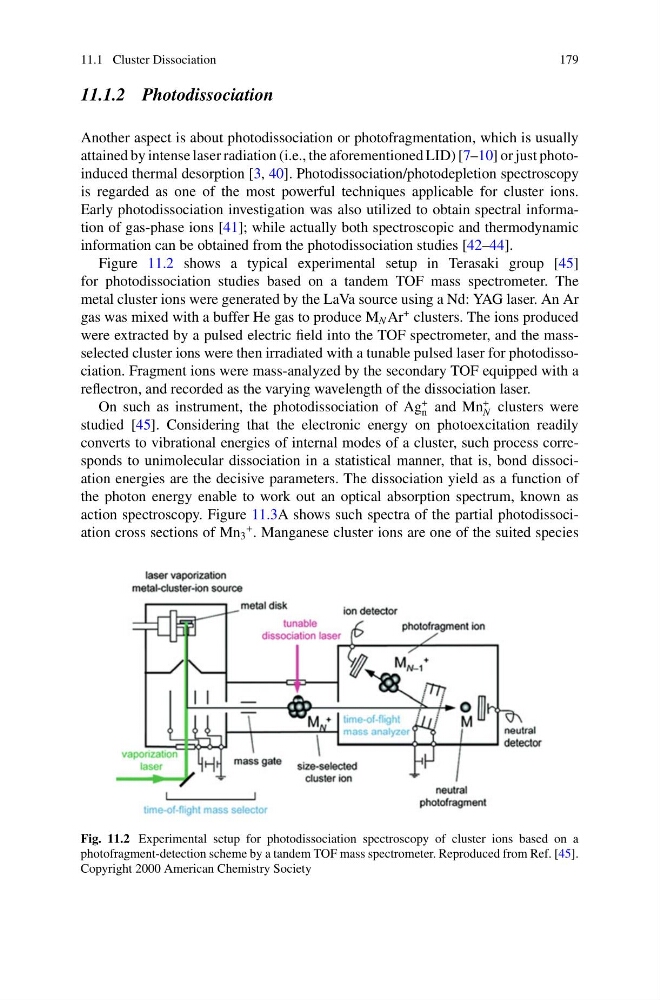
Figure 11.2 shows a typical experimental setup in Terasaki group [45]
for photodissociation studies based on a tandem TOF mass spectrometer. The
metal cluster ions were generated by the LaVa source using a Nd: YAG laser. An Ar
gas was mixed with a buffer He gas to produce M N Ar
+ clusters. The ions produced
were extracted by a pulsed electric field into the TOF spectrometer, and the massselected cluster ions were then irradiated with a tunable pulsed laser for photodissociation. Fragment ions were mass-analyzed by the secondary TOF equipped with a
reflectron, and recorded as the varying wavelength of the dissociation laser.
On such as instrument, the photodissociation of Ag
+
n and Mn
+
N clusters were
studied [45]. Considering that the electronic energy on photoexcitation readily
converts to vibrational energies of internal modes of a cluster, such process corresponds to unimolecular dissociation in a statistical manner, that is, bond dissociation energies are the decisive parameters. The dissociation yield as a function of
the photon energy enable to work out an optical absorption spectrum, known as
action spectroscopy. Figure 11.3A shows such spectra of the partial photodissociation cross sections of Mn 3
+ . Manganese cluster ions are one of the suited species
Fig. 11.2 Experimental setup for photodissociation spectroscopy of cluster ions based on a
photofragment-detection scheme by a tandem TOF mass spectrometer. Reproduced from Ref. [45].
Copyright 2000 American Chemistry Society
179
11.1.2 Photodissociation
Another aspect is about photodissociation or photofragmentation, which is usually
attained by intense laser radiation (i.e., the aforementioned LID) [7–10] or just photoinduced thermal desorption [3, 40]. Photodissociation/photodepletion spectroscopy
is regarded as one of the most powerful techniques applicable for cluster ions.
Early photodissociation investigation was also utilized to obtain spectral information of gas-phase ions [41]; while actually both spectroscopic and thermodynamic
information can be obtained from the photodissociation studies [42–44].
Figure 11.2 shows a typical experimental setup in Terasaki group [45]
for photodissociation studies based on a tandem TOF mass spectrometer. The
metal cluster ions were generated by the LaVa source using a Nd: YAG laser. An Ar
gas was mixed with a buffer He gas to produce M N Ar
+ clusters. The ions produced
were extracted by a pulsed electric field into the TOF spectrometer, and the massselected cluster ions were then irradiated with a tunable pulsed laser for photodissociation. Fragment ions were mass-analyzed by the secondary TOF equipped with a
reflectron, and recorded as the varying wavelength of the dissociation laser.
On such as instrument, the photodissociation of Ag
+
n and Mn
+
N clusters were
studied [45]. Considering that the electronic energy on photoexcitation readily
converts to vibrational energies of internal modes of a cluster, such process corresponds to unimolecular dissociation in a statistical manner, that is, bond dissociation energies are the decisive parameters. The dissociation yield as a function of
the photon energy enable to work out an optical absorption spectrum, known as
action spectroscopy. Figure 11.3A shows such spectra of the partial photodissociation cross sections of Mn 3
+ . Manganese cluster ions are one of the suited species
Fig. 11.2 Experimental setup for photodissociation spectroscopy of cluster ions based on a
photofragment-detection scheme by a tandem TOF mass spectrometer. Reproduced from Ref. [45].
Copyright 2000 American Chemistry Society