

168
10 Metallo-Carbohedrenes and Their Reactivity
density but not being detected assuming they have higher ionization potentials. Two
factors determine the intensity of neutral clusters through the photoionization spectroscopy: (i) the density of the respective clusters in the molecular beam, and (ii) the
ionization cross sections of the clusters. It is therefore not appropriate to conclude
a formation mechanism for the Met-Car clusters and their stabilities just from the
mass abundance.
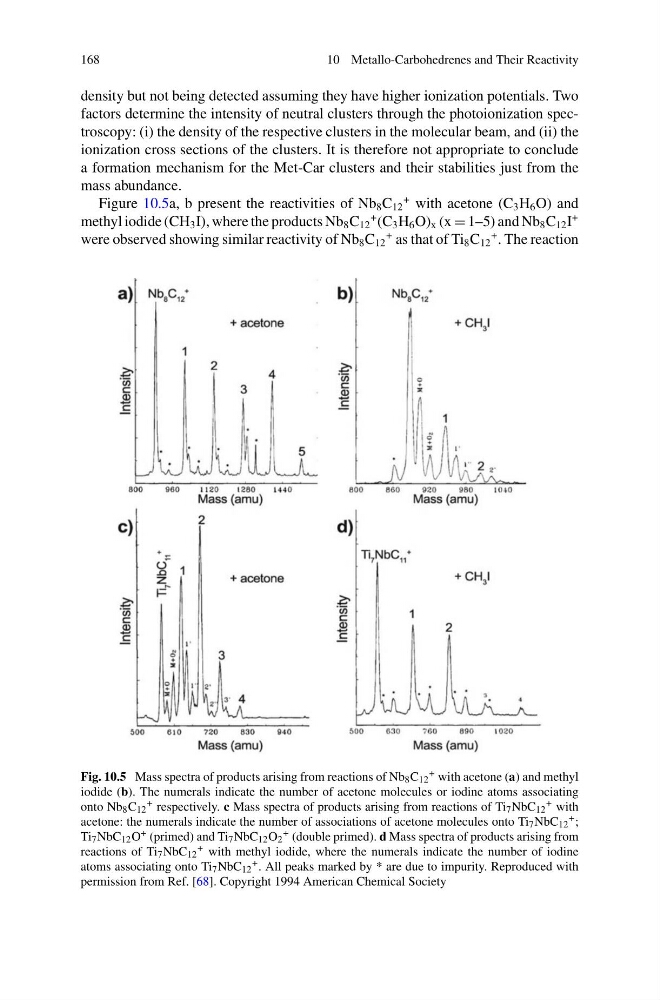
Figure 10.5a, b present the reactivities of Nb 8 C 12
+ with acetone (C 3 H 6 O) and
methyl iodide (CH 3 I), where the products Nb 8 C 12
+ (C 3 H 6 O) x (x = 1–5) and Nb 8 C 12 I
+
were observed showing similar reactivity of Nb 8 C 12
+ as that of Ti 8 C 12
+ . The reaction
Fig. 10.5 Mass spectra of products arising from reactions of Nb 8 C 12
+ with acetone (a) and methyl
iodide (b). The numerals indicate the number of acetone molecules or iodine atoms associating
onto Nb 8 C 12
+ respectively. c Mass spectra of products arising from reactions of Ti 7 NbC 12
+ with
acetone: the numerals indicate the number of associations of acetone molecules onto Ti 7 NbC 12
+ ;
Ti 7 NbC 12 O + (primed) and Ti 7 NbC 12 O 2
+ (double primed). d Mass spectra of products arising from
reactions of Ti 7 NbC 12
+ with methyl iodide, where the numerals indicate the number of iodine
atoms associating onto Ti 7 NbC 12
+ . All peaks marked by * are due to impurity. Reproduced with
permission from Ref. [68]. Copyright 1994 American Chemical Society
10 Metallo-Carbohedrenes and Their Reactivity
density but not being detected assuming they have higher ionization potentials. Two
factors determine the intensity of neutral clusters through the photoionization spectroscopy: (i) the density of the respective clusters in the molecular beam, and (ii) the
ionization cross sections of the clusters. It is therefore not appropriate to conclude
a formation mechanism for the Met-Car clusters and their stabilities just from the
mass abundance.
Figure 10.5a, b present the reactivities of Nb 8 C 12
+ with acetone (C 3 H 6 O) and
methyl iodide (CH 3 I), where the products Nb 8 C 12
+ (C 3 H 6 O) x (x = 1–5) and Nb 8 C 12 I
+
were observed showing similar reactivity of Nb 8 C 12
+ as that of Ti 8 C 12
+ . The reaction
Fig. 10.5 Mass spectra of products arising from reactions of Nb 8 C 12
+ with acetone (a) and methyl
iodide (b). The numerals indicate the number of acetone molecules or iodine atoms associating
onto Nb 8 C 12
+ respectively. c Mass spectra of products arising from reactions of Ti 7 NbC 12
+ with
acetone: the numerals indicate the number of associations of acetone molecules onto Ti 7 NbC 12
+ ;
Ti 7 NbC 12 O + (primed) and Ti 7 NbC 12 O 2
+ (double primed). d Mass spectra of products arising from
reactions of Ti 7 NbC 12
+ with methyl iodide, where the numerals indicate the number of iodine
atoms associating onto Ti 7 NbC 12
+ . All peaks marked by * are due to impurity. Reproduced with
permission from Ref. [68]. Copyright 1994 American Chemical Society