

104
7 The Reactions with Monoxides for Pollution Removal
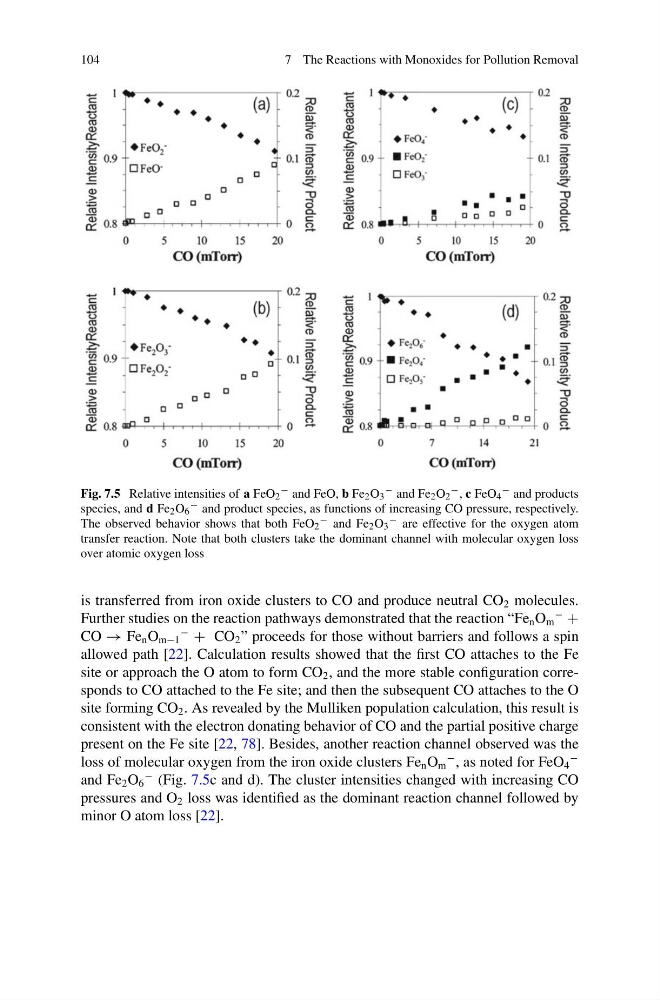
Fig. 7.5 Relative intensities of a FeO 2
− and FeO, b Fe 2 O 3
− and Fe 2 O 2
− , c FeO 4
− and products
species, and d Fe 2 O 6
− and product species, as functions of increasing CO pressure, respectively.
The observed behavior shows that both FeO 2
− and Fe 2 O 3
− are effective for the oxygen atom
transfer reaction. Note that both clusters take the dominant channel with molecular oxygen loss
over atomic oxygen loss
is transferred from iron oxide clusters to CO and produce neutral CO 2 molecules.
Further studies on the reaction pathways demonstrated that the reaction “Fe n O m
−
+
CO → Fe n O m−1
−
+ CO 2 ” proceeds for those without barriers and follows a spin
allowed path [22]. Calculation results showed that the first CO attaches to the Fe
site or approach the O atom to form CO 2 , and the more stable configuration corresponds to CO attached to the Fe site; and then the subsequent CO attaches to the O
site forming CO 2 . As revealed by the Mulliken population calculation, this result is
consistent with the electron donating behavior of CO and the partial positive charge
present on the Fe site [22, 78]. Besides, another reaction channel observed was the
loss of molecular oxygen from the iron oxide clusters Fe n O m
− , as noted for FeO 4
−
and Fe 2 O 6
− (Fig. 7.5c and d). The cluster intensities changed with increasing CO
pressures and O 2 loss was identified as the dominant reaction channel followed by
minor O atom loss [22].
7 The Reactions with Monoxides for Pollution Removal
Fig. 7.5 Relative intensities of a FeO 2
− and FeO, b Fe 2 O 3
− and Fe 2 O 2
− , c FeO 4
− and products
species, and d Fe 2 O 6
− and product species, as functions of increasing CO pressure, respectively.
The observed behavior shows that both FeO 2
− and Fe 2 O 3
− are effective for the oxygen atom
transfer reaction. Note that both clusters take the dominant channel with molecular oxygen loss
over atomic oxygen loss
is transferred from iron oxide clusters to CO and produce neutral CO 2 molecules.
Further studies on the reaction pathways demonstrated that the reaction “Fe n O m
−
+
CO → Fe n O m−1
−
+ CO 2 ” proceeds for those without barriers and follows a spin
allowed path [22]. Calculation results showed that the first CO attaches to the Fe
site or approach the O atom to form CO 2 , and the more stable configuration corresponds to CO attached to the Fe site; and then the subsequent CO attaches to the O
site forming CO 2 . As revealed by the Mulliken population calculation, this result is
consistent with the electron donating behavior of CO and the partial positive charge
present on the Fe site [22, 78]. Besides, another reaction channel observed was the
loss of molecular oxygen from the iron oxide clusters Fe n O m
− , as noted for FeO 4
−
and Fe 2 O 6
− (Fig. 7.5c and d). The cluster intensities changed with increasing CO
pressures and O 2 loss was identified as the dominant reaction channel followed by
minor O atom loss [22].