

90
6 Cooperative Active-Sites Mechanism
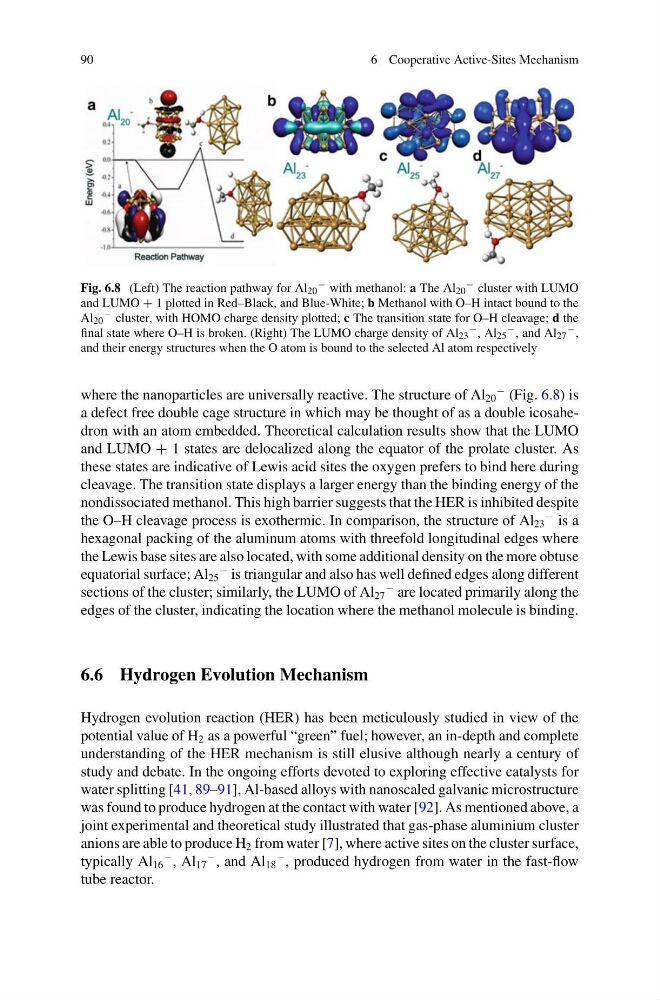
Fig. 6.8 (Left) The reaction pathway for Al 20
− with methanol: a The Al 20
− cluster with LUMO
and LUMO + 1 plotted in Red–Black, and Blue-White; b Methanol with O–H intact bound to the
Al 20
− cluster, with HOMO charge density plotted; c The transition state for O–H cleavage; d the
final state where O–H is broken. (Right) The LUMO charge density of Al 23
− , Al 25
− , and Al 27
− ,
and their energy structures when the O atom is bound to the selected Al atom respectively
where the nanoparticles are universally reactive. The structure of Al 20
− (Fig. 6.8) is
a defect free double cage structure in which may be thought of as a double icosahedron with an atom embedded. Theoretical calculation results show that the LUMO
and LUMO + 1 states are delocalized along the equator of the prolate cluster. As
these states are indicative of Lewis acid sites the oxygen prefers to bind here during
cleavage. The transition state displays a larger energy than the binding energy of the
nondissociated methanol. This high barrier suggests that the HER is inhibited despite
the O–H cleavage process is exothermic. In comparison, the structure of Al 23
− is a
hexagonal packing of the aluminum atoms with threefold longitudinal edges where
the Lewis base sites are also located, with some additional density on the more obtuse
equatorial surface; Al 25
− is triangular and also has well defined edges along different
sections of the cluster; similarly, the LUMO of Al 27
− are located primarily along the
edges of the cluster, indicating the location where the methanol molecule is binding.
6.6 Hydrogen Evolution Mechanism
Hydrogen evolution reaction (HER) has been meticulously studied in view of the
potential value of H 2 as a powerful “green” fuel; however, an in-depth and complete
understanding of the HER mechanism is still elusive although nearly a century of
study and debate. In the ongoing efforts devoted to exploring effective catalysts for
water splitting [41, 89–91], Al-based alloys with nanoscaled galvanic microstructure
was found to produce hydrogen at the contact with water [92]. As mentioned above, a
joint experimental and theoretical study illustrated that gas-phase aluminium cluster
anions are able to produce H 2 from water [7], where active sites on the cluster surface,
typically Al 16
− , Al 17
− , and Al 18
− , produced hydrogen from water in the fast-flow
tube reactor.
6 Cooperative Active-Sites Mechanism
Fig. 6.8 (Left) The reaction pathway for Al 20
− with methanol: a The Al 20
− cluster with LUMO
and LUMO + 1 plotted in Red–Black, and Blue-White; b Methanol with O–H intact bound to the
Al 20
− cluster, with HOMO charge density plotted; c The transition state for O–H cleavage; d the
final state where O–H is broken. (Right) The LUMO charge density of Al 23
− , Al 25
− , and Al 27
− ,
and their energy structures when the O atom is bound to the selected Al atom respectively
where the nanoparticles are universally reactive. The structure of Al 20
− (Fig. 6.8) is
a defect free double cage structure in which may be thought of as a double icosahedron with an atom embedded. Theoretical calculation results show that the LUMO
and LUMO + 1 states are delocalized along the equator of the prolate cluster. As
these states are indicative of Lewis acid sites the oxygen prefers to bind here during
cleavage. The transition state displays a larger energy than the binding energy of the
nondissociated methanol. This high barrier suggests that the HER is inhibited despite
the O–H cleavage process is exothermic. In comparison, the structure of Al 23
− is a
hexagonal packing of the aluminum atoms with threefold longitudinal edges where
the Lewis base sites are also located, with some additional density on the more obtuse
equatorial surface; Al 25
− is triangular and also has well defined edges along different
sections of the cluster; similarly, the LUMO of Al 27
− are located primarily along the
edges of the cluster, indicating the location where the methanol molecule is binding.
6.6 Hydrogen Evolution Mechanism
Hydrogen evolution reaction (HER) has been meticulously studied in view of the
potential value of H 2 as a powerful “green” fuel; however, an in-depth and complete
understanding of the HER mechanism is still elusive although nearly a century of
study and debate. In the ongoing efforts devoted to exploring effective catalysts for
water splitting [41, 89–91], Al-based alloys with nanoscaled galvanic microstructure
was found to produce hydrogen at the contact with water [92]. As mentioned above, a
joint experimental and theoretical study illustrated that gas-phase aluminium cluster
anions are able to produce H 2 from water [7], where active sites on the cluster surface,
typically Al 16
− , Al 17
− , and Al 18
− , produced hydrogen from water in the fast-flow
tube reactor.