

Further, sour cherry nectar phenolic profile was characterized with the presence of
rutin, pinocembrin, and galangin, detected in all nectar samples, while gallic acid,
hesperetin, and naringin were found in some samples. In earlier work, rutin was
shown to act as a feeding stimulant for some insects [98]. Also, recently was proved
that rutin has the highest antimicrobial (especially antibacterial) activity in honey
[99] so there is a possibility that its function in nectar is the same. Pinobanksin,
naringenin, and chrysin were detected in variable amounts in sour cherry nectar.
Table 2 shows the content of phenolic compounds (average values). Naringenin
plays an important role in plant development and it was reported to show bactericidal
and/or bacteriostatic activity [100], and antimicrobial effects against yeasts [101],
but shows low activity as feeding stimulant in insect-plant interaction [102].
Moreover, naringenin influenced bee foraging behavior as deterrent [103], but no
relationship could be underlined between its level and yield efficiency (yield per
trunk cross sectional area), of “Oblačisnka sour cherry” clones that were studied by.
As a matter of fact, group of clones that stored high content of nagingenin is showing
all kind of yield effectiveness, which stands the same for the group of clones with
very low level of this flavanone [64, 104].
The positive influence of abscisic acid in nectar to the immune response of worker
honeybees and larvae after being parasitized with Varroa destructor was described
previously [105]. In plants abscisic acid regulates fundamental physiological functions and accumulates in response to different environmental stresses [106, 107] and
can be found in phloem and xylem sap and in nectar [95, 108]. In honey, this
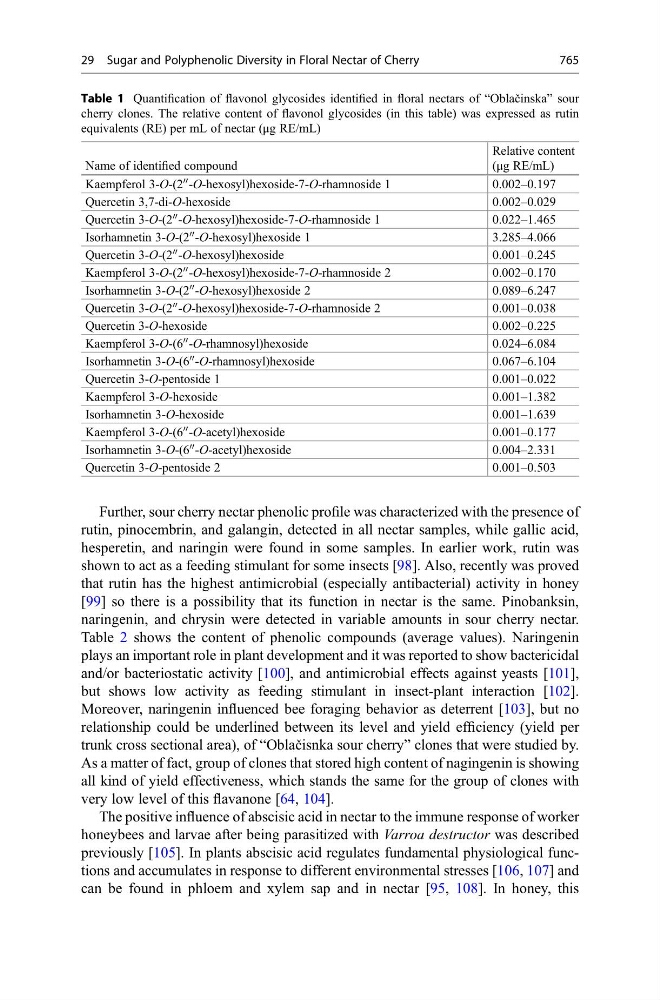
Table 1 Quantification of flavonol glycosides identified in floral nectars of “Oblačinska” sour
cherry clones. The relative content of flavonol glycosides (in this table) was expressed as rutin
equivalents (RE) per mL of nectar (μg RE/mL)
Name of identified compound
Relative content
(μg RE/mL)
Kaempferol 3-O-(2
00 -O-hexosyl)hexoside-7-O-rhamnoside 1
0.002–0.197
Quercetin 3,7-di-O-hexoside
0.002–0.029
Quercetin 3-O-(2
00 -O-hexosyl)hexoside-7-O-rhamnoside 1
0.022–1.465
Isorhamnetin 3-O-(2
00 -O-hexosyl)hexoside 1
3.285–4.066
Quercetin 3-O-(2
00 -O-hexosyl)hexoside
0.001–0.245
Kaempferol 3-O-(2
00 -O-hexosyl)hexoside-7-O-rhamnoside 2
0.002–0.170
Isorhamnetin 3-O-(2
00 -O-hexosyl)hexoside 2
0.089–6.247
Quercetin 3-O-(2
00 -O-hexosyl)hexoside-7-O-rhamnoside 2
0.001–0.038
Quercetin 3-O-hexoside
0.002–0.225
Kaempferol 3-O-(6
00 -O-rhamnosyl)hexoside
0.024–6.084
Isorhamnetin 3-O-(6
00 -O-rhamnosyl)hexoside
0.067–6.104
Quercetin 3-O-pentoside 1
0.001–0.022
Kaempferol 3-O-hexoside
0.001–1.382
Isorhamnetin 3-O-hexoside
0.001–1.639
Kaempferol 3-O-(6
00 -O-acetyl)hexoside
0.001–0.177
Isorhamnetin 3-O-(6
00 -O-acetyl)hexoside
0.004–2.331
Quercetin 3-O-pentoside 2
0.001–0.503
29 Sugar and Polyphenolic Diversity in Floral Nectar of Cherry
765