

5.3
Floral Resin: Characteristics and Histochemistry
Resins usually have amber coloration, but their composition may determine
different colors or even its total absence [269]. They are usually are composed
of a diverse mixture of terpenes, phenolic compounds, and several other classes of
compounds like polysaccharides and fatty acids, and there is variation in their
composition between groups of plants [269]. In addition, in Dalechampia
(Euphorbiaceae), fatty acids are found aside from terpenoids and phenolic compounds [273, 276, 277]. Detailed chemical studies have only been performed in
Clusia and Chrysochlamys of Clusiaceae, where the main constituents identified
were benzophenone derivatives, as 7-epi-nemorosone [281, 285]. Other studies
have identified terpenoids, lipids, mucilage, proteins, and phenolic compounds as
resin components [269, 273, 279]. Despite the variation in the composition of
resins, the main components in all the hitherto investigated groups of plants are
terpenes.
Epithelial
cell
Parenchyma
cell
Lumen
2
1
Mitochondrion
Pl w/ starch
Dictyosome
Vacuole
Nucleus
Smooth ER
Rough ER
Lipids/Resin
Pl w/ plastoglobules
Chloroplast
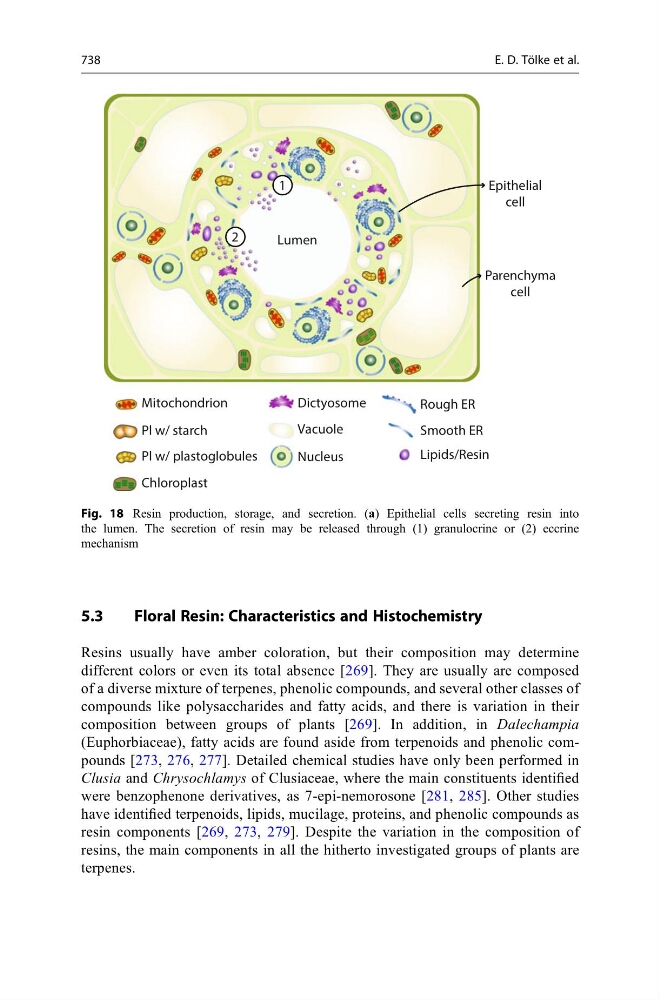
Fig. 18 Resin production, storage, and secretion. (a) Epithelial cells secreting resin into
the lumen. The secretion of resin may be released through (1) granulocrine or (2) eccrine
mechanism
738
E. D. Tölke et al.