

weight, low polarity, and low vapor pressure – properties that facilitate volatility. Some
compounds are present in most floral aromas, while others are found only in certain
species [152]. Despite the greater or lesser similarity between the chemical compositions of the volatile oils of each flower, there must be a synchronization between the
moment of an insect’s activity and the emission of the odor, besides other parameters
involved in floral development [153].
The chemical composition of scents plays an important role in the communication
between organisms. The typical odor of a flower may result from the majority
of volatile terpenes and/or their combination with amines and ammonia [8, 144].
The function of the emitted volatiles is quite diverse. The most important function is
communication. Odors have a significantly better transmission range than visual
cues. The composition of floral scents is not conservative in all species of a genus.
For instance, Clarkia breweri (Onagraceae) has fragrant flowers, while Clarkia
concinna is scentless [154]. In addition, the quality and quantity of odor emission
Symplast route
Parenchyma
Epidermis
1
2
Mitochondrion
Pl w/ starch
Dictyosome
Vacuole
Nucleus
Smooth ER
Rough ER
Volatiles
Pl w/ plastoglobules
Cuticle
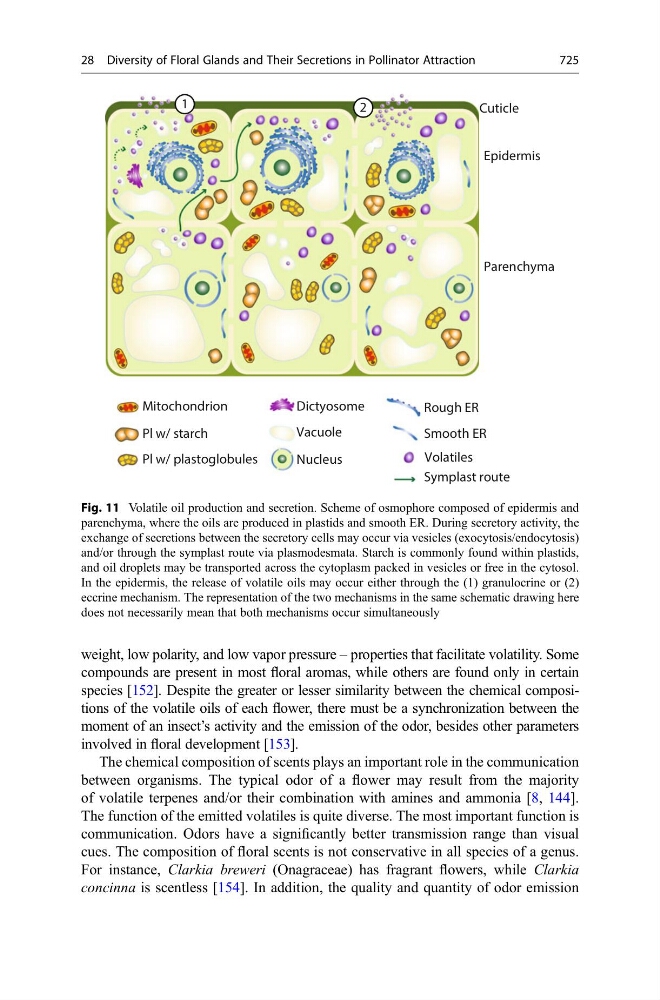
Fig. 11 Volatile oil production and secretion. Scheme of osmophore composed of epidermis and
parenchyma, where the oils are produced in plastids and smooth ER. During secretory activity, the
exchange of secretions between the secretory cells may occur via vesicles (exocytosis/endocytosis)
and/or through the symplast route via plasmodesmata. Starch is commonly found within plastids,
and oil droplets may be transported across the cytoplasm packed in vesicles or free in the cytosol.
In the epidermis, the release of volatile oils may occur either through the (1) granulocrine or (2)
eccrine mechanism. The representation of the two mechanisms in the same schematic drawing here
does not necessarily mean that both mechanisms occur simultaneously
28 Diversity of Floral Glands and Their Secretions in Pollinator Attraction
725