

In general, petals are the main floral structures that emit odorous substances, but
sepals, stamens, pistils, and nectaries can also emit specific volatiles [135].Some
remarkable examples are the osmophores (scent glands) on i) the adaxial surface of
petal lobes, like in the family Apocynaceae [136]; (ii) on the abaxial face of the
labellum of some species of Orchidaceae (Cyclopogon elatus) [137] or the hypochile
of the labellum of Stanhopea graveolens [138]; or (iii) appendages of dorsal sepals
of Bulbophyllum wendlandianum [139]; or (iv) on the spadix appendix as well as the
club-shaped organs located directly above the female flowers of certain Araceae, as
Sauromatum guttatum [140].
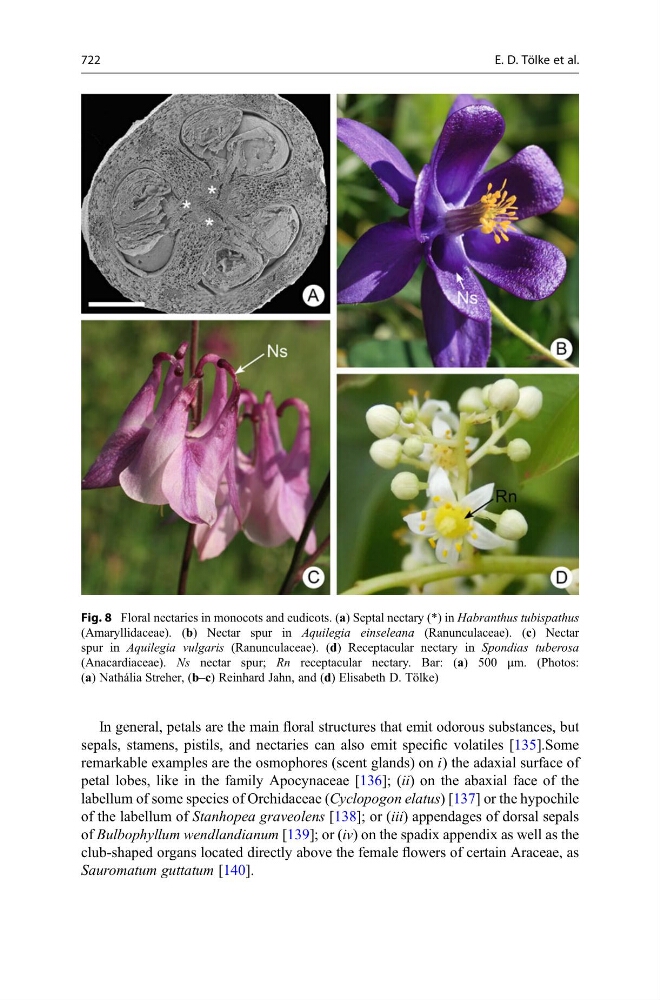
Fig. 8 Floral nectaries in monocots and eudicots. (a) Septal nectary (*) in Habranthus tubispathus
(Amaryllidaceae). (b) Nectar spur in Aquilegia einseleana (Ranunculaceae). (c) Nectar
spur in Aquilegia vulgaris (Ranunculaceae). (d) Receptacular nectary in Spondias tuberosa
(Anacardiaceae). Ns nectar spur; Rn receptacular nectary. Bar: (a) 500 μm. (Photos:
(a) Nathália Streher, (b–c) Reinhard Jahn, and (d) Elisabeth D. Tölke)
722
E. D. Tölke et al.