

are structurally simple. The flowers of Nymphaeaceae bear a central nectary on the
petals, while the flowers of Cabombaceae produce nectar through glandular trichomes [105, 115–117]. Although other early-branching lineages as Amborellales,
Austrobaileyales, and Chloranthales are pollinated by insects, no floral nectaries
have been reported so far in those orders [111, 113–115, 118–123]. Nectar is
produced in most of the families of magnoliids (e.g., Winteraceae in Canellales;
Aristolochiaceae in Piperales; Lauraceae and late Monimiaceae in Laurales;
CRC Nectary regulation
Gymnosperms
ANA Grade
Magnoliids
Monocots
Core Eudicots
Early Diverging
Eudicots
Ovular secretion
Peripheral nectaries
(petals)
a
(sepals, petals,
stamens)
b
c
(tepals, septal and
perigonal nectaries are
widespread)
(nectar spurs are especially
common in Ranunculaceae)
(nectaries variable in shape,
size, and location, most of
them receptacular and
gynoecial)
1
2
3
4
5
a: floral nectaries
b: nectary spurs
c: receptacular nectaries
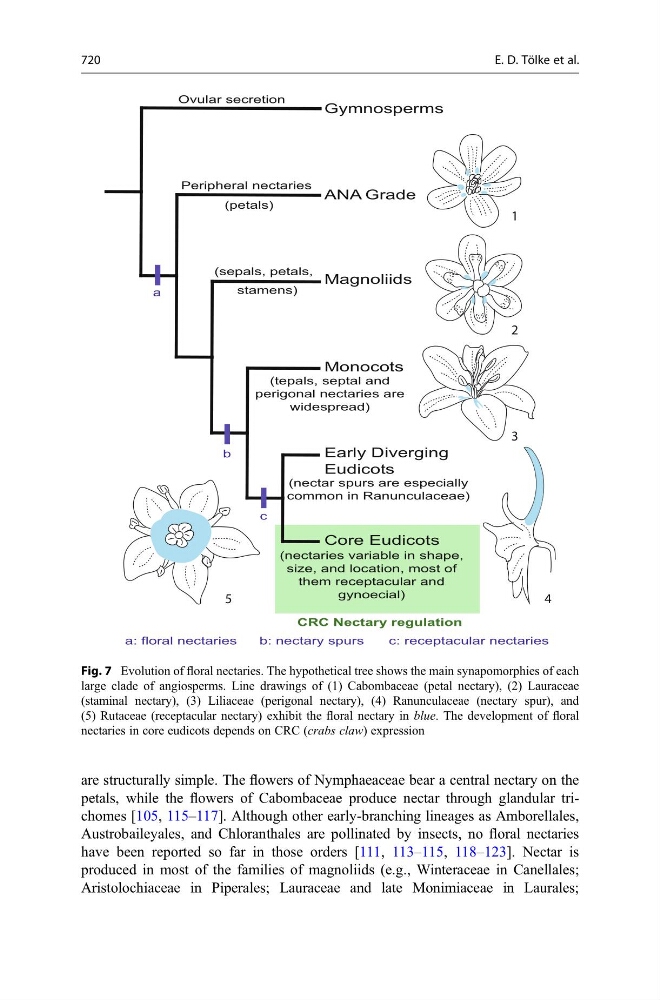
Fig. 7 Evolution of floral nectaries. The hypothetical tree shows the main synapomorphies of each
large clade of angiosperms. Line drawings of (1) Cabombaceae (petal nectary), (2) Lauraceae
(staminal nectary), (3) Liliaceae (perigonal nectary), (4) Ranunculaceae (nectary spur), and
(5) Rutaceae (receptacular nectary) exhibit the floral nectary in blue. The development of floral
nectaries in core eudicots depends on CRC (crabs claw) expression
720
E. D. Tölke et al.