

shade in betterment of the fragrance aroma and flavor of coffee [223]. Leonel and
Philippe [28] documented the obvious role of shade on organoleptic quality (body,
acidity, flavor, and preference) only with high fertilization levels. Vaast et al. [222]
noted that fruit thinning has insignificant relationship with overall yield as both kinds
of trees, full loaded and thinned (1/4% to ½%), showed alternate bearing pattern of
berries, but thinning to quarter resulted in the most balanced production of berries.
Same authors noted that fruit thinning is also responsible for fast ripening of the
remaining berries, both in shade and sun, which is detrimental to the cup quality of
coffee. Fruit thinning only improves the bean size in the highly productive year,
whereas in recessive yield year, beans size did not differ significantly among the fruit
thinned and unthinned trees. In comparison to fruit thinned tress, high fruit bearing
tress showed a 30% drop in starch (but total soluble sugars remained unaltered),
erratic leaf mineral content variations, and high probability of leaf rust occurrences
[224]. Shade reduced the difference of productivity between two successive years,
whereas full sun grown coffee showed significant variations from one year to next
year [22]. Shade also increases the leaf to fruit ratio, but this ratio also pursuits the
alternate bearing pattern of productivity each year. Shade also increases the bean size
and weight and amends the biochemical composition of beans [225]. Fat and
caffeine contents were higher in beans of shade-grown plants, whereas chlorogenic
acid, sucrose, and trigonelline contents were higher in beans of sun-grown coffee
beans owing to which sun-grown coffee showed more bitterness and astringency as
compared to acidic high flavor shade-grown coffee [22, 222]. However, same kinds
of results have not been registered for all kind of cultivars of coffee under shade. A
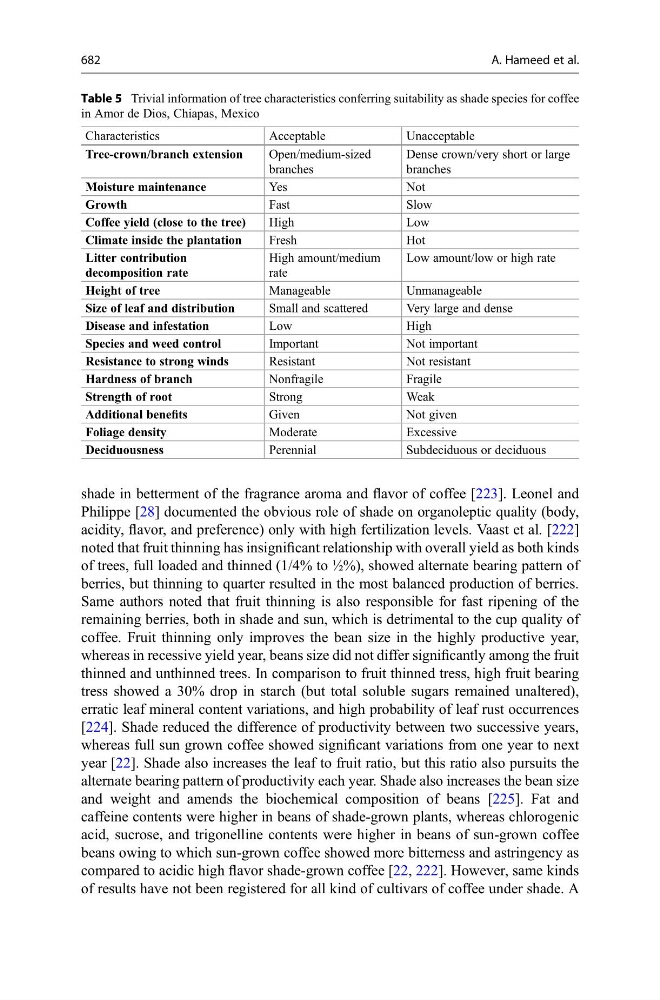
Table 5 Trivial information of tree characteristics conferring suitability as shade species for coffee
in Amor de Dios, Chiapas, Mexico
Characteristics
Acceptable
Unacceptable
Tree-crown/branch extension
Open/medium-sized
branches
Dense crown/very short or large
branches
Moisture maintenance
Yes
Not
Growth
Fast
Slow
Coffee yield (close to the tree)
High
Low
Climate inside the plantation
Fresh
Hot
Litter contribution
decomposition rate
High amount/medium
rate
Low amount/low or high rate
Height of tree
Manageable
Unmanageable
Size of leaf and distribution
Small and scattered
Very large and dense
Disease and infestation
Low
High
Species and weed control
Important
Not important
Resistance to strong winds
Resistant
Not resistant
Hardness of branch
Nonfragile
Fragile
Strength of root
Strong
Weak
Additional benefits
Given
Not given
Foliage density
Moderate
Excessive
Deciduousness
Perennial
Subdeciduous or deciduous
682
A. Hameed et al.