

gene expression [204, 205]. Due to deamination of these amino acids during
roasting, ammonia from these amino acids will combine with sugar degradation
products that gives pyrazines that are responsible for flavor and aroma of coffee.
Thus, the variation in the amount of pyrazines due to variation in the amount of
amino acid can interfere the quality attributes of coffee too [203].
Climate change can be defined as any significant change in climate, such as
temperature or precipitation that lasts for an extended period of time, typically
decades, whether due to natural variability or human activity [206]. So we can say
that climate change is anything to do with the changing rate of precipitation, dry
spells and season or rise or fall of temperature and humidity, etc. By 2050, globally,
rise in temperature (by 2
C) will result in some increased seasonality of precipitation
in different cropping regions which consequently affected the crop quality and yield
and may increase the chances of insect pest infestations [207]. Climate change can
be resulted in the loss of specialty coffee certifications such as “Denomination of
Origin” (DO) certifications as currently coffee suitable areas will not be capable of
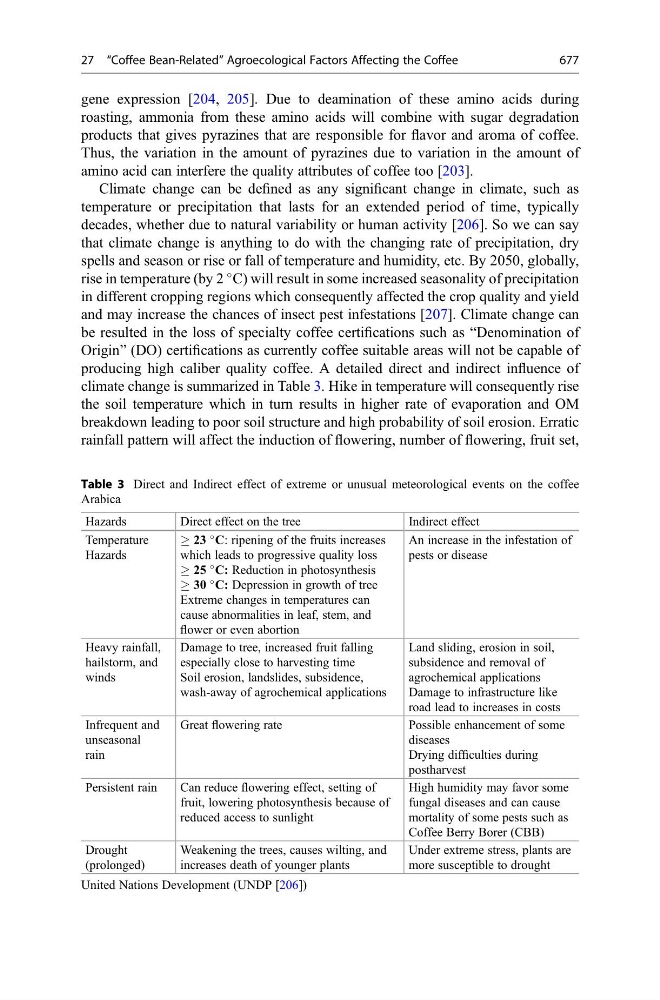
producing high caliber quality coffee. A detailed direct and indirect influence of
climate change is summarized in Table 3. Hike in temperature will consequently rise
the soil temperature which in turn results in higher rate of evaporation and OM
breakdown leading to poor soil structure and high probability of soil erosion. Erratic
rainfall pattern will affect the induction of flowering, number of flowering, fruit set,
Table 3 Direct and Indirect effect of extreme or unusual meteorological events on the coffee
Arabica
Hazards
Direct effect on the tree
Indirect effect
Temperature
Hazards
! 23
C: ripening of the fruits increases
which leads to progressive quality loss
! 25
C: Reduction in photosynthesis
! 30
C: Depression in growth of tree
Extreme changes in temperatures can
cause abnormalities in leaf, stem, and
flower or even abortion
An increase in the infestation of
pests or disease
Heavy rainfall,
hailstorm, and
winds
Damage to tree, increased fruit falling
especially close to harvesting time
Soil erosion, landslides, subsidence,
wash-away of agrochemical applications
Land sliding, erosion in soil,
subsidence and removal of
agrochemical applications
Damage to infrastructure like
road lead to increases in costs
Infrequent and
unseasonal
rain
Great flowering rate
Possible enhancement of some
diseases
Drying difficulties during
postharvest
Persistent rain
Can reduce flowering effect, setting of
fruit, lowering photosynthesis because of
reduced access to sunlight
High humidity may favor some
fungal diseases and can cause
mortality of some pests such as
Coffee Berry Borer (CBB)
Drought
(prolonged)
Weakening the trees, causes wilting, and
increases death of younger plants
Under extreme stress, plants are
more susceptible to drought
United Nations Development (UNDP [206])
27 “Coffee Bean-Related” Agroecological Factors Affecting the Coffee
677