

Studies conducted on 120 grape germplasm cultivars of Vitis for 2 years
showed that berries of interspecific rootstock cultivars had very high levels of
extractable resveratrol (<210 μg g
À1 fwÀ1). The various genotypes of V. riparia
tested usually contained high levels of resveratrol, whereas most genotypes of
V. vinifera and their hybrids with V. labrusca usually contained relatively low
levels (<2 μg g
À1 fwÀ1) [23]. Moreover, red varieties contain higher stilbene
concentrations than white ones [24]. Additionally, ripe grapes lose their ability to
respond to elicitors.
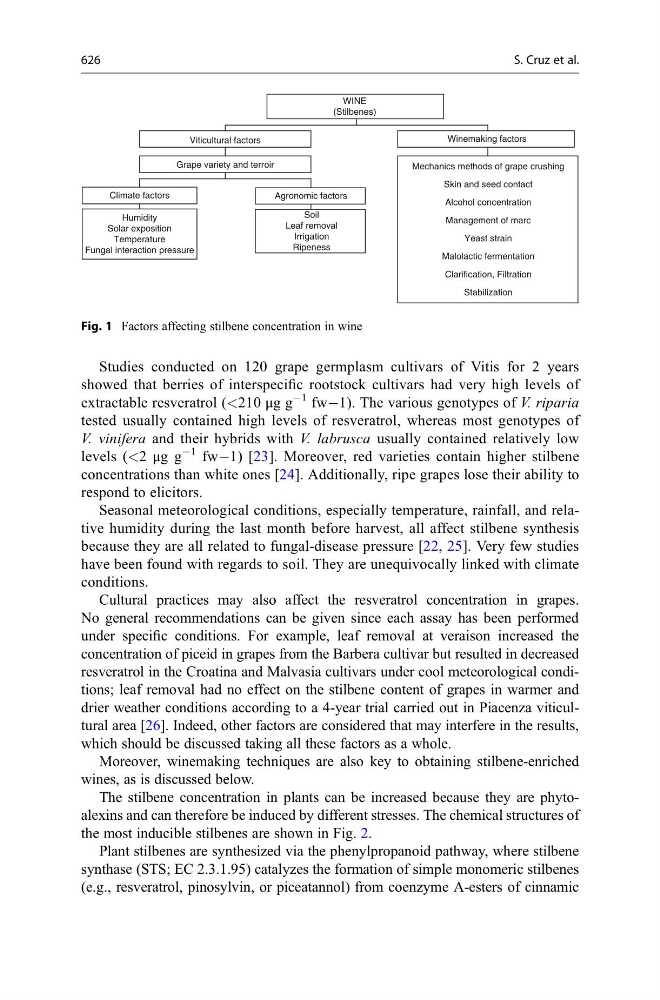
Seasonal meteorological conditions, especially temperature, rainfall, and relative humidity during the last month before harvest, all affect stilbene synthesis
because they are all related to fungal-disease pressure [22, 25]. Very few studies
have been found with regards to soil. They are unequivocally linked with climate
conditions.
Cultural practices may also affect the resveratrol concentration in grapes.
No general recommendations can be given since each assay has been performed
under specific conditions. For example, leaf removal at veraison increased the
concentration of piceid in grapes from the Barbera cultivar but resulted in decreased
resveratrol in the Croatina and Malvasia cultivars under cool meteorological conditions; leaf removal had no effect on the stilbene content of grapes in warmer and
drier weather conditions according to a 4-year trial carried out in Piacenza viticultural area [26]. Indeed, other factors are considered that may interfere in the results,
which should be discussed taking all these factors as a whole.
Moreover, winemaking techniques are also key to obtaining stilbene-enriched
wines, as is discussed below.
The stilbene concentration in plants can be increased because they are phytoalexins and can therefore be induced by different stresses. The chemical structures of
the most inducible stilbenes are shown in Fig. 2.
Plant stilbenes are synthesized via the phenylpropanoid pathway, where stilbene
synthase (STS; EC 2.3.1.95) catalyzes the formation of simple monomeric stilbenes
(e.g., resveratrol, pinosylvin, or piceatannol) from coenzyme A-esters of cinnamic
WINE
(Stilbenes)
Viticultural factors
Grape variety and terroir
Winemaking factors
Agronomic factors
Climate factors
Humidity
Solar exposition
Temperature
Fungal interaction pressure
Soil
Leaf removal
Irrigation
Ripeness
Mechanics methods of grape crushing
Skin and seed contact
Alcohol concentration
Management of marc
Yeast strain
Malolactic fermentation
Clarification, Filtration
Stabilization
Fig. 1 Factors affecting stilbene concentration in wine
626
S. Cruz et al.