

(alkaloids). These pathways, both individually and in combination, create enormous
structural diversity, with around 200,000 currently identified.
This structural diversity is further enhanced by widespread glycosylation and esterification and also by the less frequent inclusion of other primary metabolites, such as
certain nonaromatic amino acids and polysaccharides. Plants typically produce complex
mixtures of SMs. The ingredients of these mixtures, which differ between plant organs
and stages of development, generally belong to several classes of secondary metabolites;
for example, terpenoids are often accompanied by phenols. In principle, a limited
number of major secondary metabolites and several minor components are commonly
found, which are often biosynthetically related to major constituents [28].
Plant secondary metabolites are synthesized by specific pathways. The sites of
their synthesis can vary for both the type metabolite and the different plant species.
In addition, some molecules can be synthesized in all plant tissues, while others are
produced in a specific tissue or even in a cell-specific species [29]. The place of
synthesis for SM is not always the place for their accumulation. Secondary metabolites, which are hydrophilic compounds, are predominantly stored in the vacuole,
whereas lipophilic SMs are usually isolated in gum channels, oil cells, trichomes, or
in the cuticle [7, 30].
Anthocyanins, flavonols and flavan 3-ols are synthesized through the flavonoid
pathway, whose genetics and biochemistry are already well-studied. The process
consists of several steps common to the synthesis of different flavonoids. Additionally,
there are also branches of specific reactions that are specific to each type of flavonoid
(Fig. 3). It is assumed that the flavonoid pathway is mainly regulated at the level of
transcription of genes coding for enzymes from the pathway. Several transcription
factors (TFs) from various plants that control this transcription have been isolated. In
particular, the interacting TFs of the R2R3-MYB and bHLH form complex with
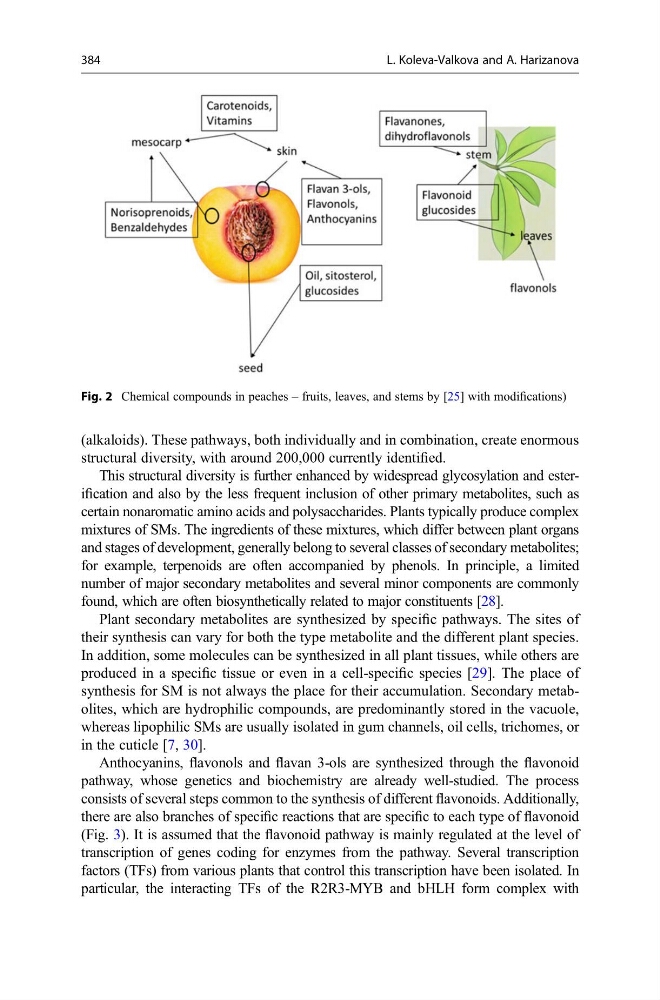
Fig. 2 Chemical compounds in peaches – fruits, leaves, and stems by [25] with modifications)
384
L. Koleva-Valkova and A. Harizanova
structural diversity, with around 200,000 currently identified.
This structural diversity is further enhanced by widespread glycosylation and esterification and also by the less frequent inclusion of other primary metabolites, such as
certain nonaromatic amino acids and polysaccharides. Plants typically produce complex
mixtures of SMs. The ingredients of these mixtures, which differ between plant organs
and stages of development, generally belong to several classes of secondary metabolites;
for example, terpenoids are often accompanied by phenols. In principle, a limited
number of major secondary metabolites and several minor components are commonly
found, which are often biosynthetically related to major constituents [28].
Plant secondary metabolites are synthesized by specific pathways. The sites of
their synthesis can vary for both the type metabolite and the different plant species.
In addition, some molecules can be synthesized in all plant tissues, while others are
produced in a specific tissue or even in a cell-specific species [29]. The place of
synthesis for SM is not always the place for their accumulation. Secondary metabolites, which are hydrophilic compounds, are predominantly stored in the vacuole,
whereas lipophilic SMs are usually isolated in gum channels, oil cells, trichomes, or
in the cuticle [7, 30].
Anthocyanins, flavonols and flavan 3-ols are synthesized through the flavonoid
pathway, whose genetics and biochemistry are already well-studied. The process
consists of several steps common to the synthesis of different flavonoids. Additionally,
there are also branches of specific reactions that are specific to each type of flavonoid
(Fig. 3). It is assumed that the flavonoid pathway is mainly regulated at the level of
transcription of genes coding for enzymes from the pathway. Several transcription
factors (TFs) from various plants that control this transcription have been isolated. In
particular, the interacting TFs of the R2R3-MYB and bHLH form complex with
Fig. 2 Chemical compounds in peaches – fruits, leaves, and stems by [25] with modifications)
384
L. Koleva-Valkova and A. Harizanova