

are flavones, flavonols, flavan-3-ols, isoflavones, flavanones, anthocyanidins,
dihydroflavonols, flavan 3,4-diols, coumarins, chalcones, dihydrochalcones, and
aurons. A variety of substitutes may be added to the primary flavonoid skeleton.
Hydroxyl groups are typically present at 4, 5, and 7 positions. Sugars are very
common in most flavonoids naturally occurring like glycosides. Both sugars and
hydroxyl groups increase the water solubility of flavonoids, but other substituents
such as methyl groups and isopentyl units make the flavonoids lipophilic. This, in
turn, determines the sites for their accumulation [13].
Anthocyanins, flavonols, and flavan-3-ols play a central role in determining fruit
quality [18]. Flavan-3-ols are the most complex subclass of flavonoids ranging from
simple catechin and epicatechin monomers to oligomeric and polymeric proanthocyanidins, also known as fused tannins [13]. Proanthocyanidins give astringency to fresh fruits, fruit juices, and wine. They can be oxidized by forming brown
pigments in the seeds and other tissues and can act as substances that inhibit the
feeding of various pests in reproductive tissues and in developing fruits [5].
The major nonflavonoids are gallic acid, which is the precursor of hydrolyzable
tannins, hydroxycinnamates, and their conjugated derivatives, and polyphenol stilbenes. Phenolic acids are also known as hydroxybenzoates, the main component
being gallic acid. For the first time, it is isolated from the juice of specific bumps
(gallae) formed in plants after an attack by parasitic insects. The tissue swelling is
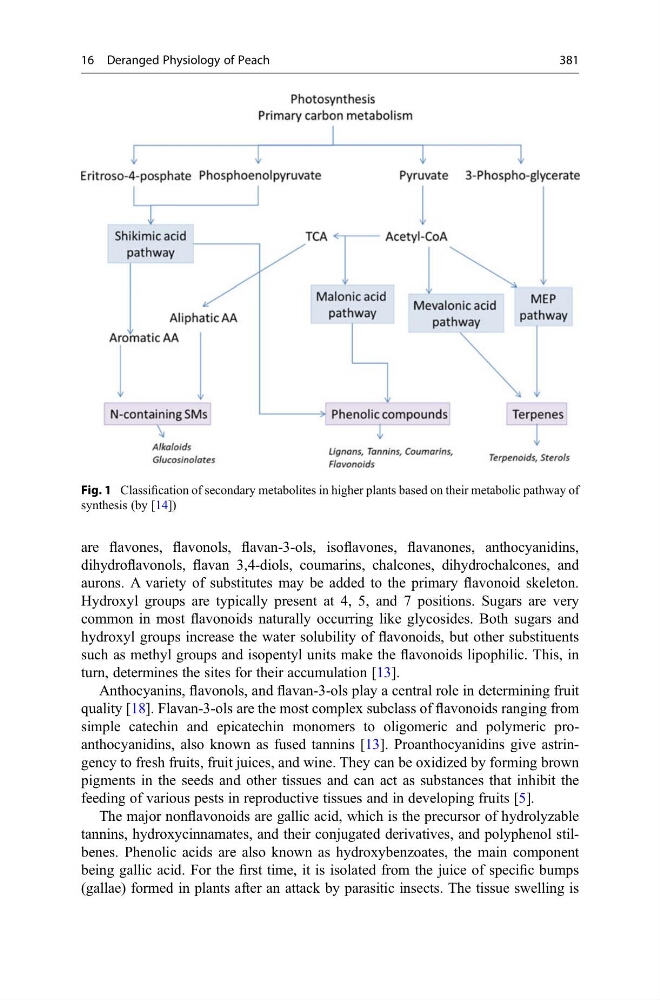
Fig. 1 Classification of secondary metabolites in higher plants based on their metabolic pathway of
synthesis (by [14])
16 Deranged Physiology of Peach
381
dihydroflavonols, flavan 3,4-diols, coumarins, chalcones, dihydrochalcones, and
aurons. A variety of substitutes may be added to the primary flavonoid skeleton.
Hydroxyl groups are typically present at 4, 5, and 7 positions. Sugars are very
common in most flavonoids naturally occurring like glycosides. Both sugars and
hydroxyl groups increase the water solubility of flavonoids, but other substituents
such as methyl groups and isopentyl units make the flavonoids lipophilic. This, in
turn, determines the sites for their accumulation [13].
Anthocyanins, flavonols, and flavan-3-ols play a central role in determining fruit
quality [18]. Flavan-3-ols are the most complex subclass of flavonoids ranging from
simple catechin and epicatechin monomers to oligomeric and polymeric proanthocyanidins, also known as fused tannins [13]. Proanthocyanidins give astringency to fresh fruits, fruit juices, and wine. They can be oxidized by forming brown
pigments in the seeds and other tissues and can act as substances that inhibit the
feeding of various pests in reproductive tissues and in developing fruits [5].
The major nonflavonoids are gallic acid, which is the precursor of hydrolyzable
tannins, hydroxycinnamates, and their conjugated derivatives, and polyphenol stilbenes. Phenolic acids are also known as hydroxybenzoates, the main component
being gallic acid. For the first time, it is isolated from the juice of specific bumps
(gallae) formed in plants after an attack by parasitic insects. The tissue swelling is
Fig. 1 Classification of secondary metabolites in higher plants based on their metabolic pathway of
synthesis (by [14])
16 Deranged Physiology of Peach
381