

ervi and the aphid predator Macrolophus pygmaeus [118]. Fungal metabolites also
can act as autoregulatory substances of morphogenetic processes. For example,
1-octen-3-ol, 3-octanol, and 3-octanone enhanced the condition response in
T. atroviride [119]. It has been reported that T. viride and Trichoderma aureoviride
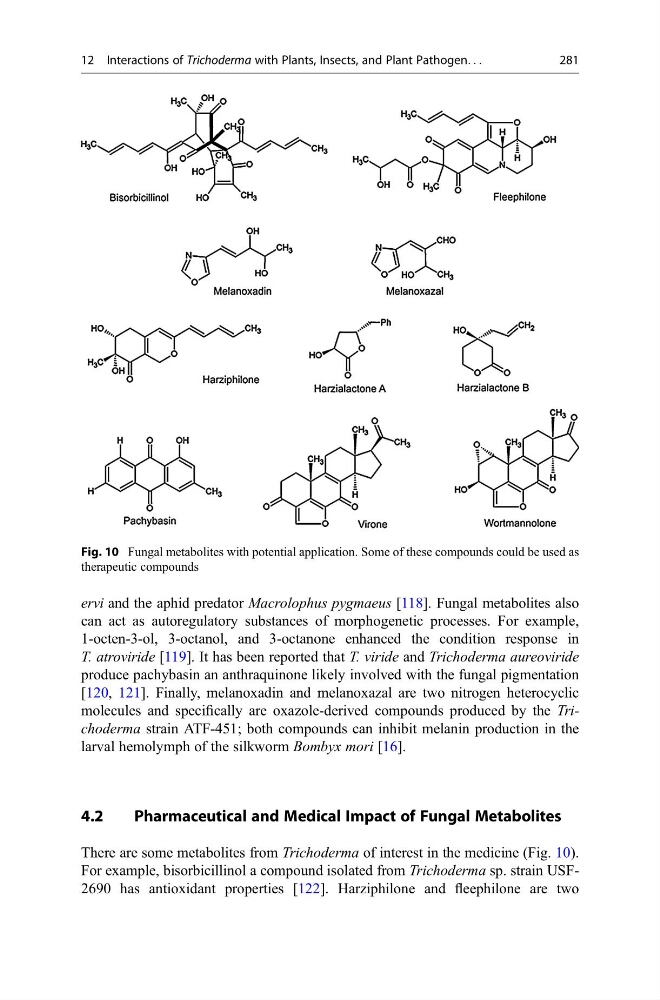
produce pachybasin an anthraquinone likely involved with the fungal pigmentation
[120, 121]. Finally, melanoxadin and melanoxazal are two nitrogen heterocyclic
molecules and specifically are oxazole-derived compounds produced by the Trichoderma strain ATF-451; both compounds can inhibit melanin production in the
larval hemolymph of the silkworm Bombyx mori [16].
4.2
Pharmaceutical and Medical Impact of Fungal Metabolites
There are some metabolites from Trichoderma of interest in the medicine (Fig. 10).
For example, bisorbicillinol a compound isolated from Trichoderma sp. strain USF2690 has antioxidant properties [122]. Harziphilone and fleephilone are two
Fig. 10 Fungal metabolites with potential application. Some of these compounds could be used as
therapeutic compounds
12 Interactions of Trichoderma with Plants, Insects, and Plant Pathogen. . .
281
can act as autoregulatory substances of morphogenetic processes. For example,
1-octen-3-ol, 3-octanol, and 3-octanone enhanced the condition response in
T. atroviride [119]. It has been reported that T. viride and Trichoderma aureoviride
produce pachybasin an anthraquinone likely involved with the fungal pigmentation
[120, 121]. Finally, melanoxadin and melanoxazal are two nitrogen heterocyclic
molecules and specifically are oxazole-derived compounds produced by the Trichoderma strain ATF-451; both compounds can inhibit melanin production in the
larval hemolymph of the silkworm Bombyx mori [16].
4.2
Pharmaceutical and Medical Impact of Fungal Metabolites
There are some metabolites from Trichoderma of interest in the medicine (Fig. 10).
For example, bisorbicillinol a compound isolated from Trichoderma sp. strain USF2690 has antioxidant properties [122]. Harziphilone and fleephilone are two
Fig. 10 Fungal metabolites with potential application. Some of these compounds could be used as
therapeutic compounds
12 Interactions of Trichoderma with Plants, Insects, and Plant Pathogen. . .
281