

The diversity can be genetic diversity or chemical diversity, and both diversities can
help in reducing herbivory. This diversification in plants has co-evolved with
herbivore populations [18]. Consequently herbivores and pathogens put great
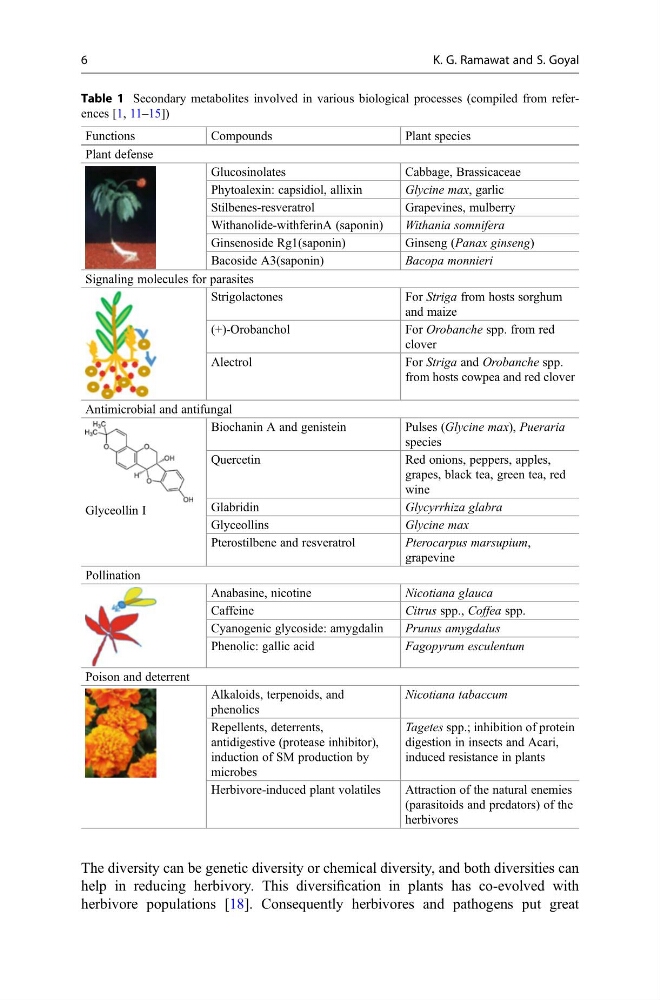
Table 1 Secondary metabolites involved in various biological processes (compiled from references [1, 11–15])
Functions
Compounds
Plant species
Plant defense
Glucosinolates
Cabbage, Brassicaceae
Phytoalexin: capsidiol, allixin
Glycine max, garlic
Stilbenes-resveratrol
Grapevines, mulberry
Withanolide-withferinA (saponin)
Withania somnifera
Ginsenoside Rg1(saponin)
Ginseng (Panax ginseng)
Bacoside A3(saponin)
Bacopa monnieri
Signaling molecules for parasites
Strigolactones
For Striga from hosts sorghum
and maize
(+)-Orobanchol
For Orobanche spp. from red
clover
Alectrol
For Striga and Orobanche spp.
from hosts cowpea and red clover
Antimicrobial and antifungal
Glyceollin I
Biochanin A and genistein
Pulses (Glycine max), Pueraria
species
Quercetin
Red onions, peppers, apples,
grapes, black tea, green tea, red
wine
Glabridin
Glycyrrhiza glabra
Glyceollins
Glycine max
Pterostilbene and resveratrol
Pterocarpus marsupium,
grapevine
Pollination
Anabasine, nicotine
Nicotiana glauca
Caffeine
Citrus spp., Coffea spp.
Cyanogenic glycoside: amygdalin
Prunus amygdalus
Phenolic: gallic acid
Fagopyrum esculentum
Poison and deterrent
Alkaloids, terpenoids, and
phenolics
Nicotiana tabaccum
Repellents, deterrents,
antidigestive (protease inhibitor),
induction of SM production by
microbes
Tagetes spp.; inhibition of protein
digestion in insects and Acari,
induced resistance in plants
Herbivore-induced plant volatiles
Attraction of the natural enemies
(parasitoids and predators) of the
herbivores
6
K. G. Ramawat and S. Goyal
help in reducing herbivory. This diversification in plants has co-evolved with
herbivore populations [18]. Consequently herbivores and pathogens put great
Table 1 Secondary metabolites involved in various biological processes (compiled from references [1, 11–15])
Functions
Compounds
Plant species
Plant defense
Glucosinolates
Cabbage, Brassicaceae
Phytoalexin: capsidiol, allixin
Glycine max, garlic
Stilbenes-resveratrol
Grapevines, mulberry
Withanolide-withferinA (saponin)
Withania somnifera
Ginsenoside Rg1(saponin)
Ginseng (Panax ginseng)
Bacoside A3(saponin)
Bacopa monnieri
Signaling molecules for parasites
Strigolactones
For Striga from hosts sorghum
and maize
(+)-Orobanchol
For Orobanche spp. from red
clover
Alectrol
For Striga and Orobanche spp.
from hosts cowpea and red clover
Antimicrobial and antifungal
Glyceollin I
Biochanin A and genistein
Pulses (Glycine max), Pueraria
species
Quercetin
Red onions, peppers, apples,
grapes, black tea, green tea, red
wine
Glabridin
Glycyrrhiza glabra
Glyceollins
Glycine max
Pterostilbene and resveratrol
Pterocarpus marsupium,
grapevine
Pollination
Anabasine, nicotine
Nicotiana glauca
Caffeine
Citrus spp., Coffea spp.
Cyanogenic glycoside: amygdalin
Prunus amygdalus
Phenolic: gallic acid
Fagopyrum esculentum
Poison and deterrent
Alkaloids, terpenoids, and
phenolics
Nicotiana tabaccum
Repellents, deterrents,
antidigestive (protease inhibitor),
induction of SM production by
microbes
Tagetes spp.; inhibition of protein
digestion in insects and Acari,
induced resistance in plants
Herbivore-induced plant volatiles
Attraction of the natural enemies
(parasitoids and predators) of the
herbivores
6
K. G. Ramawat and S. Goyal