

260
M. Gor˛ aczko
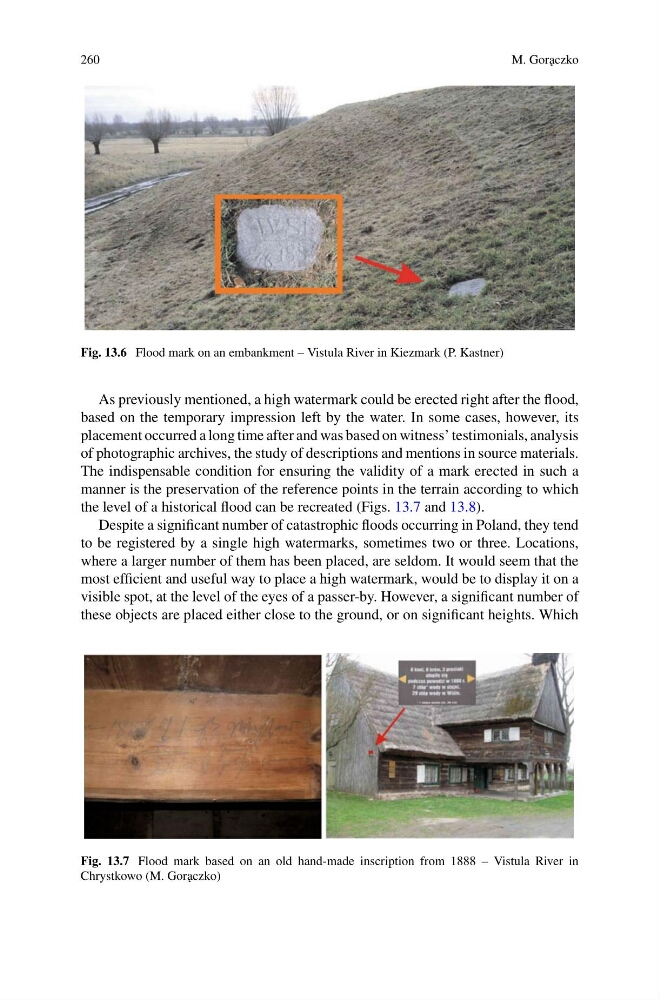
Fig. 13.6 Flood mark on an embankment – Vistula River in Kiezmark (P. Kastner)
As previously mentioned, a high watermark could be erected right after the flood,
based on the temporary impression left by the water. In some cases, however, its
placement occurred a long time after and was based on witness’ testimonials, analysis
of photographic archives, the study of descriptions and mentions in source materials.
The indispensable condition for ensuring the validity of a mark erected in such a
manner is the preservation of the reference points in the terrain according to which
the level of a historical flood can be recreated (Figs. 13.7 and 13.8).
Despite a significant number of catastrophic floods occurring in Poland, they tend
to be registered by a single high watermarks, sometimes two or three. Locations,
where a larger number of them has been placed, are seldom. It would seem that the
most efficient and useful way to place a high watermark, would be to display it on a
visible spot, at the level of the eyes of a passer-by. However, a significant number of
these objects are placed either close to the ground, or on significant heights. Which
Fig. 13.7 Flood mark based on an old hand-made inscription from 1888 – Vistula River in
Chrystkowo (M. Gor˛ aczko)
M. Gor˛ aczko
Fig. 13.6 Flood mark on an embankment – Vistula River in Kiezmark (P. Kastner)
As previously mentioned, a high watermark could be erected right after the flood,
based on the temporary impression left by the water. In some cases, however, its
placement occurred a long time after and was based on witness’ testimonials, analysis
of photographic archives, the study of descriptions and mentions in source materials.
The indispensable condition for ensuring the validity of a mark erected in such a
manner is the preservation of the reference points in the terrain according to which
the level of a historical flood can be recreated (Figs. 13.7 and 13.8).
Despite a significant number of catastrophic floods occurring in Poland, they tend
to be registered by a single high watermarks, sometimes two or three. Locations,
where a larger number of them has been placed, are seldom. It would seem that the
most efficient and useful way to place a high watermark, would be to display it on a
visible spot, at the level of the eyes of a passer-by. However, a significant number of
these objects are placed either close to the ground, or on significant heights. Which
Fig. 13.7 Flood mark based on an old hand-made inscription from 1888 – Vistula River in
Chrystkowo (M. Gor˛ aczko)