

13 Flood Marks in Poland and Their Significance in Water …
257
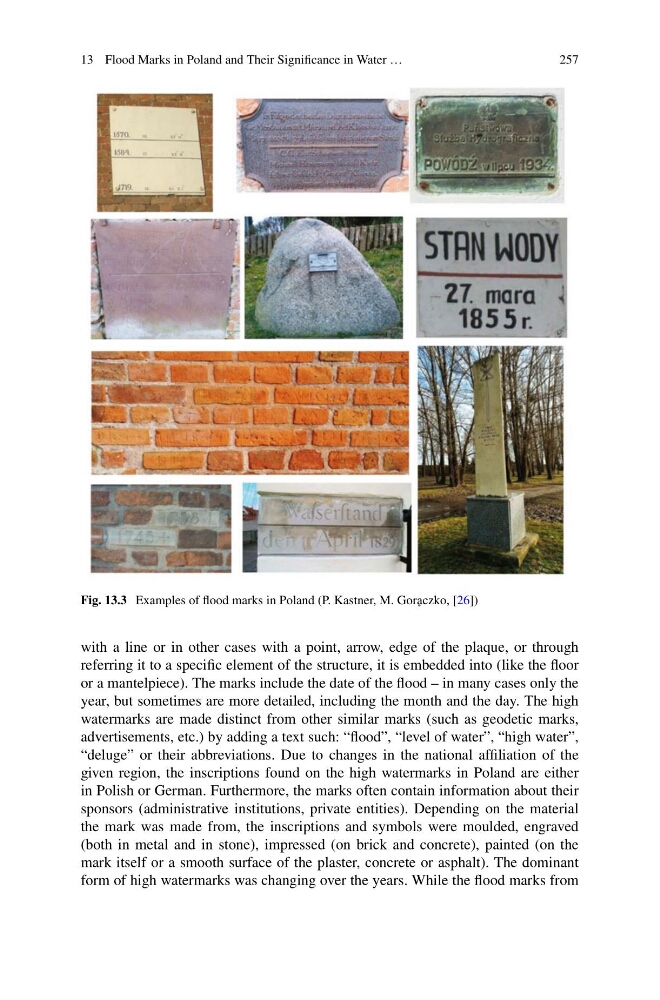
Fig. 13.3 Examples of flood marks in Poland (P. Kastner, M. Gor˛ aczko, [26])
with a line or in other cases with a point, arrow, edge of the plaque, or through
referring it to a specific element of the structure, it is embedded into (like the floor
or a mantelpiece). The marks include the date of the flood – in many cases only the
year, but sometimes are more detailed, including the month and the day. The high
watermarks are made distinct from other similar marks (such as geodetic marks,
advertisements, etc.) by adding a text such: “flood”, “level of water”, “high water”,
“deluge” or their abbreviations. Due to changes in the national affiliation of the
given region, the inscriptions found on the high watermarks in Poland are either
in Polish or German. Furthermore, the marks often contain information about their
sponsors (administrative institutions, private entities). Depending on the material
the mark was made from, the inscriptions and symbols were moulded, engraved
(both in metal and in stone), impressed (on brick and concrete), painted (on the
mark itself or a smooth surface of the plaster, concrete or asphalt). The dominant
form of high watermarks was changing over the years. While the flood marks from
257
Fig. 13.3 Examples of flood marks in Poland (P. Kastner, M. Gor˛ aczko, [26])
with a line or in other cases with a point, arrow, edge of the plaque, or through
referring it to a specific element of the structure, it is embedded into (like the floor
or a mantelpiece). The marks include the date of the flood – in many cases only the
year, but sometimes are more detailed, including the month and the day. The high
watermarks are made distinct from other similar marks (such as geodetic marks,
advertisements, etc.) by adding a text such: “flood”, “level of water”, “high water”,
“deluge” or their abbreviations. Due to changes in the national affiliation of the
given region, the inscriptions found on the high watermarks in Poland are either
in Polish or German. Furthermore, the marks often contain information about their
sponsors (administrative institutions, private entities). Depending on the material
the mark was made from, the inscriptions and symbols were moulded, engraved
(both in metal and in stone), impressed (on brick and concrete), painted (on the
mark itself or a smooth surface of the plaster, concrete or asphalt). The dominant
form of high watermarks was changing over the years. While the flood marks from