

244
E. Tomaszewski and M. Kozek
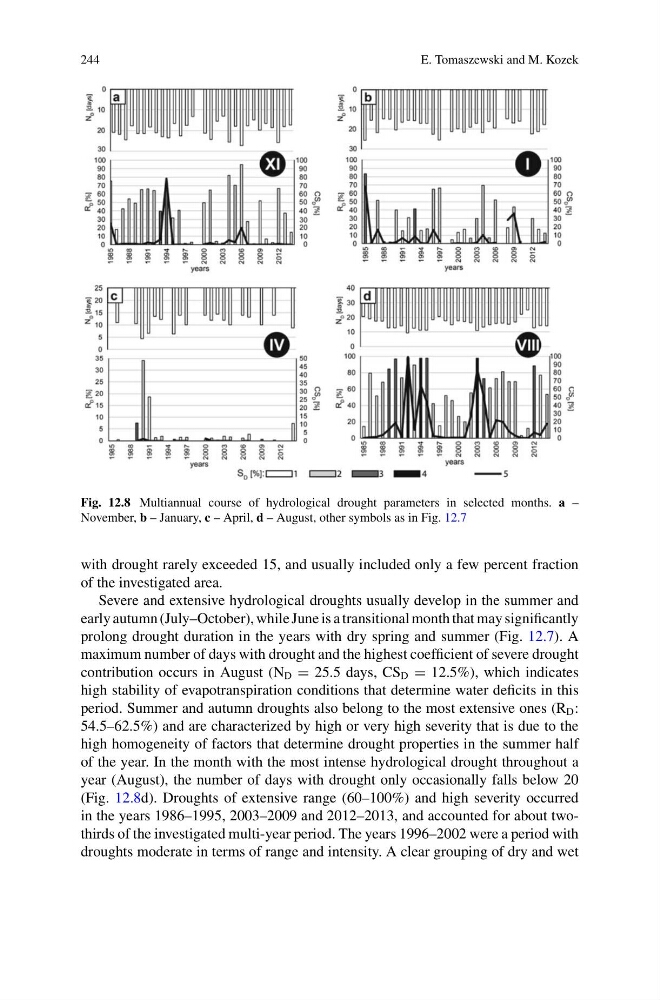
Fig. 12.8 Multiannual course of hydrological drought parameters in selected months. a –
November, b – January, c – April, d – August, other symbols as in Fig. 12.7
with drought rarely exceeded 15, and usually included only a few percent fraction
of the investigated area.
Severe and extensive hydrological droughts usually develop in the summer and
early autumn (July–October), while June is a transitional month that may significantly
prolong drought duration in the years with dry spring and summer (Fig. 12.7). A
maximum number of days with drought and the highest coefficient of severe drought
contribution occurs in August (N D = 25.5 days, CS D = 12.5%), which indicates
high stability of evapotranspiration conditions that determine water deficits in this
period. Summer and autumn droughts also belong to the most extensive ones (R D :
54.5–62.5%) and are characterized by high or very high severity that is due to the
high homogeneity of factors that determine drought properties in the summer half
of the year. In the month with the most intense hydrological drought throughout a
year (August), the number of days with drought only occasionally falls below 20
(Fig. 12.8d). Droughts of extensive range (60–100%) and high severity occurred
in the years 1986–1995, 2003–2009 and 2012–2013, and accounted for about twothirds of the investigated multi-year period. The years 1996–2002 were a period with
droughts moderate in terms of range and intensity. A clear grouping of dry and wet
E. Tomaszewski and M. Kozek
Fig. 12.8 Multiannual course of hydrological drought parameters in selected months. a –
November, b – January, c – April, d – August, other symbols as in Fig. 12.7
with drought rarely exceeded 15, and usually included only a few percent fraction
of the investigated area.
Severe and extensive hydrological droughts usually develop in the summer and
early autumn (July–October), while June is a transitional month that may significantly
prolong drought duration in the years with dry spring and summer (Fig. 12.7). A
maximum number of days with drought and the highest coefficient of severe drought
contribution occurs in August (N D = 25.5 days, CS D = 12.5%), which indicates
high stability of evapotranspiration conditions that determine water deficits in this
period. Summer and autumn droughts also belong to the most extensive ones (R D :
54.5–62.5%) and are characterized by high or very high severity that is due to the
high homogeneity of factors that determine drought properties in the summer half
of the year. In the month with the most intense hydrological drought throughout a
year (August), the number of days with drought only occasionally falls below 20
(Fig. 12.8d). Droughts of extensive range (60–100%) and high severity occurred
in the years 1986–1995, 2003–2009 and 2012–2013, and accounted for about twothirds of the investigated multi-year period. The years 1996–2002 were a period with
droughts moderate in terms of range and intensity. A clear grouping of dry and wet